When most people in North America say 'yellow finch,' they're picturing the American Goldfinch: a small, compact songbird with brilliant canary-yellow body plumage, a jet-black cap, and bold black wings edged in white. That bright summer male is probably the most vivid yellow bird you'll spot at a backyard feeder or in a sunny meadow. The name itself is a casual one, though, so knowing exactly which bird you're looking at depends a lot on where you live and what time of year it is. See what does a goldfinch bird look like in the species profile for a quick visual summary.
What Does a Yellow Finch Bird Look Like: Complete ID Guide

Marcus Whitley
10 Aug 2026
Quick ID: What Is a Yellow Finch?
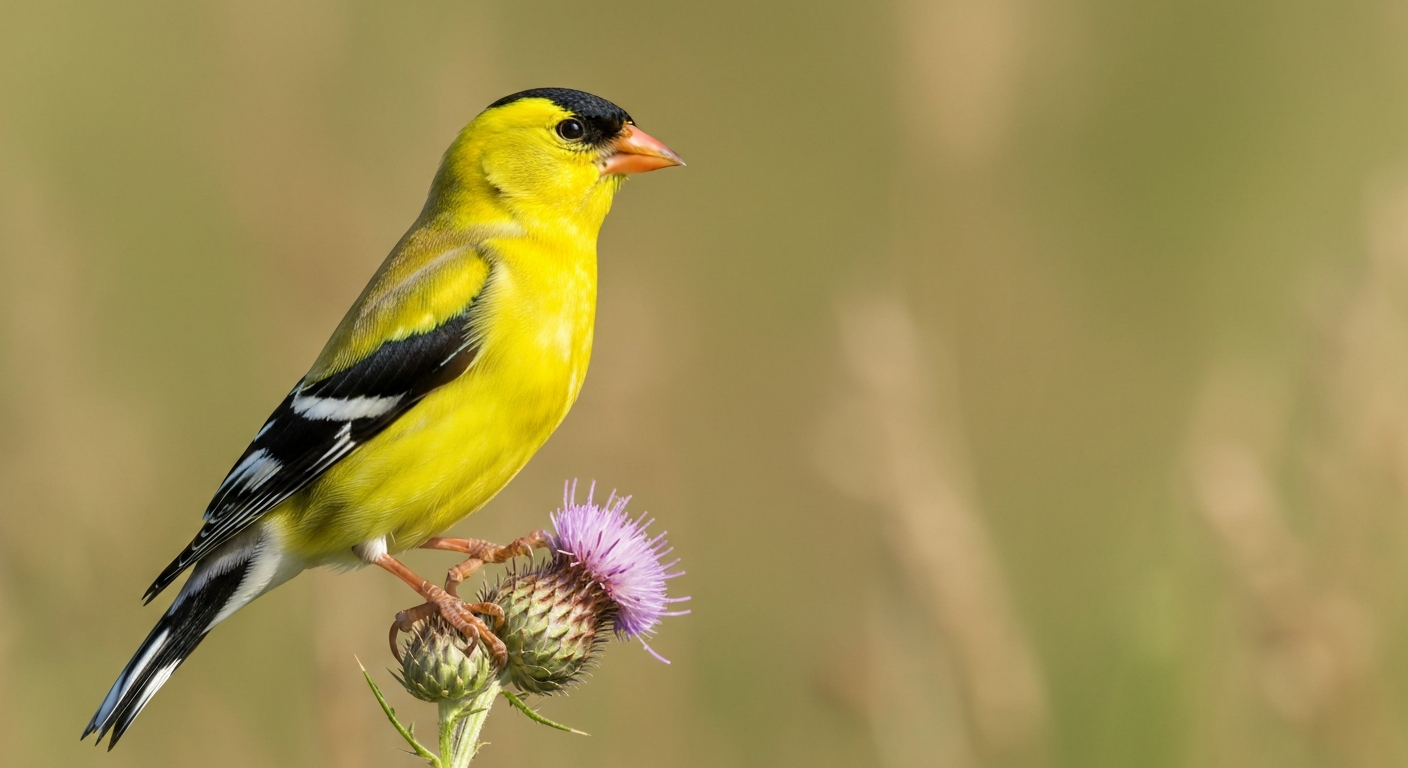
A 'yellow finch' in North America is almost certainly an American Goldfinch (Spinus tristis): a sparrow-sized bird with an all-yellow body, a small pale conical bill, a notched tail, and, in breeding males, a distinctive black forehead patch and black wings with white edging.
5 Field Markers to Check First
Before diving into the details, these are the five things to look at the moment you spot a small yellow bird. Run through them quickly and you'll have a confident ID in seconds.
- Body color: Is the bird uniformly bright yellow, or streaked/patchy? A clean lemon-yellow body points strongly toward a goldfinch.
- Cap: Look for a sharp black forehead patch on the male American Goldfinch. If the whole head is yellow-orange, think Saffron Finch.
- Wings: Check for bold black wings with white wing bars (American Goldfinch) or a large white wedge at the wing base (Lesser Goldfinch).
- Bill shape: A small, stubby, pale conical bill means a seed-eater in the finch family. A long, chisel-like bill means something else entirely (like a flicker).
- Size: Is it sparrow-sized or smaller? True yellow finches are tiny. If the yellow bird is robin-sized or bigger, it's not a goldfinch.
Detailed Visual Description: Head to Tail
Body Plumage
The breeding male American Goldfinch is one of the most uniformly colored birds in North America. His body is a clean, saturated canary yellow with almost no streaking or variation. The yellow extends from the throat all the way down the belly and across the back. You might notice the yellow looks almost luminous in direct sunlight, which is part of what makes this bird so eye-catching at feeders.
Head, Cap, and Face
The most diagnostic single mark on a breeding male is the black forehead cap, which sits like a small beret right above the bill. It doesn't extend to the back of the head, just the front. The rest of the face and throat are the same bright yellow as the body. There's no eye stripe, no mask, and no crest, which helps separate it from European Goldfinches and tiny crested birds like the Goldcrest or Firecrest.
Wings and Tail
The wings are jet black with two distinct white wing bars, and the flight feathers are edged in white, giving a crisp pattern when the bird is perched. The tail is also black with white patches visible at the outer edges, especially when the bird fans it slightly in flight. That notched tail shape is worth noting: it gives the bird a slightly forked look in the air, which is a useful silhouette clue.
Bill, Eye, and Legs
The bill is short, stout, and conical, pale horn or pinkish in color, perfectly shaped for cracking open sunflower and thistle seeds. The eye is dark and round with no obvious ring or stripe around it. Legs are a pale pinkish-flesh color. None of these features are flashy, but the combination of small pale bill plus all-yellow body plus black-and-white wings is essentially unmistakable in good light.
Size, Shape and Silhouette
American Goldfinches are small but not tiny. Think of them as slightly larger than a chickadee and about the same size as a house sparrow. In the hand, their compact, rounded body and short neck give them a slightly plump look, while the notched tail and pointed wings create a distinctive bounding flight silhouette. Here's how the numbers compare across the 'yellow finch' species group:
| Species | Length | Wingspan | Weight |
|---|---|---|---|
| American Goldfinch | 11–13 cm (4–5 in) | 20–22 cm (8–9 in) | 11–20 g (0.4–0.7 oz) |
| Lesser Goldfinch | 9–11 cm (3.5–4.3 in) | 19–22 cm (7.5–8.7 in) | 8–11 g (0.3–0.4 oz) |
| European Goldfinch | 12–13.5 cm (4.7–5.1 in) | 21–25 cm (8.3–9.8 in) | 14–19 g (0.5–0.7 oz) |
| Saffron Finch | 14–15 cm (5.5–6 in) | 20–23 cm (8–9 in) | 16–17 g (0.6 oz avg) |
| Northern Flicker | 28–34 cm (11–13 in) | 42–51 cm (16.5–20 in) | 86–167 g (3–5.9 oz) |
The proportions matter for silhouette ID. American and Lesser Goldfinches both have relatively large heads for their body size, short tails, and pointed wings that create an undulating flight pattern. The Saffron Finch is noticeably stockier and chunkier in the body. The Northern Flicker, sometimes spotted because of its yellow wing-shaft flashes in flight, is roughly three times the size of any goldfinch and is shaped more like a dove than a sparrow.
Male, Female, Juvenile, and Winter Plumage
Breeding Males (Spring and Summer)
This is the classic yellow finch look: intense canary yellow all over, sharp black cap, crisp black wings with white wing bars. Males reach this peak brightness by around June after a complete spring molt. If you see a bright yellow bird at a summer feeder, there's a very good chance this is what you're looking at.
Females and Non-Breeding Males
Females are noticeably duller. Their body color shifts toward a pale olive-yellow or even greenish-yellow, and they lack the black forehead cap entirely. The wings stay darker with retained white wing bars, which is your best clue that you're still looking at a goldfinch. Non-breeding males after their post-summer molt go through a similar dull phase, which can lead to real confusion at fall and winter feeders when you see a brownish-olive little bird that looks nothing like the brilliant summer male.
Juveniles
Young birds in their first season look similar to adult females: olive-brown above, washed yellowish below, with buffy rather than white wing bars. They lack the crisp color contrasts of adults. If you spot what looks like a streaky, olive-tinted sparrow with faint wing bars at a thistle feeder in late summer, juveniles are a likely explanation.
Molting and Transitional Birds
American Goldfinches go through two molts per year, and the transitional period in late summer and early fall can be genuinely puzzling. You might see a male with patches of bright yellow mixing with dull olive, or a partially-formed black cap. These molting birds trip up even experienced birders. The best approach is to lean on the wing pattern: those black wings with white bars persist through all plumages and are the most reliable constant feature.
Field Marks and Behavioral Cues
Posture and Flight
American Goldfinches have a distinctive bounding or undulating flight pattern, swooping up and down in smooth arcs as they travel. You'll often hear them before you see them, especially when they're flying over open areas. Their call in flight is a bright, liquid 'per-chick-o-ree' or 'potato chip' sound that experienced birders learn to recognize from a distance. At rest, they tend to perch upright and cling easily to seed heads and feeders.
Feeding Behavior
Watch how the bird feeds. Goldfinches are specialists at clinging to the stems of thistle and other composite plants, often hanging upside down to reach seed heads. At feeders, they strongly prefer nyjer (thistle) seed and hulled sunflower. If you see a bright yellow bird confidently hanging sideways on a sock feeder, you're almost certainly watching an American Goldfinch.
Habitat Clues
Look for American Goldfinches in open fields, meadows, weedy roadsides, and suburban gardens with thistle or sunflowers nearby. They're highly attracted to backyards with nyjer feeders. Lesser Goldfinches in the western U.S. overlap in many habitats but tend to prefer scrubby hillsides, brushy edges, and more arid areas. If you're in South America, yellow finches of the Sicalis group like open grasslands and farmland.
Similar Species: Why Small Yellow Birds Get Mixed Up
The 'yellow finch' label gets applied to a handful of genuinely different birds, and knowing what each one actually looks like makes separating them much easier in the field.
Lesser Goldfinch
In the western U.S., the Lesser Goldfinch is the bird most likely to be confused with the American Goldfinch. It's noticeably smaller, with a length of just 9–11 cm compared to the American's 11–13 cm. The key visual difference is the wing patch: Lesser Goldfinches have a large white wedge at the base of the primaries that shows as a bold white block on the folded wing, quite different from the American's paired white wing bars. Male Lessers also often have a greenish back rather than yellow, and some western populations show an all-black back. Female Lessers are olive-yellow, similar to female Americans but generally duller.
European Goldfinch
If you're in Europe or encounter an escaped bird in North America, the European Goldfinch looks completely different up close but can flash yellow at a distance. Its most distinctive feature is a bold bright yellow wing bar across otherwise black wings, paired with a vivid red face mask edged in black and white. The body is warm brown above and white below with buff flanks. Both sexes look similar, which is unusual among finches. The yellow is confined to a wing stripe rather than the whole body, so there's minimal actual confusion with American Goldfinch once you get a clear view.
Saffron Finch
Found naturally in South America and introduced to some parts of North America and Hawaii, the Saffron Finch is a stocky, medium-sized bird (14–15 cm) with an all-yellow body and an orange-gold head that deepens in color toward the face. See Saffron Finch, All About Birds (Cornell Lab) for species details confirming adult males are overall brilliant yellow with orange‑gold highlights on the head, plain yellow wings, and a stout conical seed‑eater’s bill blank" rel="noopener noreferrer">Saffron Finch — All About Birds (Cornell Lab). Unlike the Spinus goldfinches, it has plain yellow wings with no bold black-and-white pattern, making it look more uniform at a glance. It's larger and heavier-billed than American Goldfinch, and the absence of wing markings is a reliable separator.
Northern Flicker
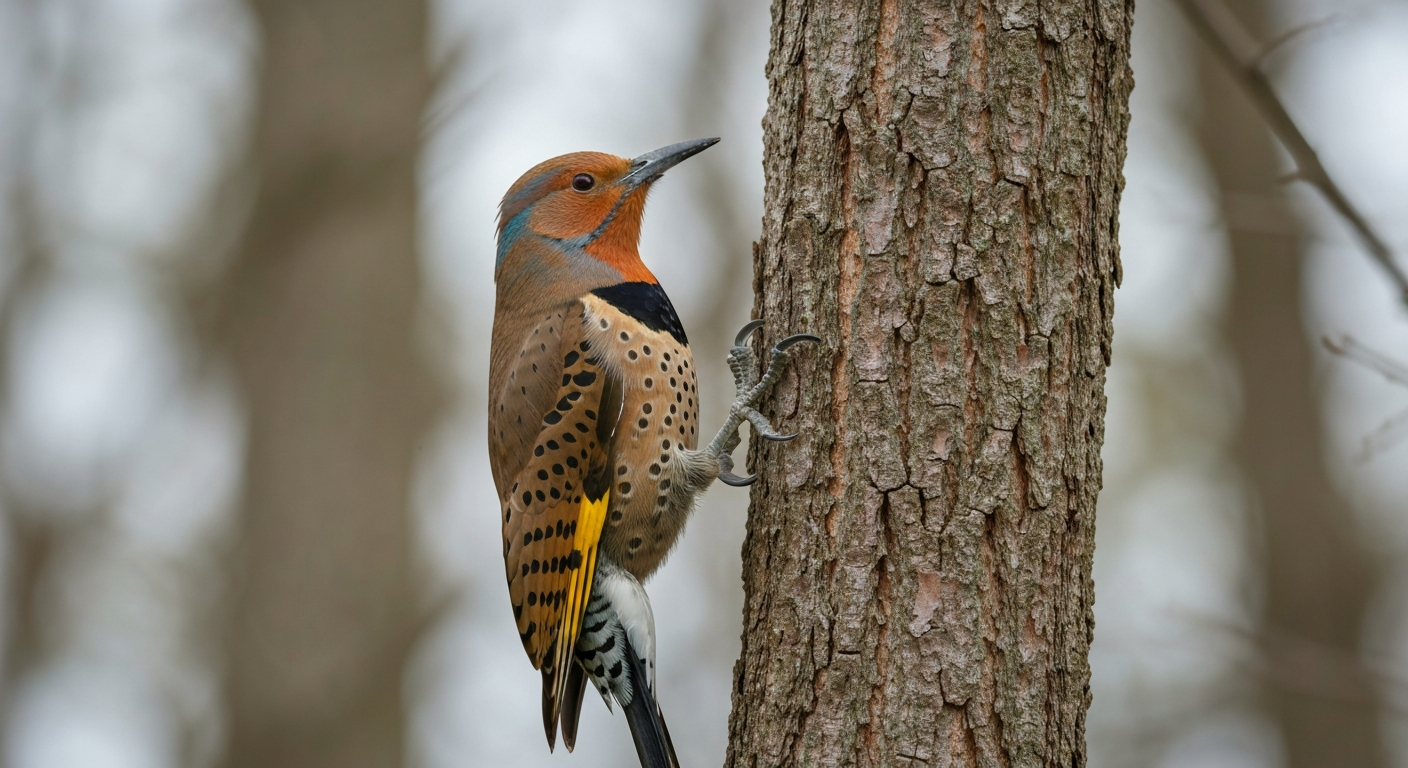
You might wonder why a woodpecker shows up in a yellow finch comparison, but the Northern Flicker genuinely confuses beginners who catch a flash of yellow in flight. For a closer look, see what does a flicker bird look like for detailed descriptions and photos. The yellow-shafted form (eastern North America) has bright yellow feather shafts on the underwings and tail that can look startlingly vivid mid-flight. For more details on its appearance, see what a Northern Flicker looks like. But the Flicker is enormous compared to a finch: 28–34 cm long with a wingspan up to 51 cm. Northern Flicker, All About Birds (Cornell Lab) reports the species measures about 28–34 cm (11–13 in) long with a wingspan of roughly 42–51 cm (16.5–20 in) and shows yellow or red feather shafts (yellow-shafted in the east, red-shafted in the west) blank" rel="noopener noreferrer">Northern Flicker — All About Birds (Cornell Lab). It also has a long chisel bill, a spotted breast, and a bold black bib. Once you see the full bird, there's no real confusion, but a brief flyover glimpse of yellow can mislead.
Goldcrest and Firecrest
These two tiny European birds are sometimes called into question when people see a small bird with a yellow crown stripe. The Goldcrest (8.5–9.5 cm, just 4.5–7 g) is Europe's smallest passerine and sports a lemon-yellow central crown stripe bordered in black. For a detailed description of the species, see our guide on what does a Goldcrest bird look like. The Firecrest is similar but adds a bold white supercilium and has a more orange-yellow crown on males. Neither is anything like a seed-eating finch in body shape, bill structure, or behavior. Both are insect hunters with needle-thin bills who flit nervously through conifer branches. The resemblance to yellow finches is superficial at best, but both are worth knowing since their small size and yellow crown can generate 'yellow bird' reports.
American Goldfinch vs. Other Yellow Finches: Side-by-Side Comparison
Here's a direct comparison of the most commonly confused yellow birds to help you sort through your sighting quickly.
| Feature | American Goldfinch | Lesser Goldfinch | European Goldfinch | Saffron Finch |
|---|---|---|---|---|
| Body color | Bright canary yellow (male); olive-yellow (female) | Yellow below; green or black back (male); olive (female) | Brown back, white below, buff flanks | All yellow with orange-gold head |
| Head pattern | Black forehead cap (male only) | Black cap (male); plain olive (female) | Red face mask, black-and-white head | Orange-gold head, no cap or mask |
| Wing pattern | Black wings, two white wing bars | White wedge at primary base | Broad yellow wing bar on black wings | Plain yellow wings, no bold markings |
| Bill | Small, pale conical | Small, dark-tipped conical | Small, pale conical | Stout, heavy conical |
| Seasonal change | Dramatic: bright summer, dull winter | Less dramatic year-round | Minimal seasonal change | Relatively stable year-round |
| North America range | Continent-wide | Western U.S. mainly | Introduced/escaped only | South America; introduced Hawaii/FL |
American Goldfinch in Detail: The Classic Yellow Finch
Because the American Goldfinch is the default 'yellow finch' for most North American birdwatchers, it's worth spending extra time on the details that make it identifiable across seasons. The breeding male (April through August) is easy: that uniform canary yellow with black cap and black wings is about as distinctive as a bird can get. But the post-breeding male from September through early spring looks so different that beginners often report 'a new bird' at their feeder when really it's the same goldfinch they've been watching all summer.
In winter, males fade to a dull olive-brown above and pale yellowish below, though they usually retain a faint yellow wash on the throat and face. The black wings with white bars stay put, which is your anchor point for the ID. Females look similar to winter males throughout the year, so the easiest way to think about it is: if you see a small bird with blackish wings, two white wing bars, a pale conical bill, and any amount of yellow on the body, you're almost certainly looking at an American Goldfinch in some plumage state.
Migration and seasonal timing also matter. American Goldfinches don't breed until late summer, timed to coincide with thistle seed ripening. If you're trying to identify a molting or breeding bird, late June through August is peak season for seeing the full vivid male plumage. By October, most males are well into their post-breeding molt and looking considerably less impressive.
Practical Tips for Identifying Yellow Finches in the Field
Best Angles and Lighting
Try to get the bird in good sidelight rather than backlit. A goldfinch in direct afternoon sun can look almost fluorescent yellow, while the same bird against a bright sky can appear dark and nondescript. A slightly overcast day actually gives the most accurate color rendering. When photographing for ID, aim for a clear side profile showing the wing bars, and a face-on view showing the cap and bill shape.
What to Note When You Spot a Yellow Bird
- Overall body color: uniform yellow, patchy, or just yellow on parts of the bird?
- Cap or mask: is there a distinct black cap, a red face pattern, or is the head all one color?
- Wing pattern: look for white wing bars, a white wing patch, or a yellow wing stripe
- Bill: stubby and conical (finch), thin and pointed (warbler or kinglet), or long and chisel-like (woodpecker)?
- Size relative to nearby birds: sparrow-sized, smaller, or clearly bigger?
- Behavior: clinging to seed heads, hammering on bark, or flitting through foliage?
- Flight pattern: bounding/undulating (finch) or direct and powerful (larger birds)?
Photographing for a Confident ID
If you're trying to capture a photo for later identification, the three most useful shots are: a clean side profile showing the full wing pattern and tail, a front-facing view of the head to show cap and bill clearly, and if possible a shot with the wings partially spread to reveal the underwing and flight feather details. Even a blurry photo showing wing bar pattern can often clinch an ID that a description alone cannot.
A Quick ID Checklist for Yellow Finches
Use this checklist to work through a yellow bird sighting systematically before reaching for a field guide.
- Is the whole body yellow, or just parts of it? (Whole body = goldfinch or Saffron Finch; partial = European Goldfinch or molting bird)
- Is there a black cap? (Yes = American Goldfinch male or Lesser Goldfinch male)
- Is there a red face mask? (Yes = European Goldfinch)
- What's on the wings? (White bars = American Goldfinch; white wedge/block = Lesser Goldfinch; bright yellow stripe = European Goldfinch; plain yellow = Saffron Finch)
- Is the bird smaller than a sparrow with a thin needle bill? (Yes = probably Goldcrest or Firecrest, not a finch)
- Is the bird much bigger than a sparrow with a long bill? (Yes = probably a flicker, not a finch)
- What season is it? (Summer = expect bright plumage; winter = expect duller, olive tones even in goldfinches)
Explore More Yellow Bird Identifications
If you've narrowed your sighting down to a goldfinch type but still want a deeper dive, dedicated species pages on the American Goldfinch and European Goldfinch cover plumage variation in much greater detail, including subspecies differences and regional color variation. For a general overview of finch appearance, see what does finch bird look like. If your yellow bird turned out to be something unexpected with a flash of yellow in flight, the Northern Flicker and related woodpecker pages are worth checking. And if you spotted a tiny bird with a bright yellow crown stripe moving through conifer branches, the Goldcrest and Firecrest guides will help you separate those two closely related species, which can look deceptively similar at a quick glance.
FAQ
Quick ID: What does a “yellow finch” look like at a glance?
Concise: a small, stocky seed‑eating passerine with conspicuous yellow body plumage (intensity varies), a short conical bill, and distinct head/wing marks depending on species — e.g., American Goldfinch: bright canary yellow male with black cap and black wings; Lesser Goldfinch: smaller yellow bird often with a black (or dark) cap and white wedge on the folded wing; European Goldfinch: yellow on the wing (broad yellow wing‑bar) but not an all‑yellow body and notable red face. If you see a plain, entirely yellow, short‑billed bird perched at feeders or in thistle patches in North America, it’s likely an American or Lesser Goldfinch.
Detailed visual description: what to look for on a yellow finch (plumage, bill, eyes, legs, wings, tail)?
Head & face: breeding males vary — American Goldfinch male has a black forehead/cap; Lesser Goldfinch male often has an all‑black or dark cap (varies regionally); European Goldfinch has a red face with black/white head pattern. Bill: short, conical, seed‑crushing—pale horn to gray in Spinus/Carduelis types; thicker in some Sicalis (South American ‘yellow‑finches’). Eyes: dark, round; no prominent eye ring in most finches. Legs: thin, pinkish to brownish. Wings & wing marks: American Goldfinch shows black wings with white wing bars/edging; Lesser shows a white patch (wedge) at the base of primaries on folded wing; European Goldfinch has black wings with a broad bright yellow wing‑bar. Tail: notched tail in Spinus species with white outer tail spots on Lesser; rump often yellow in breeding birds. Overall color: ranges from brilliant canary yellow (breeding male American) to dull olive‑yellow or buff (females/immatures, nonbreeding).
Size and shape measurements (typical ranges for commonly implied species)
American Goldfinch (Spinus tristis): length 11–13 cm (4–5 in), wingspan ~20–22 cm, weight ~11–20 g. Lesser Goldfinch (Spinus psaltria): length 9–11 cm, wingspan ~19–22 cm, weight ~8–11 g. European (Eurasian) Goldfinch (Carduelis carduelis): length ~12–13.5 cm, wingspan ~21–25 cm, weight ~14–19 g. Saffron Finch (Sicalis flaveola; South America): length ~14–15 cm, wingspan ~20–23 cm, weight commonly ~12–17 g. Northern Flicker (Colaptes auratus — commonly confused for yellow because of yellow shafted flight feathers): length 28–34 cm, wingspan 42–51 cm — substantially larger. Goldcrest/Firecrest (Regulus spp.): tiny, length ~8.5–9.5 cm, weight ~4.5–7 g — much smaller and slimmer with thin bill and bold crown stripe.
Sex, age, and seasonal plumage variations to expect
American Goldfinch: breeding male bright canary/yellow with black cap and black wings; females and nonbreeding males are duller olive‑yellow to brownish with retained wing pattern; they undergo a late spring molt into bright breeding plumage and a post‑breeding molt back to duller plumage. Lesser Goldfinch: males show a darker head cap and brighter yellow underparts in breeding season; females/immatures are duller olive/yellow and lack a strong cap. European Goldfinch: sexes look similar year‑round but males’ red mask may extend slightly further. Sicalis/‘yellow‑finches’ in South America: males often richer yellow/orange on head in breeding season; females duller. Juveniles of all species are generally duller, streakier, and lack full adult head markings.
Key field marks and behaviors that help confirm ID in the field
Field marks: short conical bill, overall proportions (short thick neck, round body), wing markings (white wedge on Lesser; black wings with white edging on American; broad yellow wing‑bar on European). Head marks: black cap (Spinus males), red face (European). Flight features: undulating flight in goldfinches with rapid wingbeats then glide, visible white/bright wingbars in flight; Lesser often shows white wedge on folded wing. Behavior: seed‑focused—frequent visits to thistle, sunflower, and weeds; often perch high, feed in small groups, and sing short twitters/trills. Habitat & timing: American & Lesser common at feeders, weedy fields, edges; Sicalis species more open grassland in South America; flickers are ground foragers on insects and much larger.
How to tell yellow finches apart from similar yellow birds (comparison highlights)
American Goldfinch vs Lesser Goldfinch: American is larger (11–13 cm), breeding male has a distinct black forehead/cap and black wings with white edges; Lesser is smaller (9–11 cm), often shows a white wedge on the folded wing and can have a darker or greenish back depending on subspecies. American has more uniform bright yellow in breeding males; Lesser may show more variable back color and wing patch. Golden/European Goldfinch (Carduelis): not an all‑yellow bird — red face, warm brown back, and a broad yellow band on the wing; body is more streaked/varied. Saffron Finch (Sicalis): larger, plainer all‑yellow with thicker bill and no black wing pattern of Carduelis; compare bill thickness and overall bulk. Northern Flicker: much larger, long tail, spotted underparts, and in flight shows bright yellow (or red) shafts on wing feathers — not a small finch. Goldcrest/Firecrest: tiny, thin bill, active insectivores with crown stripes/white supercilium (firecrest) — structurally and behaviorally different from seed‑eating finches.
Next Article
What Does a Northern Flicker Bird Look Like: Visual ID Guide
Identify Northern Flicker: size, field marks, yellow vs red‑shafted, sex/age, flight, foraging & ID photo tips.