A pheasant is a large, chicken-sized bird with a famously long, pointed tail that makes it look almost prehistoric when it walks across a field. The Texas Breeding Bird Atlas records ring-necked pheasant release history in Texas, including coastal releases during 1933, 1934 at Aransas National Wildlife Refuge blank" rel="noopener noreferrer">Texas Breeding Bird Atlas records ring-necked pheasant release history in Texas, including coastal releases during 1933–1934 at Aransas National Wildlife Refuge. The male is one of the most striking birds you can come across in North America or Europe: a glossy green-blue head, brilliant red facial wattles, a bold white ring around the neck, and a warm copper-brown body covered in intricate dark markings. He stands roughly a foot tall and stretches about 36 inches from beak to tail tip. The female is much plainer, mottled tan and brown all over, but she still shares that long, tapered tail that sets pheasants apart from most other ground birds.
What Does a Pheasant Bird Look Like? Male vs Female ID

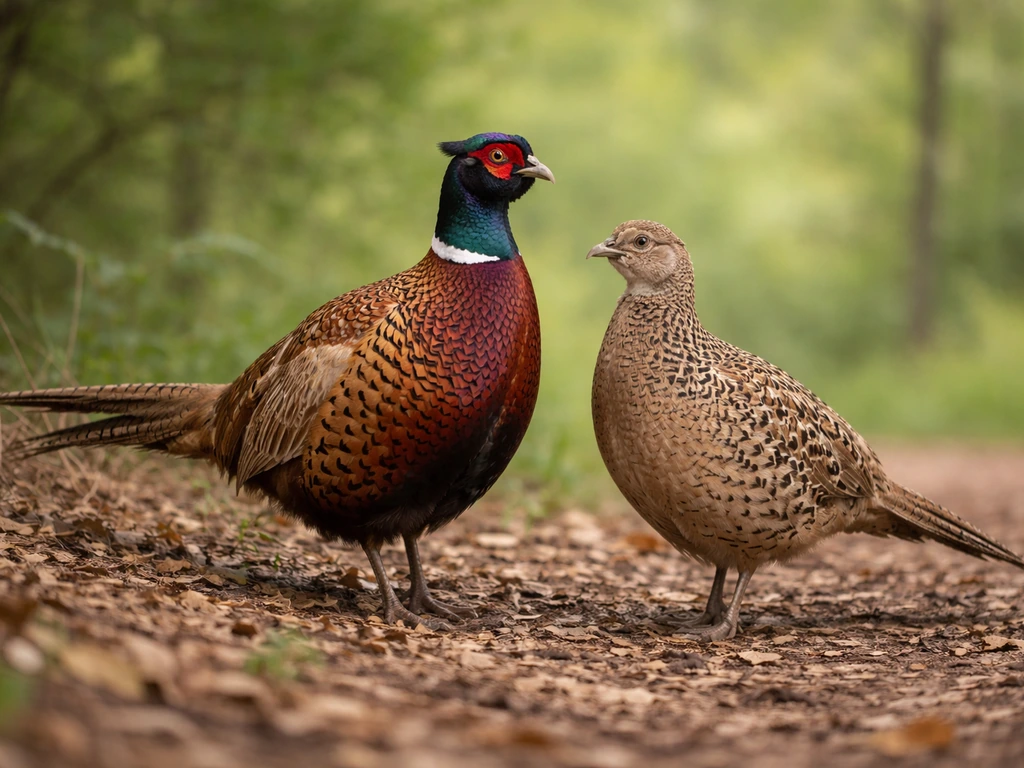
Quick visual snapshot of a pheasant
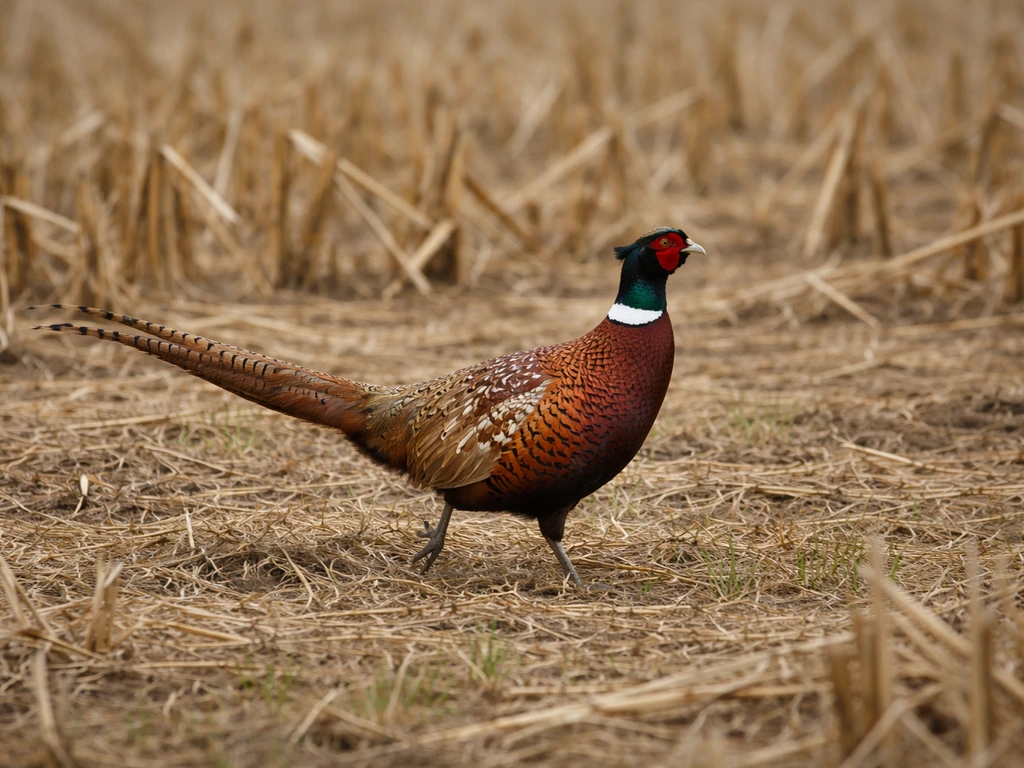
Picture a very large, long-tailed bird strutting through a harvested cornfield or along a weedy roadside ditch. That long tail is the first thing you notice, making up a huge proportion of the bird's total length. The body shape is stocky and rounded, similar to a domestic chicken, but sleeker. The wings are short and rounded, which means pheasants spend most of their time on the ground rather than soaring. When you spot one from a distance, that combination of big body plus dramatically long tail is unlike almost anything else you might see in agricultural or rural landscapes. Even before you get to color or markings, the silhouette alone should put pheasant near the top of your list.
Key identification features: head, body, tail, and legs
Head and neck
On a male (called a rooster), the head is an iridescent greenish-black that can flash blue-green depending on the light. Look for the red, fleshy eye patch, which is bare skin, not feathers, and it tends to look almost swollen around the eye. Just below the head sits the most iconic mark: a crisp white ring circling the neck like a collar. Not every male has a perfectly complete ring, but it's nearly always visible enough to clinch the ID. The rest of the neck glows with that deep blue-green iridescence.
Body
The male's body is a warm, rich copper-brown covered with dark scalloping and spots. The overall effect is busy but beautiful, and in good light the feathers have a burnished, almost metallic sheen. It's a dense, heavy-looking bird, and that stocky build combined with the vivid colors makes roosters genuinely hard to miss. Females, by contrast, are mottled brown and tan throughout, with fine streaks and spots that help them disappear into dry grass and brush. That drabness is intentional: they need to blend in when nesting.
Tail
The tail is the single most reliable structural clue for both sexes. It's long, stiff, and comes to a distinct pointed tip, not a fan shape or a rounded edge like you'd see on a grouse or prairie-chicken. On a rooster, the tail can account for well over half the bird's total length, and it's crossed with thin dark barring. The female's tail is shorter but still pointed and noticeably long for a brown ground bird her size. If you see a bird with a short, rounded tail, it's almost certainly not a pheasant.
Legs and feet
Pheasant legs are sturdy and built for walking. On older male roosters, look for a sharp spur jutting from the back of each leg, sometimes close to an inch long. Younger males have much smaller, barely noticeable spurs. This is a useful detail if you get a close look, though in most field situations you won't need it since the other markings are so obvious.
Male vs female pheasant: what you'll actually see
| Feature | Male (Rooster) | Female (Hen) |
|---|---|---|
| Overall color | Rich copper-brown with iridescent green-blue head | Mottled tan and brown throughout |
| Head | Greenish-black with red eye wattles | Plain brown, no wattles |
| Neck ring | Bold white collar, usually visible | Absent |
| Tail | Very long, pointed, barred; often 20+ inches | Shorter, but still pointed and tapered |
| Size impression | Larger, more imposing | Slightly smaller-looking |
| Leg spurs | Sharp, up to ~1 inch on older birds | None |
| Camouflage | Conspicuous; hard to miss in open habitat | Blends well into dry grass and brush |
In spring, it's common to see one rooster followed by several hens, which gives you a great side-by-side comparison. The rooster walks with his head high and tail held at an angle; the hens look almost like a completely different species by comparison. If you want a quick visual answer to what a Phoebe bird looks like, start by comparing its overall size, wing shape, and the patterning on its head and breast what a Phoebe bird look like. If you only see a dull brown bird with a pointed tail and you're in farm country, female pheasant is a strong first guess. One note worth keeping in mind: hatchery-raised males sometimes have shorter tails than wild birds, so a suspiciously stubby tail on an otherwise colorful male isn't an automatic disqualifier.
Common look-alikes and how to tell them apart
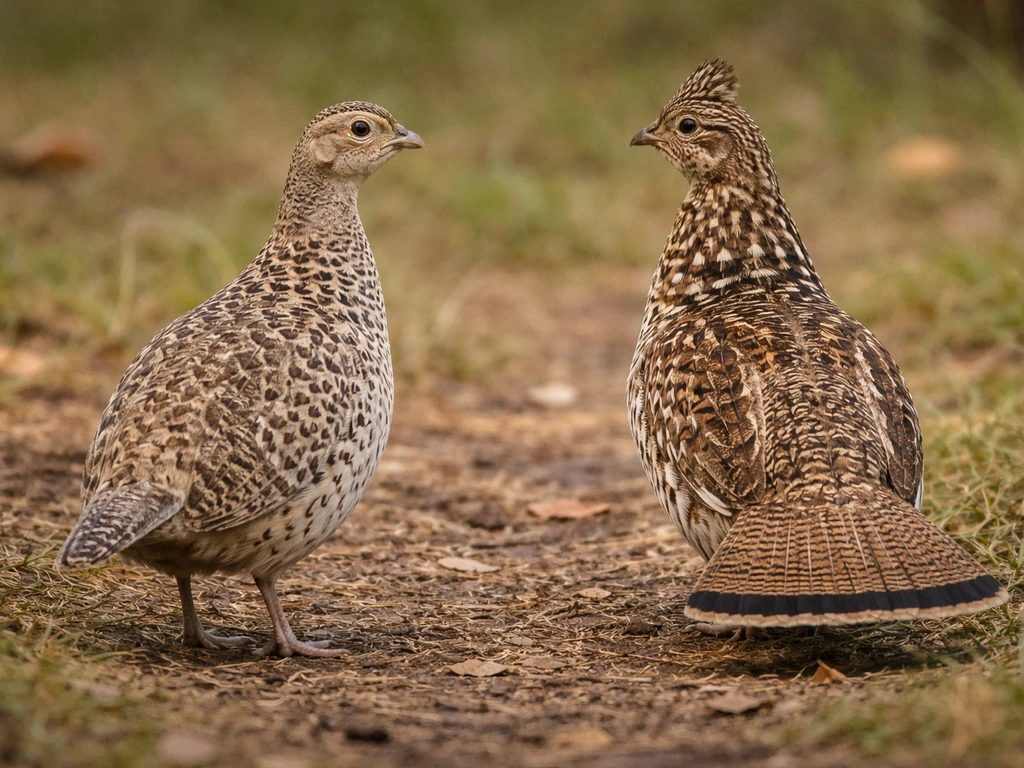
The bird most often confused with a female pheasant is the ruffed grouse or, in open country, a prairie-chicken. The key difference is the tail: both grouse and prairie-chickens have short, rounded or fan-shaped tails, while a female pheasant's tail is clearly pointed and noticeably long. Pheasant tails are a big giveaway in the field, but if you are also curious about small species like "what does a pee wee bird look like," you can use similar silhouette-first thinking to narrow it down. If the tail isn't pointed and tapered, you're probably not looking at a pheasant.
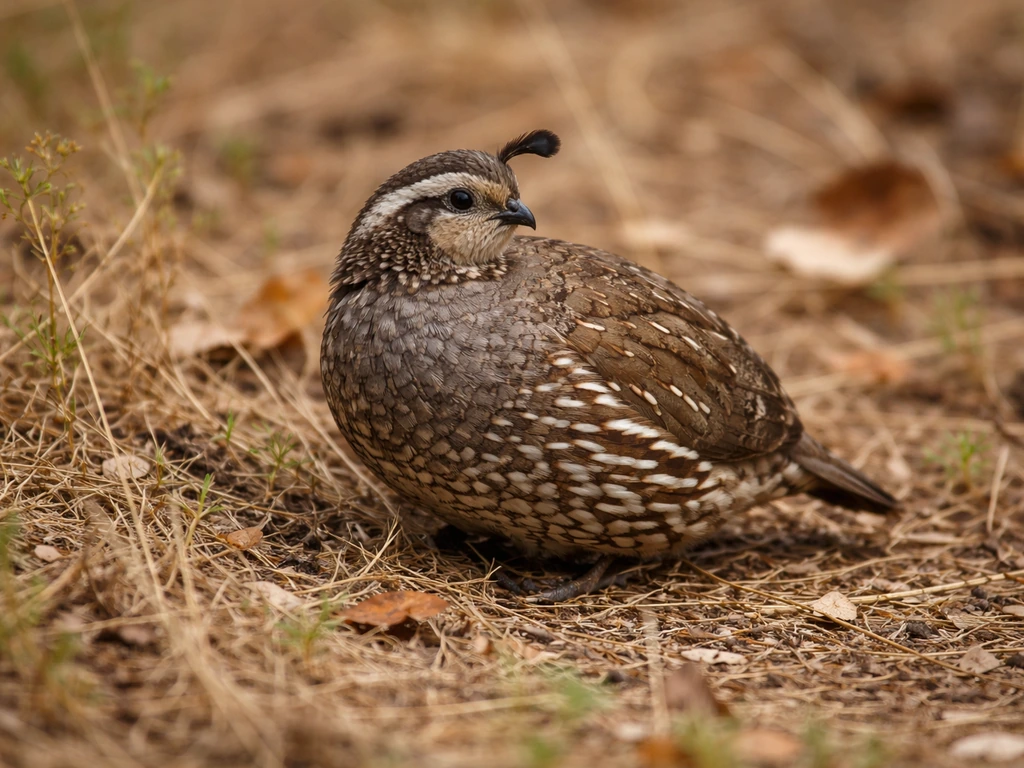
Partridges, including the gray partridge, are another potential mix-up, especially for newer birders. Partridges are considerably smaller and rounder, with very short tails and a more compact profile. Think of a partridge as a pheasant scaled down and stripped of the long tail. Quail are also in this same ground-bird family but are much smaller, more like a tennis ball with legs, and rarely confused with pheasants once you know the size difference. If you've been looking at what a partridge looks like or what a quail looks like, those comparisons will make the pheasant's larger, longer-tailed build stand out immediately.
- Grouse and prairie-chickens: shorter, rounded or fan-shaped tails; stockier proportions; usually in woodland or open prairie rather than agricultural edges
- Partridge: much smaller body, very short tail, no long-tail silhouette
- Quail: noticeably tiny compared to a pheasant, often moves in tight coveys
- Domestic chickens: similar size and shape but lack the long pointed tail and wild coloring; unlikely to be seen in open fields away from a farmyard
- Turkey: far larger and heavier, with a fan tail and naked red head; once seen together there's no confusion
What to look for depending on the setting
In a field or along a roadside
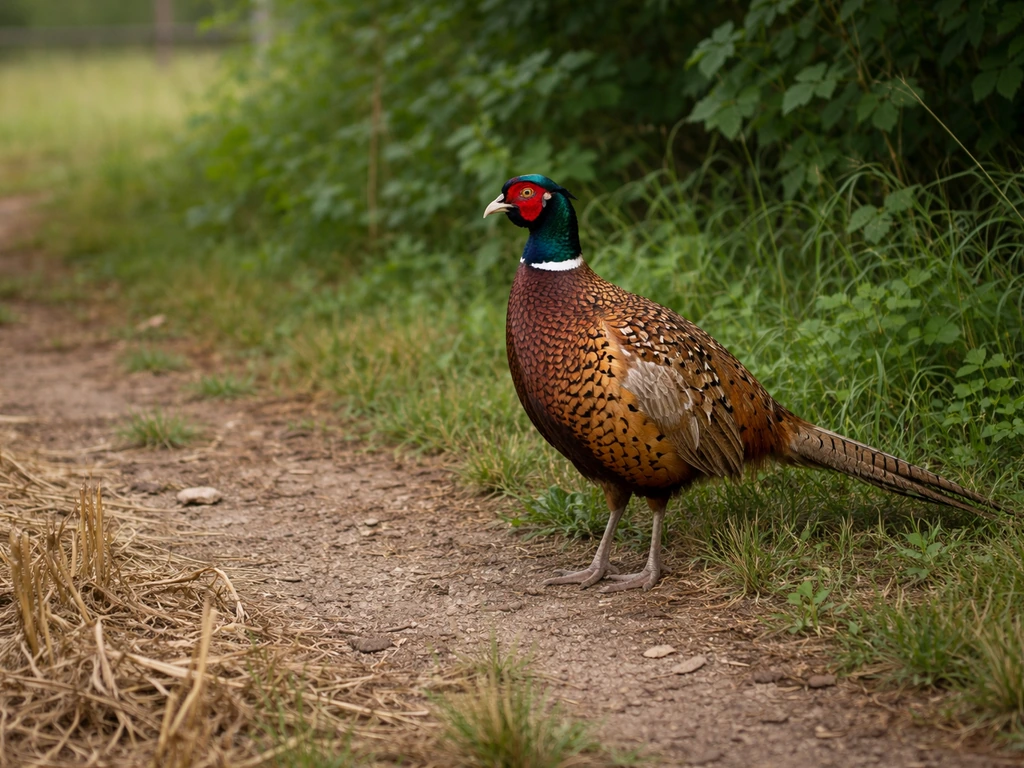
This is the classic pheasant scenario: you're driving a rural road through farmland and catch movement at the edge of a corn stubble field or along a hedgerow. At distance, lead with the silhouette. That long tail dragging behind a rounded, upright body is the first clue. As you get closer, look for the white neck ring on males, which is visible at a surprising distance. Females walking through dry grass can be almost invisible until they move, so watch for that slow, deliberate walking pace and the pointed tail poking up above the vegetation.
In your yard or near brush cover
Pheasants do wander into rural yards, especially in winter near brush piles or feeders set near overgrown edges. Up close, the male is unmistakable: that red eye patch practically glows, and the green neck shimmers even in flat light. For females, focus on size (clearly bigger than any sparrow or grouse hen) and the tail shape. A quail bird is much smaller than a pheasant, with a compact body, short wings, and a rounded head. You might also hear the male before you see him: a sharp, two-note crow followed by a quick, loud burst of wing drumming is a very distinctive sound that narrows your ID before you even get a look.
In flight
Pheasants are reluctant fliers, but when they do flush, they burst upward almost explosively with rapid, whirring wing beats, then quickly lock their wings and glide on a low, arcing path down into cover. That burst-and-glide pattern is very recognizable once you've seen it. In the air, the long tail streams behind the bird, making it look disproportionately long. The short, rounded wings combined with that tail silhouette in flight are as good as a field guide: no other common bird in agricultural North America looks quite like this.
When lighting or distance makes things tricky
Backlit or in low morning light, a male pheasant can lose all that color and just look like a large dark shape with a very long tail. In that situation, fall back on structure: size, tail proportion, and the overall upright posture. A female in bright midday sun can sometimes look more rufous or reddish-brown than you'd expect from a description of 'dull.' The pointed tail stays reliable in any light, so when color fails you, tail shape is your anchor. If you're debating between pheasant and something else based on a blurry or backlit look, the tail length and pointed tip should be your deciding factor, not the color.
FAQ
What should I look for if the pheasant is too far away to see color?
If you can only see silhouette or partial body, look for a stocky, upright ground-bird shape with a very long, stiff, tapered tail (pointed tip) that makes up a large share of the total length. Color and face markings can wash out in backlight, so the tail structure is the deciding feature.
How can I tell male versus female pheasant when colors are hard to see?
Males usually show the bold white neck ring and a bare red eye patch with an iridescent green-blue head. If you see a long, pointed tail on a bird that lacks those conspicuous face and collar features, it is more likely a female, but confirm by checking whether the tail is truly long and pointed rather than short and rounded.
Can a pheasant look “wrong” for its sex because of age or being hatchery-raised?
Yes. Hatchery-reared males can have shorter tails than wild birds, and juveniles of either sex can look duller. If the tail looks stubby on an otherwise colorful male, do not rely on tail length alone, instead compare overall body size, the upright, chicken-like stance, and (for males) the red eye patch or neck ring if visible.
What other birds are most likely to be confused with a female pheasant, and how do I rule them out?
A quick way to avoid a common mix-up is tail shape: ruffed grouse and prairie-chickens typically have short rounded or fan-shaped tails. Female pheasants have a clearly pointed tail and that tail looks noticeably long for a brown ground bird.
How do I distinguish a pheasant from smaller ground birds like quail or partridges at a glance?
Partridges and quail are smaller with much more compact bodies. If the bird you see is closer to sparrow-grouse size, or the tail is barely visible, it is less likely a pheasant. For pheasants, expect noticeably larger size (clearly bigger than small songbirds and typical quail), short rounded wings, and the long pointed tail that sticks up above grass.
I saw a brown ground bird near a feeder, how do I confirm it is a pheasant and not something else?
In yards, roosting spots, and feeder areas, a female can seem nearly invisible because her brown-and-tan pattern blends with dry grass and brush. Use movement and silhouette, watch the slow deliberate walking pace, and confirm that the tail still ends in a pointed tip that rises above vegetation.
Can flight behavior and tail look help confirm a pheasant when I only catch a brief view?
Because pheasants flush reluctantly, their departure can help: they often burst up quickly with rapid wing beats, then settle into a low arcing glide. In flight the long tail streams behind, making the bird look disproportionately long compared with other agricultural birds.
What should I do if lighting makes the pheasant’s colors misleading?
Yes, background conditions can trick you. Backlit males may look like a large dark shape, and bright sun can make females look more reddish than expected. When color is unreliable, prioritize structure, especially tail length with a tapered pointed tip, upright posture, and the overall rounded, chicken-like body with short rounded wings.
What Does a Quail Bird Look Like? ID Guide by Species
At-a-glance guide to quail appearance, face patterns, plumage traits, look-alikes, and how to ID by habitat and photos.