
A phoebe is a small, chunky flycatcher with a big-looking head, brownish-gray upperparts, pale whitish underparts, and a signature habit of pumping its tail up and down while perched. There are three species in North America (Eastern, Say's, and Black Phoebe), but the Eastern Phoebe is the one most people are trying to identify. Once you know what to look for, a phoebe is surprisingly easy to spot: no wing bars, no eye ring, an all-dark bill, and that constant tail-wagging is a dead giveaway.
What Does a Phoebe Bird Look Like? Field ID Guide

Marcus Whitley
8 Jun 2026
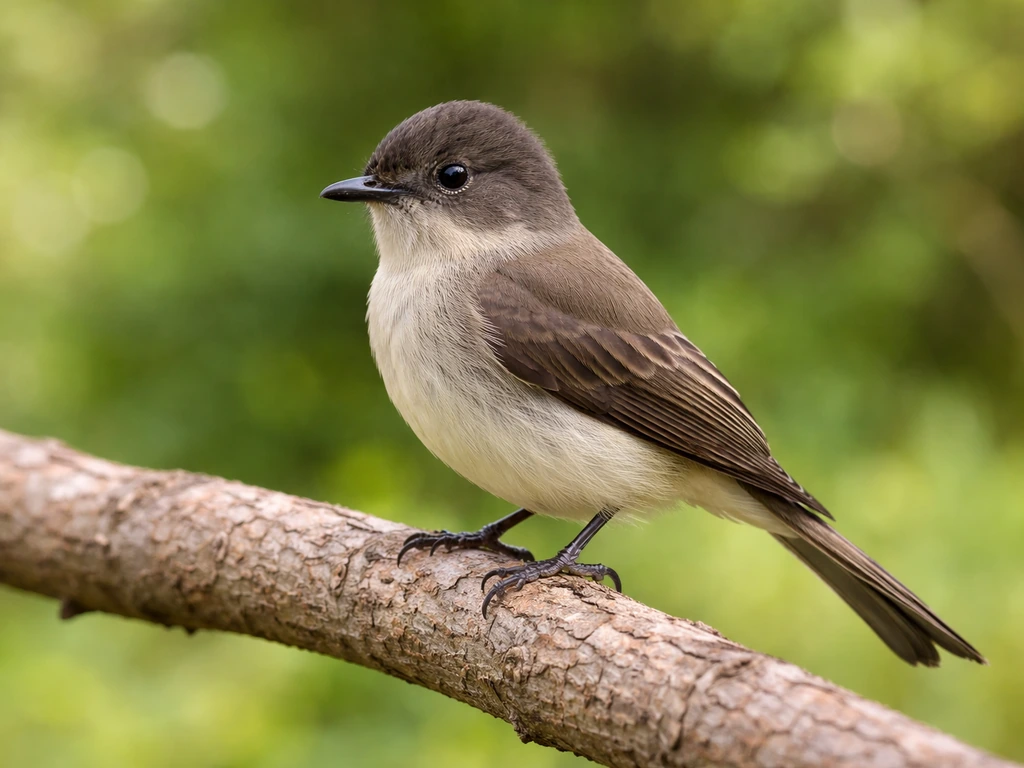
What kind of bird is a phoebe, exactly?
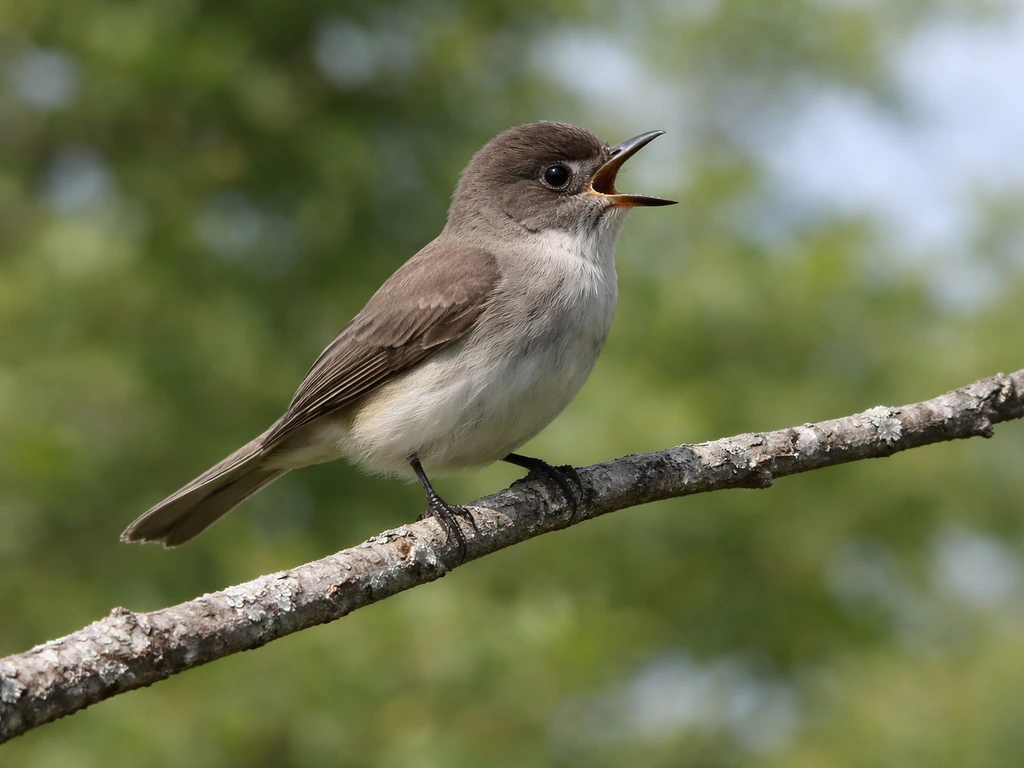
Phoebes belong to the tyrant flycatcher family, a huge group of New World birds known for catching insects on the wing from exposed perches. The three North American phoebes are Eastern Phoebe, Say's Phoebe, and Black Phoebe, all in the genus Sayornis. They are not finches, not sparrows, and not warblers, even though they can look vaguely similar to those groups at a quick glance. Think of them as medium-small, upright-perching insect hunters with plain coloring and very active tails.
If you are in the eastern half of North America and you spotted a plain brownish-gray bird near a bridge or barn that kept bobbing its tail, you almost certainly found an Eastern Phoebe. Pheasants look very different from phoebes, so knowing what pheasant birds look like can help prevent mix-ups when comparing photos Plain brownish-gray bird. If you are out west in open ranch country or prairie, a dusty gray bird with an orange-buff belly is almost certainly a Say's Phoebe. Knowing your general location immediately narrows the ID down. The rest of this guide focuses primarily on the Eastern Phoebe since it is the most commonly encountered, but it covers all three species where they differ meaningfully.
Size and silhouette: what shape is a phoebe?
Eastern Phoebes measure about 5.5 to 7 inches long with a wingspan of roughly 10 to 11 inches, and they weigh less than an ounce. That puts them a bit smaller than a robin but noticeably bigger than a chickadee. Think of them as compact and rounded, with a body shape that looks slightly front-heavy because of the oversized head.
That head is the first thing to notice in silhouette. It looks disproportionately large and often has a subtly peaked crown, almost like the bird is wearing a tiny cap. The tail is medium length and squared at the tip rather than forked or rounded. Eastern Phoebes look blank" rel="noopener noreferrer">plump overall. Say's Phoebes are a bit more slender and longer-tailed, with a barrel-chested, squared-off head that gives them a slightly different silhouette. Both species share the upright posture typical of flycatchers: they sit bolt-upright on a low perch with the tail hanging down, giving them an alert, watchful look.
Plumage colors from head to belly
Eastern Phoebe
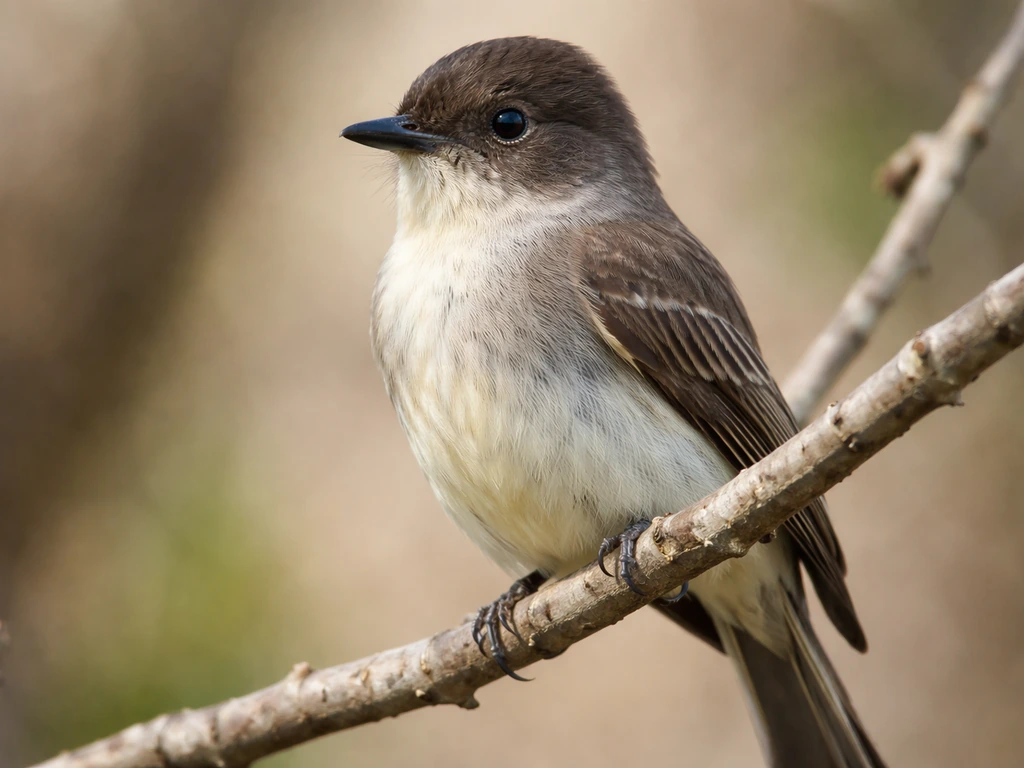
The Eastern Phoebe is the definition of understated. The head is the darkest part of the bird, a deep brownish-gray or dark olive-brown that contrasts gently with the rest of the body. There is no bold eye stripe, no eye ring, and no crest. The back, wings, and rump are a softer brownish-gray, fairly uniform without much contrast. The wings are darker but do not show any distinct wingbars in adult birds. The throat and chest are pale whitish or off-white, sometimes with a faint yellowish or grayish wash on the chest and sides, especially in fresh fall plumage. The belly is white. The overall effect in a photo is a plain, two-toned bird: dark above, pale below.
Say's Phoebe
Say's Phoebe has a warmer, dustier look. The upperparts are soft dusty gray with the darkest area concentrated around the lores and behind the eye, giving the face a slightly masked appearance even though there is no crisp mask line. The chest is gray. The lower belly and undertail coverts are a distinctive pale orange-buff, almost like a faded peach color, which is the easiest visual difference from an Eastern Phoebe at a glance. The tail is notably dark, close to black. Immature Say's Phoebes may show two cinnamon-colored wingbars and cinnamon-tipped feathers on the wings, which can cause confusion if the bird you are looking at is young.
Black Phoebe
The Black Phoebe is the most visually distinctive of the three and the easiest to recognize once you know it. The head, chest, back, wings, and tail are all sooty black. The belly is clean white, creating a sharp black-and-white contrast that is unlike anything else in its range. If you are in the southwestern United States or along the Pacific Coast near water and you see a small black-and-white flycatcher pumping its tail, that is almost certainly a Black Phoebe.
The fastest field marks to check
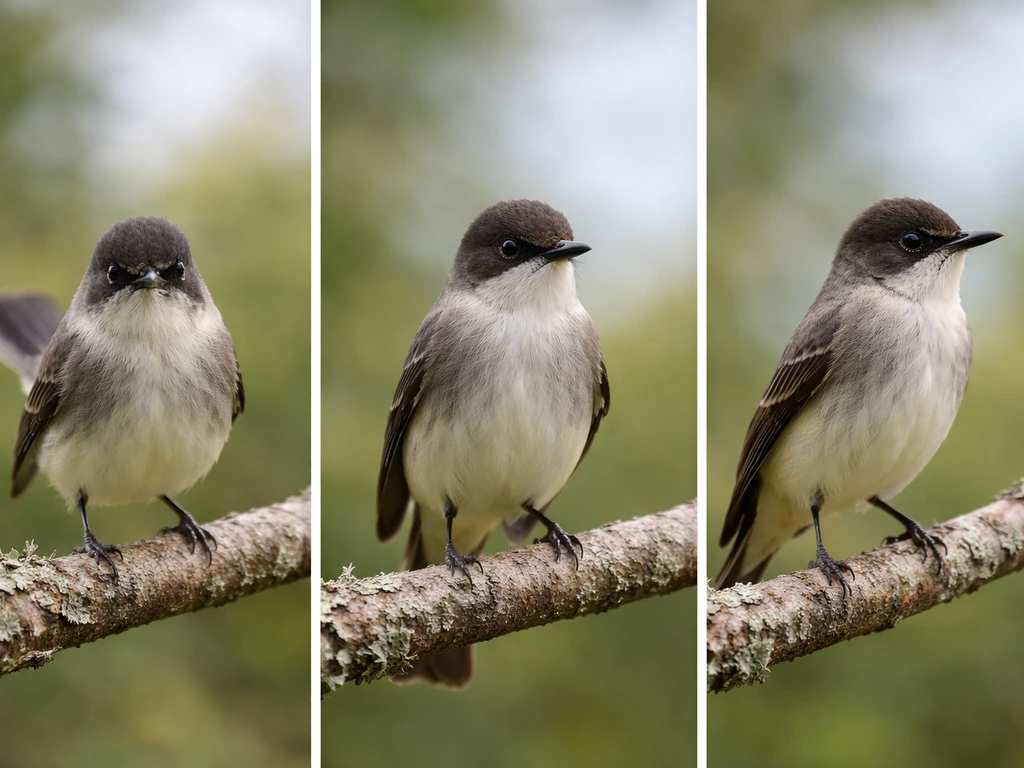
These are the things to look for first when you think you are looking at a phoebe, whether you are in the field or scrolling through a photo on your phone. If you are trying to picture one, a partridge usually appears as a small, round-bodied ground bird with mottled brown and gray plumage partridge bird look like.
- Tail wagging: Phoebes pump their tails repeatedly in a smooth, downward-then-upward motion while perched. This is the single most reliable behavioral field mark. Eastern and Black Phoebes do it constantly; Say's Phoebe does it less frequently but still noticeably.
- No wingbars: Adult Eastern Phoebes have no distinct wingbars. This immediately separates them from most other small flycatchers you might confuse them with.
- No eye ring: Eastern Phoebes lack the white or pale eye ring that many similar-looking flycatchers have. If you see an eye ring, it is not an Eastern Phoebe.
- All-dark bill: The bill is entirely dark, short, and slightly hooked at the tip. There is no pale lower mandible.
- Big head with peaked crown: The head looks oversized for the body, and the crown often has a subtle peak rather than a smooth rounded dome.
- Upright posture on low perches: Phoebes sit in an alert, vertical stance, usually on low exposed perches like fence posts, low branches, bridge rails, or wires.
Common look-alikes and how to separate them
Phoebes share their habitat with several other plain-looking flycatchers, and beginners often get tripped up. Here is a quick comparison of the most likely mix-ups.
| Bird | Wing bars? | Eye ring? | Belly color | Tail behavior | Bill |
|---|---|---|---|---|---|
| Eastern Phoebe | No (adults) | No | White, faint wash | Pumps constantly | All dark |
| Empidonax flycatchers (e.g. Least, Willow) | Yes, usually two clear bars | Usually yes | Pale yellowish or white | Occasional flick, not a pump | Dark above, pale below |
| Eastern Wood-Pewee | Yes, two wingbars | No | Pale whitish | Still, rarely wags | Dark above, pale lower mandible |
| Say's Phoebe | No (adults) | No | Orange-buff lower belly | Pumps, less often than Eastern | All dark |
| Western Kingbird / Yellow-bellied Kingbird | No | No | Bright yellow | Does not pump tail | Heavier, wider bill; dark mask |
The Empidonax group is the trickiest comparison. These are small, plain flycatchers that look very similar to phoebes in a quick glance, but nearly all of them have two visible wingbars and a pale eye ring. If you can see either of those features, you are not looking at an Eastern Phoebe. Eastern Wood-Pewees also have wingbars and tend to sit very still, without the tail-pumping behavior.
Kingbirds are noticeably larger and heavier-billed, and their bright yellow belly color is a clear giveaway in decent light. If someone mentions how a pee wee bird looks, the pewee is a different (though related) flycatcher group worth keeping in mind as a comparison. A peewee bird (often called a pewee) is a different but related flycatcher group with its own distinct look pee wee bird.
Where to look and when to expect one
Eastern Phoebes are one of the earliest spring migrants in eastern North America, often arriving before other flycatchers when there is still a chill in the air. They breed across the eastern and central United States and much of Canada, and they winter in the southeastern US and into Mexico. If it is late February or March and you are seeing a small plain flycatcher near water or a bridge, there is a very good chance it is an Eastern Phoebe before most other flycatchers have even arrived.
Habitat is one of the most useful confirmation clues. Eastern Phoebes love edges: stream banks, forest margins, farmland, parks, and especially anything near water with a bridge, barn, or outbuilding nearby. They historically nested under cliff overhangs, and they have adapted that behavior to human structures so well that they earned old nicknames like 'bridge phoebe.' If you find a small flycatcher perched near a bridge or on the eaves of a barn, the Eastern Phoebe is your first guess.
Say's Phoebes live in the open West: prairies, badlands, desert scrub, and ranch country from the Great Plains to the Pacific Coast. They also nest under eaves and overhangs but prefer the wide-open landscape rather than wooded stream edges. If you are in Arizona or Wyoming and you see a dusty gray flycatcher with a warm orange belly on a fence post, that is a Say's Phoebe. Black Phoebes are almost always near water in the Southwest and along the Pacific Coast, from southern Oregon down through California and into Central America.
Once you know the species, confirming the ID is a matter of matching four things: the plain coloring with no wingbars or eye ring, the oversized-looking head and upright posture, the tail-pumping behavior, and the habitat or geographic location. Get three of those four to align and you can be confident in your identification. The tail wagging alone will save you a lot of guessing in the field.
FAQ
If the tail-wagging is not obvious in a photo, how can I still tell it’s a phoebe?
Yes. First check for the “plain flycatcher” package, no wing bars and no eye ring, plus the all-dark bill and the tail pumping habit. In photos, the tail-wagging can be captured as a blur or angled tail, so use posture and head size as backup clues when the motion is unclear.
Can young phoebes look different from adults, and what should I watch for?
Juveniles, especially of Say’s Phoebe, can show cinnamon or warm wing accents, which may look like wing bars. If you see any wing bars, re-check for an eye ring and bill color, and also use location and the belly tone, an Eastern Phoebe will not have the orange-buff lower belly that stands out in Say’s.
What’s the most reliable detail to check if the bird looks plain in a bad lighting photo?
Look at the bill and face pattern in the same frame as the bird’s body. A phoebe has an all-dark bill and no obvious eye ring or eye stripe. If the bill looks pale, or there is a distinct pale eye ring, it likely points you toward Empidonax rather than phoebes.
How do I separate Eastern vs Say’s phoebe when both seem plain brownish-gray?
Eastern Phoebe and Say’s Phoebe can be confused because both lack bold markings, but geography usually settles it. If you are in the open West, a dusty gray bird with a warm orange-buff belly is much more likely Say’s Phoebe, while Eastern Phoebe is more expected around stream edges, bridges, and barn eaves in the East.
What if I can’t clearly see the black-and-white contrast for Black Phoebe?
Black Phoebe is easiest when you can see the strong contrast, sooty black above and a clean white belly. If the bird is too far away or overexposed, focus on silhouette and behavior first (small flycatcher with tail pumping), then confirm with the black-and-white pattern once you get a clearer view.
How much does habitat matter for confirming a phoebe ID?
Use habitat, not just the bird itself. Empidonax species and other small flycatchers may be present in similar places, but phoebes strongly favor edges near water and human structures like bridges or barns for Eastern Phoebes, and open ranch or scrub edges for Say’s Phoebes.
If I only saw the bird once and it didn’t pump its tail, should I still ID it as a phoebe?
Yes. If you only see a single perching moment without feeding behavior, it can still be a phoebe, but confirmation is weaker. Try to observe whether it performs repeated tail pumps from a low perch, catches insects on the wing, or returns to the same perches near water or structures.
What are the common mistakes people make when they misidentify phoebes?
Watch for wing bars and eye ring, they are common “stop signs” for phoebe. In many similar-looking flycatchers, wing bars are visible when the bird opens its wings even briefly, so check closely during any flutter or wing stretch.
Could a phoebe be mistaken for a sparrow or warbler, and how do I avoid that?
Phoebes are often easiest to detect from a distance because they look front-heavy with a large-looking head and upright stance. If your bird looks more rounded like a small sparrow and lacks the tail-pumping behavior, it is less likely a phoebe even if the color is similar.
Does the time of year change which phoebe I should expect to see?
When you are near water in late winter or early spring in the eastern half of North America, a small plain flycatcher with tail pumping is a strong early-migrant signal for Eastern Phoebe. If it’s much later in spring or you are in the West, shift your expectation to the species that fits the region and belly tone.
Next Articles
What Does the Phoenix Bird Look Like and What Is It
No real species called phoenix. See classic fiery bird details and learn real bird lookalikes to identify by color, cres
What Does a Herring Bird Look Like? Herring Gull ID Guide
Learn what a herring bird likely is: clear herring gull ID guide with key marks, plumage differences, and lookalike comp
What Does a Hawk Bird Look Like? Key Field Marks to Spot
Learn key field marks for spotting hawks, compare to eagles falcons buzzards, and confirm with photos and angles.