A partridge is a plump, round-bodied ground bird that looks a bit like a small chicken, roughly the size of a pigeon or slightly larger. It has a short tail, a small rounded head, and stubby legs built for walking rather than perching. The exact colors depend on which species you're looking at, but most partridges share a warm earthy palette of browns, grays, and rufous tones, often with bold face markings and streaked or barred flanks that make them surprisingly striking up close.
What Does a Partridge Bird Look Like? Key ID Features

Marcus Whitley
10 Jun 2026
What "partridge" actually means (it depends where you are)
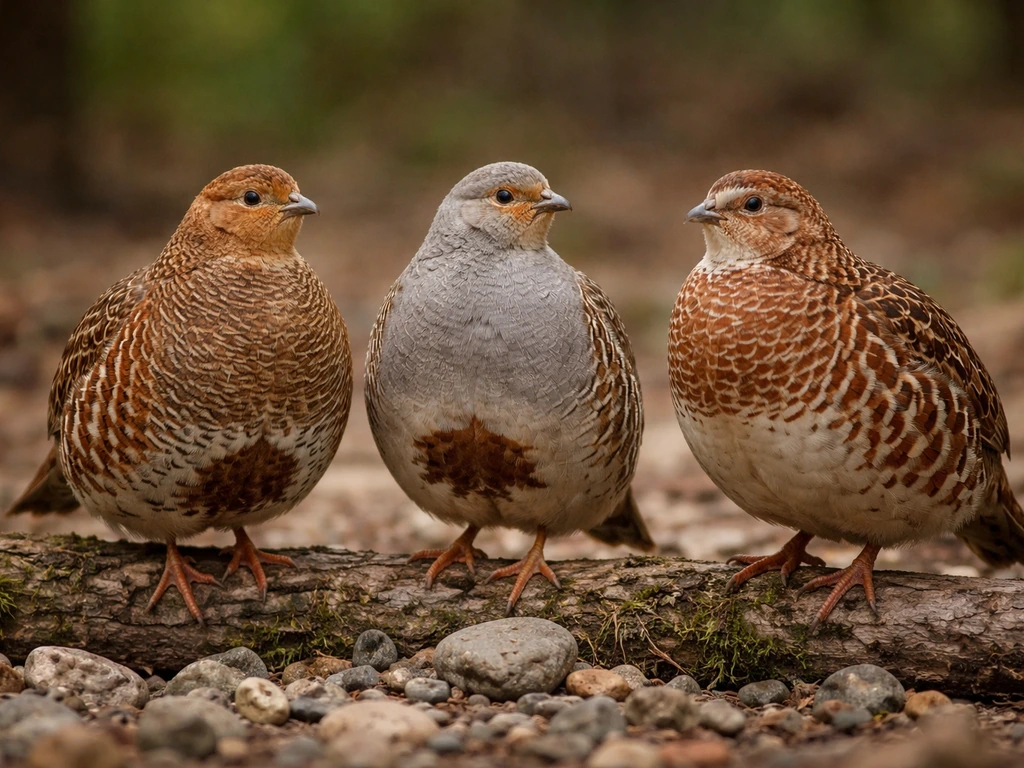
Before diving into what one looks like, it's worth knowing that "partridge" means different birds to different people, and that confusion trips up a lot of would-be identifiers. In the UK and Europe, the two birds most commonly called partridges are the Grey Partridge (Perdix perdix) and the Red-legged Partridge (Alectoris rufa). The Red-legged is actually an introduced species in Britain, brought over from continental Europe, but it's now extremely common and often the first bird people encounter when they say they've seen "a partridge." In North America, the bird most people call "partridge" is usually either the introduced Gray Partridge (the same Perdix perdix that Europeans know), the Chukar (often called Chukar Partridge), or even the Northern Bobwhite, which old-timers across the American South and East have long called "partridge" despite it being a quail. Britannica notes that the Grey Partridge was specifically nicknamed the "Hungarian Partridge" or "hun" in North America after its introduction. So if someone says they saw a partridge, the first question is always: where did they see it?
The overall look: size, shape, and first impression
All true partridges share the same basic blueprint. Cornell's All About Birds describes the Gray Partridge as "a plump, chickenlike bird with a rotund body, small head, and short tail," and that description applies across the family. These are not sleek birds. They look almost inflated, with a rounded belly that sits close to the ground and wings that seem slightly too short for the body. The tail is notably stubby and is often held low or cocked slightly when the bird is alert.
For size reference, the Red-legged Partridge measures about 32 to 34 cm in length and weighs 400 to 550 g, making it noticeably bigger than a blackbird but smaller than a typical farmyard chicken. The Gray Partridge runs slightly smaller, at around 30 to 33 cm long. Either way, when you see one in a field, your first impression is a chunky, ground-hugging bird that walks with a purposeful strut and explodes into low, fast flight when startled.
Head-to-tail plumage: what to look for
Grey Partridge
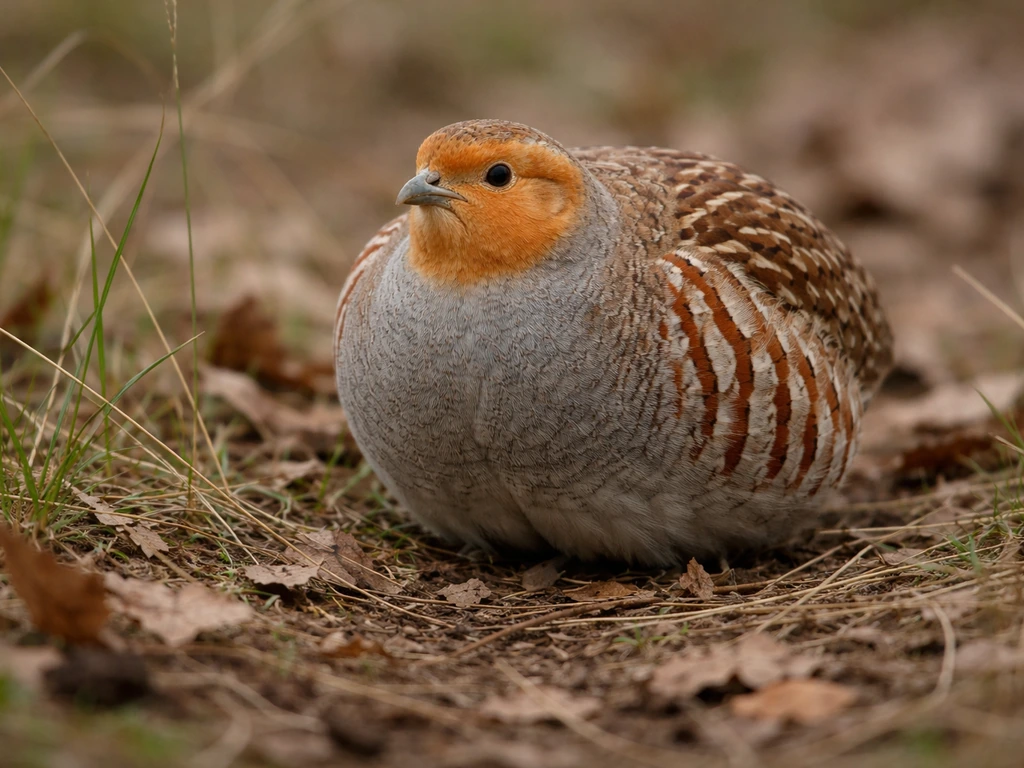
The Grey Partridge has an orange-buff face that almost glows against the rest of its muted body. The crown and back are a warm streaky brown, and the breast is pale gray, which is where the name comes from. The most eye-catching feature on an adult male is a dark chestnut-brown horseshoe-shaped patch on the lower belly, sitting right in the center of that pale gray chest. The flanks are barred with rufous-chestnut streaks. In flight, you'll catch a flash of chestnut-orange on the outer tail feathers, which is one of the quickest ways to confirm what you're looking at.
Red-legged Partridge
The Red-legged Partridge is arguably the more striking of the two UK species. Look for a large white chin and throat patch bordered by a thick black gorget that breaks up into bold black streaks across the upper chest. The upperparts are sandy-brown, the breast is pale gray, and the belly warms to a pinkish-buff. The flanks are where this bird really stands out: bold black-and-rufous bars run down the sides in a way that looks almost painted on. The bill is bright red, the legs are red, and there's a red eye ring that catches the light. If you see red legs in the field, that's your single fastest confirmation.
Chukar Partridge
The Chukar shares the same chunky build but has its own unmistakable face pattern. A bold black band sweeps across the forehead, runs through the eyes, and loops around the throat to form what Audubon describes as a distinctive "necklace," enclosing a clean white-to-creamy cheek and throat patch inside it. The upperparts are sandy-brown, the breast is gray, and the belly is warm buff. Like the Red-legged Partridge, it has red legs and a red bill, and the flanks show similar bold black-and-chestnut barring. In flight, look for the short square tail with chestnut outer feathers.
Males, females, and juveniles: how different can they look?
Audubon notes that Gray Partridge sexes are similar in overall coloring, which is good news if you're trying for a quick ID. That said, the details matter. The GWCT's identification guide points out that male Grey Partridges typically have a brighter, more intensely orange-buff face, and that in the hand the male shows more reddish bare skin around the eye. The horseshoe belly patch on the male is usually larger, more complete, and a richer chestnut-brown than on the female, whose horseshoe may be smaller, broken, or nearly absent.
For sexing Grey Partridges in the field or in the hand, GWCT uses the concept of the "Cross of Lorraine" pattern on the wing coverts, where the exact shape and color of the feather centers differs between males and females. It's a subtle detail that requires a good look, but the broader principle is that males tend to look slightly bolder and more saturated than females across most partridge species.
Juveniles are considerably drabber than adults. Young partridges are brownish and heavily streaked overall, with no clear belly patch, no bold face markings, and a generally "unfinished" look. If you see a partridge-shaped bird that looks washed out and heavily streaked without any bold color blocks, you're likely looking at a juvenile or a bird in early moult. They also tend to move in coveys (family groups) with adults, which can help narrow down the ID.
Birds you might confuse with a partridge
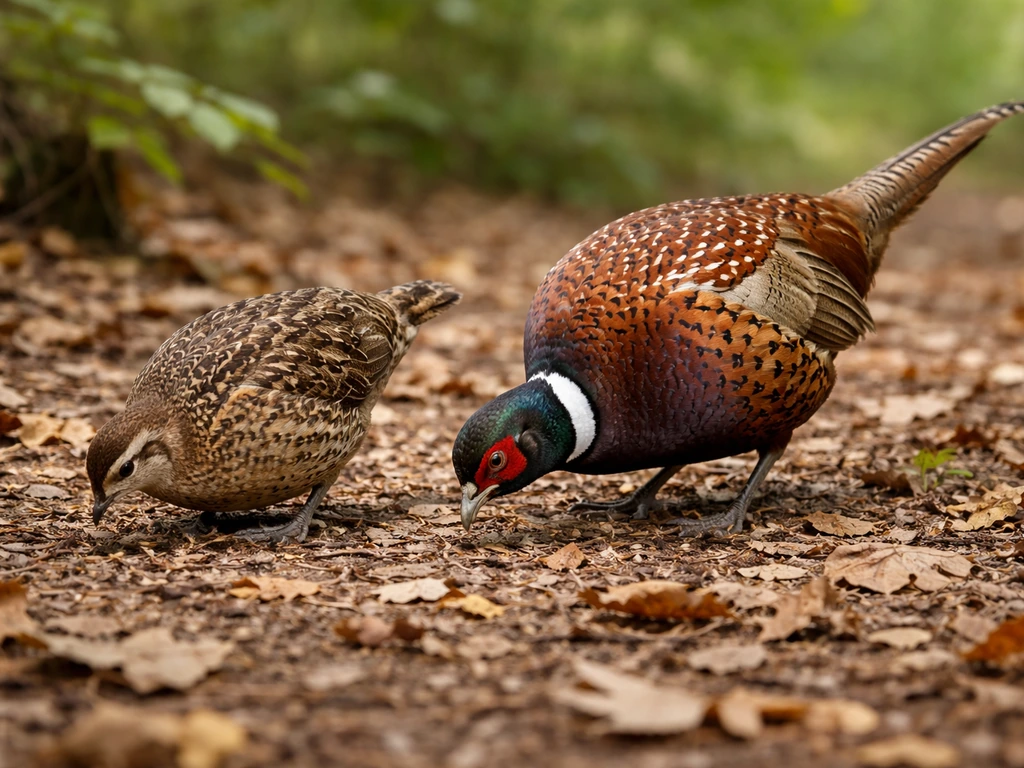
Partridges are regularly confused with several other ground birds, so it helps to know the key separation points before you head out.
| Bird | Key difference from partridge | Quick check |
|---|---|---|
| Pheasant | Much larger and longer-tailed; males have iridescent green head and long copper tail | If the tail is longer than the body, it's a pheasant |
| Quail (Coturnix/Bobwhite) | Noticeably smaller, more compact; Northern Bobwhite has bold head stripes | Smaller than a partridge, head markings more striped |
| Chukar vs Red-legged Partridge | Very similar; Chukar's black necklace is a clean enclosed loop; Red-legged has a streaked gorget that breaks up | Check whether the throat border is a solid band or streaked |
| Francolin | More upright posture, longer legs, often with spotted or scaled underparts | Francolins look lankier; partridges look rounder and shorter-legged |
| Woodcock/Snipe | Much longer bill, cryptic streaked pattern, found in wetter habitat | If it has a long bill, it's not a partridge |
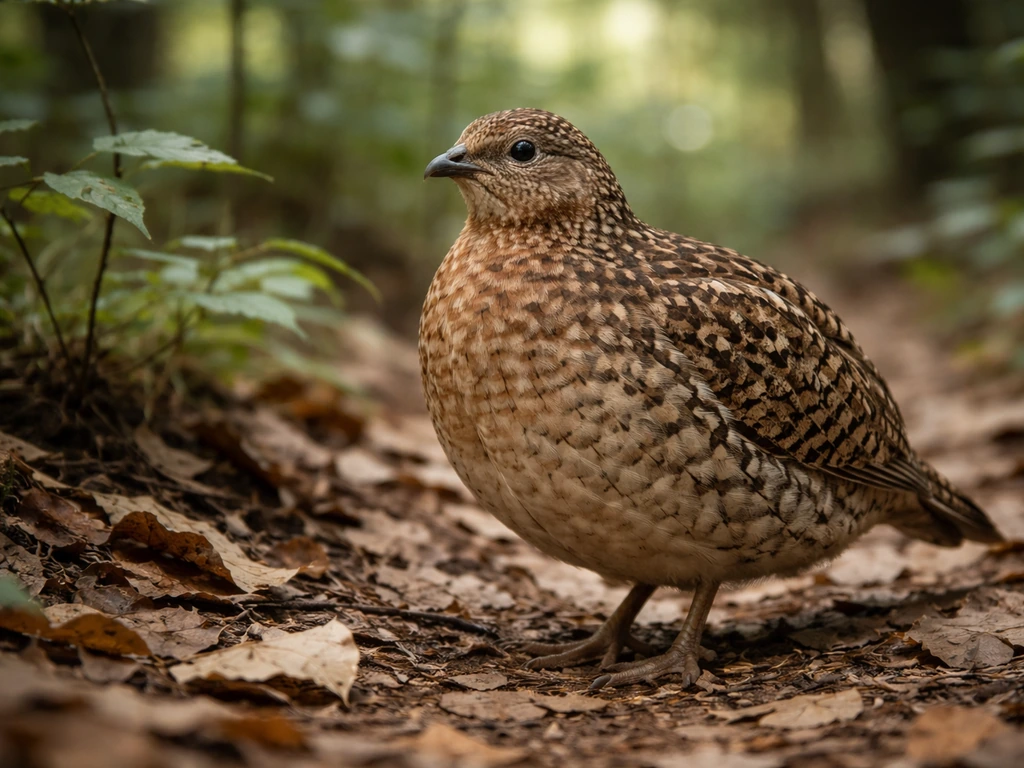
Pheasants are the most common mixup in the UK and Europe, but size alone usually sorts that out quickly. A pheasant is dramatically longer, and males are unmistakably colorful. For quail comparisons, it's worth noting that quail and partridge are close relatives, and their general shape is similar. For quail comparisons, it's worth noting that quail and partridge are close relatives, and their general shape is similar what does a phoebe bird look like. Quail birds are smaller and often have more obvious facial patterning, so learning what a quail looks like can help you tell them apart quickly quail and partridge. The partridge is simply larger and stockier. If you're in North America and someone insists the "partridge" they saw looked like a small striped quail, they may well be describing a Northern Bobwhite.
Where to look: habitat and range as your second confirmation
Habitat is one of the most reliable secondary confirmation tools for partridge ID. All true partridges are ground birds that prefer open or semi-open landscapes. In the UK and Europe, you'll find Grey Partridges in farmland, arable fields, and hedgerow edges, often in small family groups called coveys. The Red-legged Partridge overlaps with that range but also tolerates drier, stonier terrain and is common on managed shooting estates. Audubon notes that Gray Partridge nests on the ground, often under hedgerows, shelterbelts, or brushy roadsides.
In North America, the Gray Partridge was introduced and is now established across the northern Great Plains and Prairie provinces of Canada, particularly in agricultural areas. The Chukar was introduced to the western US and is now found in rocky, arid hillsides, canyon edges, and sagebrush slopes, particularly in states like Utah, Nevada, Idaho, and Oregon. If you're in rocky desert terrain in the American West, the Chukar is by far the most likely "partridge" you'll encounter. Geography alone can narrow your ID significantly before you even raise your binoculars.
Quick field checklist and next steps
When you spot a partridge-type bird, here's what to focus on in order of usefulness:
- Overall size and shape: Is it plump and round with a short tail? That's your first confirmation it's a partridge-type bird rather than a pheasant or quail.
- Leg and bill color: Red legs and a red bill immediately point to Red-legged Partridge or Chukar. Grey Partridge has dull yellowish-gray legs.
- Face pattern: Look for the orange-buff face of the Grey Partridge, the bold white throat with a streaked black gorget on the Red-legged, or the enclosed black necklace on the Chukar.
- Belly: Does the bird have a dark horseshoe patch in the center of the chest (Grey Partridge)? A pinkish-buff belly below a gray breast (Red-legged or Chukar)?
- Flanks: Bold black-and-rufous bars on the flanks are a strong indicator of Red-legged Partridge or Chukar.
- Tail in flight: A flash of chestnut-orange on the outer tail feathers during flush is typical of Grey Partridge; a short square tail is typical of Chukar.
- Location and habitat: Are you in UK farmland, American prairie, or western rocky terrain? Let geography narrow your options before committing to an ID.
For photo confirmation, try to get shots from three angles: a side view of the flanks and tail, a front-on view of the breast and belly pattern, and if possible a head shot to capture the face markings and bill color. These three angles together will give you everything you need to match your bird against reference images. The WAFWA management guidelines also discuss practical chukar versus gray partridge identification, including chukar wing length measurements of 146, 180 mm blank" rel="noopener noreferrer">wing length of 146–180 mm. A pee wee bird typically looks like a small, slim bird with a grayish-brown body, a pale belly, and subtle markings reference images. Apps like Merlin (Cornell Lab) are excellent for comparing your photo against known partridge species, and they'll also flag if what you photographed is more likely a quail, a pheasant, or one of the other gamebirds that share the same general look. Partridges are rewarding birds to identify once you know the key traits, and once you've seen one well, the silhouette alone will bring them back to memory every time. The phoenix bird look varies by source, so descriptions of its size, plumage colors, and form can differ a bit from account to account what does the phoenix bird look like.
FAQ
If I see a “partridge-shaped” bird from far away, what are the quickest traits to check first?
In most cases, the fastest clue is the “ground bird” silhouette, chunky body, short tail, and walking legs. For actual species ID, combine 1) face/bill color (especially the red bill and red eye ring of Red-legged and Chukar) with 2) flank patterning (barred or streaked) and 3) whether you see a stubby tail flashed in low, quick takeoff flight.
Why does my partridge look different from photos, and could it be a juvenile or molting bird?
Yes, timing matters. Adults show bold face blocks and, for Grey Partridge males, the more complete horseshoe belly patch. Juveniles and birds in early moult look washed out, so focus on structural cues (round body, short tail, low ground-hugging posture) and avoid relying only on belly patch or face contrast.
How do I avoid being thrown off by lighting and color variation when identifying a partridge?
Lighting can make “warm” patterns look faded or gray. If the bird looks more subdued than expected, try to match features that are less affected by color cast, like the presence of strong barring on the flanks, the short square tail in Chukar, and the overall plump, slightly inflated body shape held low to the ground.
What if I can’t clearly see the bill or legs, can I still confirm Red-legged Partridge versus Chukar?
Yes. Many people mix up “red” field marks with distance. On Red-legged Partridge and Chukar, the red bill and red legs tend to be the most reliable fast confirmation, especially when you can see the bill or the legs clearly as it walks. If those aren’t visible, flanks and face patterning become more important.
Can I tell male versus female Grey Partridge from a typical field photo?
For Grey Partridge specifically, sexing from photos is difficult. Use the idea from the wing covert pattern and the male’s typically brighter, more intensely orange-buff face, but the most dependable sex cues come from close views where the horseshoe belly patch completeness and intensity can be assessed.
What are the most common “false partridge” lookalikes, and how do I quickly rule them out?
If the bird is more slender and more obviously patterned around the head and neck, don’t assume partridge. Compare size and tail shape first, then check for a pheasant-like longer body and tail, or quail-like overall smaller proportions and more distinct face contrast. If it’s in the American South/East and smaller with a “partridge” common name, consider Northern Bobwhite as a likely mixup.
If “partridge” is reported by a friend, how much should geography guide my ID?
Use location as a primary filter. UK and Europe sightings are most likely Grey Partridge or Red-legged Partridge (the Red-legged is introduced there). In the American West rocky, arid terrain, Chukar is usually the “partridge” people mean. On the northern Great Plains, introduced Grey Partridge is a common candidate.
How can covey behavior make identification harder, and what should I do in the moment?
Yes, you can. Takeoffs from coveys can be confusing because different birds may flash different flank or belly markings. Re-check whether multiple birds show the same face pattern and flank barring, and if possible watch how the group moves after landing (many partridge-type birds keep to ground cover and form small family groupings).
What photo angles give the highest chance of correctly identifying a partridge?
For photos, avoid only getting one angle. The most useful set is side view (flanks and tail), front view (breast and belly pattern), and a head shot (face markings and bill color). If your images don’t include those angles, plan a second attempt when the bird pauses or walks.
Is Merlin (or other bird ID apps) reliable for partridge ID, and how should I verify its suggestion?
Apps can help, but they may group “partridge-like” birds together or prefer quail or other gamebirds when image resolution is low. If your image clearly shows red legs or red bill (Red-legged Partridge or Chukar), or clear strong black-and-rufous flank barring, use those specific traits to override a vague app result.
Next Article
What Does a Phoebe Bird Look Like? Field ID Guide
Learn what a phoebe bird looks like, field marks, and how to tell phoebes from similar flycatchers.