
A sleeping bird typically looks puffed up and still, often perched with one leg tucked against its belly, its head rotated and nestled into the feathers of its back or shoulder, and its eyes fully or partially closed. That combination of fluffed feathers, tucked head, and total stillness is usually enough to tell you a bird is asleep rather than simply resting. Once you know what to look for, sleeping birds are surprisingly easy to spot in the field.
What Does a Sleeping Bird Look Like: Visual ID Guide

Marcus Whitley
15 Jul 2026
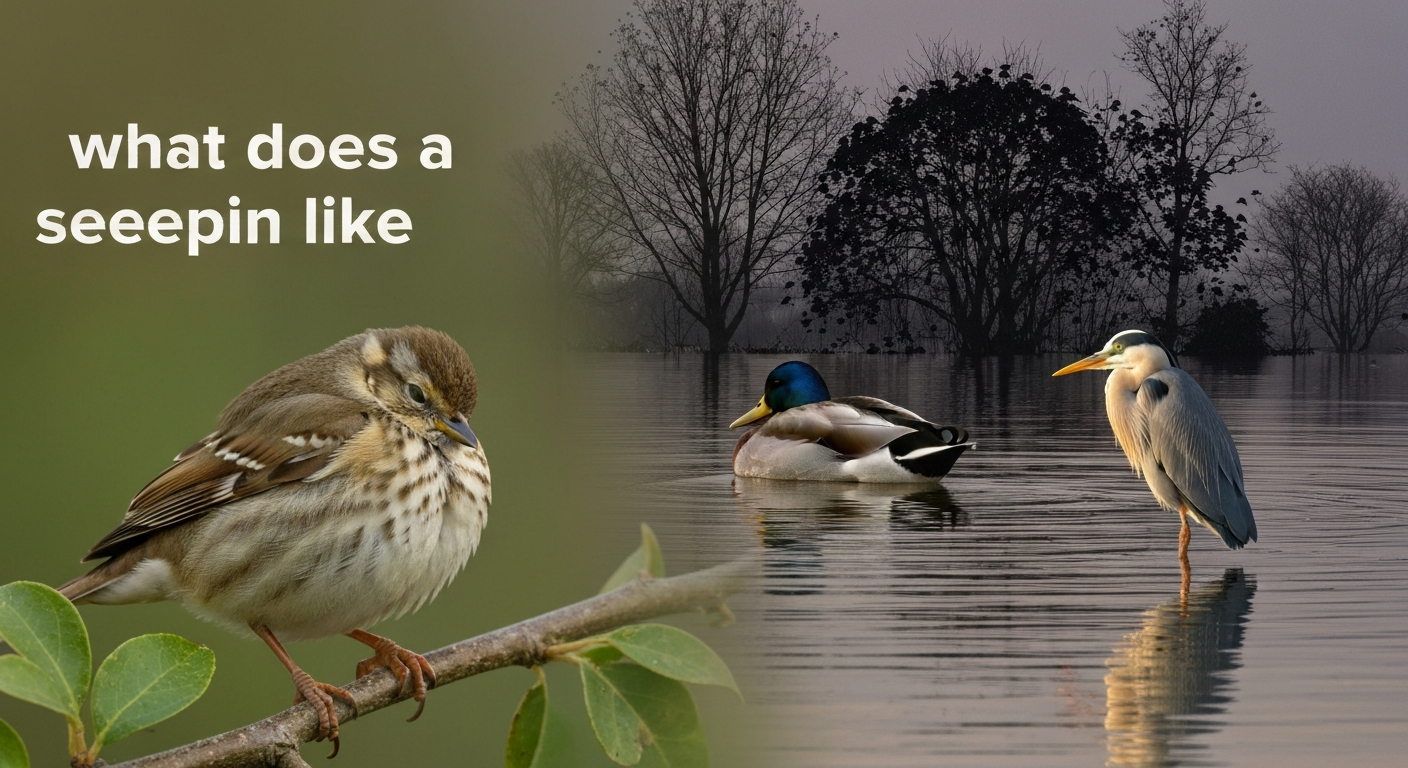
What This Guide Covers
This guide walks you through every visual cue that signals a bird is asleep, from the most obvious postures to the subtle differences between species. You'll learn how storks, starlings, nightingales, snipes, and nestlings each sleep differently, how to tell a nocturnal sleeper from a daytime one, and how communal roosts look compared to a single bird dozing alone on a branch. There's also a practical section on distinguishing a sleeping bird from an injured or dead one, plus tips on how to observe and photograph sleeping birds without causing any disturbance.
Why Knowing What a Sleeping Bird Looks Like Actually Matters
Most birdwatching guides focus on active, alert birds. But if you spend any real time outdoors, you're going to come across a bird that isn't moving and you'll wonder what's going on. Is it sleeping? Is it sick? Is it dead? Being able to read a sleeping bird's posture quickly and confidently means you won't disturb a perfectly healthy roosting bird out of misplaced concern, and it also means you'll actually recognize when a bird does need help. It's one of those field skills that feels small but changes how you see birds entirely.
The Key Visual Cues That Tell You a Bird Is Sleeping
No single feature confirms a bird is asleep. What you're looking for is a cluster of cues that appear together. Here are the five you'll encounter most often.
Eye Closure (and the One-Eye-Open Trick)
Full, sustained eye closure is the most obvious sign, but it's not always what you see. Many birds, especially those exposed to predators, sleep with one eye open and one eye closed. This is called unihemispheric sleep, where one half of the brain rests while the other stays alert. Mallard ducks are a well-documented example. If you spot a perched bird with one eye shut and one open, staring blankly at nothing in particular, you're very likely looking at a bird in a light sleep. At typical birdwatching distances, though, eye state can be hard to read clearly, especially in low light or at an angle. Field observation guides note that head‑tucking and overall stillness are more reliably visible than subtle eye‑state at common viewing distances and oblique angles (Roosting Behavior, ScienceDirect Topics (field behaviour synthesis)) Roosting Behavior — ScienceDirect Topics (field behaviour synthesis). Don't rely on it alone.
Head-Tucking
This is probably the single most reliable visual cue you'll see from a distance. A sleeping bird will rotate its head backward and bury its bill into the feathers of its upper back, nape, or shoulder. The bird's head seems to almost disappear into its body. This posture conserves heat by keeping the bill and face covered and is so consistent across species that if you see it, you can be fairly confident the bird is roosting or asleep. It's especially obvious in larger birds like herons and ducks, but you'll see it in small garden birds too.
Feather-Fluffing
A sleeping bird often looks noticeably rounder and puffier than an alert one. Birds fluff their feathers to trap warm air close to their skin, which is especially important during cold nights. A small garden bird that looks twice its normal size, perched without moving, is often asleep. That said, a fluffed-up bird can also be a sick one, so you should always look at the full picture. A healthy sleeping bird will be alert and responsive the moment you get too close. A sick or cold bird may stay fluffed and still even when approached.
One-Leg Perching
You'll often see perching birds standing on one leg with the other tucked up into their belly feathers. This is made possible by a tendon-locking mechanism that lets the bird grip a perch automatically without any muscular effort, so it won't fall even in deep sleep. One-leg perching combined with head-tucking is a very strong indicator that you're looking at a sleeping bird rather than a resting one. Waterbirds like flamingos and herons are famous for it, but even small songbirds do the same thing.
Overall Stillness and Relaxed Posture
An alert bird is constantly making small movements: shifting its weight, scanning around, flicking its tail, adjusting its grip. A sleeping bird is remarkably still. Its posture droops slightly rather than holding the upright, tense shape of an alert bird. The body looks relaxed rather than coiled. Time of day matters a lot here too. A motionless, droopy bird in deep cover at dusk or perched in a sheltered spot at dawn is almost certainly asleep. Context plus posture is almost always enough to make the call.
Common Sleeping Postures and What They Look Like
Upright Perch Sleeping
This is the most familiar sleeping posture and what most people picture when they think of a bird asleep. The bird stands on a branch or wire, grips with both feet or tucks one leg up, and may or may not tuck its head. From a distance it can look like an alert bird that just isn't moving. The key difference is the slight drooping of the body and the total absence of scanning or reactive movement. Garden birds like sparrows and robins sleep like this, usually tucked into dense hedges or ivy where they're sheltered from wind and hidden from predators.
Head-Tucked Sleeping
This is the classic sleeping bird silhouette: a rounded, featureless shape on a branch with no visible head. The bill is buried so deeply into the back feathers that the bird's outline looks more like a ball than a bird. You'll see this most often in ducks resting on a bank, herons hunched at the water's edge, and pigeons on ledges. It's one of the easiest postures to photograph because the bird's rounded shape is distinctive even in low-light conditions or at a distance.
Sprawled or Sunning Posture (Not Always Sleep)
Some birds, particularly ground-nesting or open-country species, do occasionally sleep lying flat or sprawled. This is more common in nestlings and fledglings than in adults, and in adults it can sometimes be misread as injury. A healthy bird lying flat on warm ground in sunlight is usually sunbathing rather than sleeping. A bird lying flat and unresponsive is more likely to be in trouble. The distinction comes down to muscle tone and responsiveness, which the next section covers in detail.
Communal Roost Sleeping
When dozens, hundreds, or even thousands of birds settle together to sleep, the visual effect is completely different from a single bird on a branch. At a communal roost, you'll see a dense, motionless cluster of birds packed into trees, reedbeds, or the rafters of a building. The mass appears dark and static from a distance. Individual postures blend together. This is the roosting style of starlings, rooks, and some gull species, and it's one of the most striking spectacles in everyday birdwatching.
How Different Species Sleep: Storks, Starlings, Nightingales, Snipes, and Nestlings
Different birds look noticeably different when asleep, shaped by their size, habitat, and predation risks. Here's how some of the most interesting examples compare.
| Species | Typical Sleep Location | Key Sleeping Posture | Notable Visual Cue |
|---|---|---|---|
| White Stork | Elevated perch, nest, or ground | Upright, often one-legged | Tall, still silhouette with head tucked; looks like a post from a distance |
| Common Starling | Dense communal roost in trees, reedbeds, or buildings | Tightly packed, head-tucked | Motionless dark mass; preceded by murmuration at dusk |
| Nightingale | Low in dense shrub or understory cover | Motionless and concealed, head tucked or low | Almost invisible; stillness and concealment are the only cues |
| Snipe | On or near ground in marshy vegetation | Crouched, bill pointing forward or slightly tucked | Cryptic, horizontal shape blending into wet grass or mud |
| Nestling / Altricial Chick | Inside nest, brooded by parent | Huddled flat or piled with siblings, eyes closed | Immobile, eyes shut, clustered tightly in nest cup |
White Stork
Storks are large enough that you can read their sleeping posture from quite far away. A roosting stork stands very upright, often on one leg, with its long neck folded down and its bill tucked into the chest or shoulder feathers. At a distance it can look almost like a fence post or a chimney stack. During breeding season they'll often roost right on the nest, which makes them easy to observe. Their disturbance sensitivity is worth noting: storks will take flight from a roost if approached too closely, so binoculars are your best friend here. For more on what storks look like in general, they're worth comparing to other large wading birds in appearance.
Common Starling
Starlings are communal roosters by nature, and watching them settle down for the night is one of birdwatching's great free spectacles. Before sleep, huge flocks perform swooping, shape-shifting murmurations in the sky, then drop suddenly into their chosen roost site, which might be a reedbed, a stand of trees, or even the inside of a barn or dairy building. Once settled, the sleeping birds look like a single dark, lumpy mass. Individual birds have their heads tucked and their feathers slightly fluffed, but at roost density you won't easily pick out individuals. The visual signature here is mass and stillness rather than individual posture.
Nightingale
The nightingale presents an interesting case because it's famous for singing at night, so you might assume it never sleeps after dark. In reality, nightingales do sleep, but they roost in such dense, low cover that spotting one asleep is genuinely difficult. If you do find a roosting nightingale, it will appear as a small, compact brown bird sitting motionless and low in the middle of a thick shrub or tangled understory, head likely tucked. Its concealment is its main defense, so it won't be visible from the outside of the vegetation at all in most cases. The experience of looking for a sleeping nightingale is really an exercise in listening for silence where there had been song.
Snipe
A sleeping snipe is one of the hardest birds to spot in the field, and that's entirely by design. Snipes roost directly on the ground in wet grassland and marshy areas, adopting a crouched, horizontal posture that makes them almost indistinguishable from the surrounding vegetation. Bent's Life Histories of North American Shore Birds describes snipe roosting on the ground in marshy vegetation and adopting a crouched, cryptic posture blank" rel="noopener noreferrer">Bent's Life Histories of North American Shore Birds describes snipe roosting on the ground in marshy vegetation and adopting a crouched, cryptic posture.. Their heavily streaked, brown-and-buff plumage provides excellent camouflage even in full daylight. The bill, which is long and straight, often points slightly forward or is tucked down against the chest. You're far more likely to accidentally flush a sleeping snipe and watch it zigzag away than to spot it at rest. Learn more about what does a snipe bird look like.
Nestlings
Nestlings spend the vast majority of their early lives asleep or being brooded. If you look into a nest (from a safe distance and without touching), you'll likely see a pile of small, featherless or partly feathered chicks lying flat or huddled together with their eyes closed. For a concise visual summary of what does a nestling bird look like, look for tiny, often featherless or down-covered chicks huddled flat with closed eyes, soft bodies, and very low muscle tone. Their movements are minimal and their bodies appear soft and heavy, with very little muscle tone compared to a fully mobile bird. This is completely normal. The key thing to remember is that nestlings found outside the nest almost certainly need help returning to it, while fledglings found on the ground are usually in the middle of their normal learning-to-fly process and should be left alone.
Nocturnal vs Diurnal Sleepers: What the Difference Looks Like
Most birds you encounter are diurnal, meaning they're active during the day and sleep at night. These birds tend to sleep in sheltered perches, dense vegetation, or on water, usually in the head-tucked, one-legged posture described above. If you find a diurnal bird completely still and head-tucked at midday, that's unusual enough to pay attention to.
Nocturnal species like owls and nightjars flip this pattern. They're active after dark and roost by day, and their daytime roosting posture is specifically designed to be invisible. A roosting tawny owl, for example, will press itself against a tree trunk with its eyes fully closed or narrowed to slits, its plumage flattened and blending into the bark. A nightjar on the ground looks almost exactly like a piece of dead wood. Both rely on stillness and camouflage rather than concealment in thick cover. If you find a bird like this sitting completely still and unresponsive in plain sight during the day, rather than assuming it's sick, consider whether it might be a nocturnal species roosting normally.
| Feature | Diurnal Sleeper (e.g., Robin, Duck) | Nocturnal Sleeper (e.g., Owl, Nightjar) |
|---|---|---|
| When they sleep | At night | During the day |
| Typical roost location | Dense hedge, sheltered perch, water surface | Tree trunk, open ground, dense cover |
| Posture | Head-tucked, one-legged, fluffed | Flattened, camouflaged, eyes closed or narrowed |
| Visibility | Often partially visible in cover | Highly cryptic, blends into surroundings |
| Response to disturbance at rest | Wakes quickly and flies | May hold very still before flushing |
Communal Roosting vs Sleeping Alone: What Each Looks Like
The visual experience of finding a communal roost is completely different from stumbling across a single sleeping bird, and it's worth knowing what each looks like so you recognize both.
Communal Roosts
Communal roosts are typically announced by activity before sleep. In the case of starlings, the murmuration gives the whole thing away. With rooks or gulls, it's a noisy gathering flight converging on a fixed site at dusk. Once the birds settle, the roost looks like a dense, dark mass: hundreds of individual birds packed closely together in trees, reedbeds, or on building ledges, all motionless. The group produces occasional rustling or calling sounds, but overall the impression is of an enormous static shape. Birds at the edges of a communal roost tend to sleep more lightly than those in the center, since predation risk is higher at the edge, but you won't easily see this behavioral difference from outside.
Solitary Sleepers
A bird sleeping alone is a subtler find. You're looking for a single, still, rounded shape in a sheltered spot: a robin tucked into ivy, a duck with its head buried on a riverbank, a heron motionless at the water's edge in the half-light. The stillness and posture are your primary clues, and the time of day matters enormously. A bird like this in the right habitat at dusk or dawn is almost certainly asleep. The same posture in the middle of the day in an exposed location is worth a second look.
| Characteristic | Communal Roost | Solitary Sleeper |
|---|---|---|
| Visual scale | Dense mass of birds in trees, reeds, or buildings | Single individual on perch, bank, or in cover |
| Pre-sleep behavior | Murmurations, convergence flights, loud calling | Gradual quieting, preening, settling into cover |
| Individual posture visibility | Difficult to see individual birds clearly | Full posture clearly observable |
| Habitat examples | Reedbeds, large trees, barns, building ledges | Dense hedges, waterside vegetation, tree hollow |
| Example species | Starlings, rooks, gulls | Robin, snipe, nightingale, heron |
How Habitat Changes What a Sleeping Bird Looks Like
Where a bird chooses to sleep directly shapes how it looks while sleeping. Waterbirds, like ducks and swans, often sleep afloat or on a bank with their heads tucked low and their bodies sitting heavy and still on the water surface. The low head profile and stillness on open water is a recognizable roosting signature for these species. Passerines in dense reeds or shrubs are almost invisible, pressed into vegetation with their bodies low and concealed. Canopy-roosting species like wood pigeons sit high and silhouetted against the sky, appearing as dark shapes on bare winter branches. Knowing the typical roosting habitat of a species you're looking for helps enormously. You won't find a sleeping snipe in a tree, and you're unlikely to find a wood pigeon sleeping flat on the ground.
Is That Bird Sleeping, Injured, or Dead? Here's How to Tell
This is probably the most practically important skill in this whole guide, and it's one that comes up regularly for anyone who spends time outdoors. A sleeping bird and a sick or dead bird can look very similar at first glance. Here's what to check before approaching or intervening.
- Look for breathing movement: a sleeping bird's chest will rise and fall rhythmically. This is often the first and clearest indicator from a short distance.
- Watch for a response to your presence: a healthy sleeping bird will almost always wake up and react as you get within a few meters. It might startle, reposition, or simply open an eye and watch you. A bird that doesn't respond at all to your approach is cause for concern.
- Check its grip and posture: a healthy perched bird, even when asleep, maintains its grip on the branch due to the tendon-locking mechanism. A sick or dying bird may have lost muscle tone and may be slumped, tilted, or unable to maintain an upright position.
- Look at the eyes: glazed, fixed, or half-open eyes with no blinking or corneal reflex suggest the bird is not simply asleep.
- Consider the location and context: a bird sitting motionless in the middle of a path, on open ground with no shelter nearby, or in an unusual location for the species is less likely to be sleeping normally.
- Fluffed feathers alone are not a reliable indicator of illness: sleeping birds fluff up regularly for warmth. Look for the full combination of stillness, location, responsiveness, and posture.
- If you're concerned, observe from a distance for several minutes before approaching. Many birds that appear unwell simply need a moment to recover from a minor collision or a temporary cold spell.
- If a bird shows no breathing movement, no response to gentle nearby disturbance, and shows flaccid posture with fixed eyes, contact a local wildlife rehabilitator or veterinary practice.
Field Tips for Spotting and Photographing Sleeping Birds
The best time to look for sleeping birds is the hour before dark and the hour after dawn. At these times, birds are either settling in for the night or just waking up and tend to stay put longer than at any other point in the day. Dusk is particularly productive because you can watch birds actively choosing their roost sites, which makes identification much easier.
- Use binoculars rather than approaching closely. Most sleeping birds, particularly those in communal roosts, will flush if you get too close, and disturbing a roost causes real stress. At 10 to 20 meters with good binoculars you can read posture clearly without disturbing the bird.
- Focus on posture first, then eye state. At typical field distances, posture (head direction, body shape, leg position) is much easier to read than whether one or both eyes are open. Lead with what you can actually see.
- Work with available light. Sleeping birds in cover can be hard to light well. In low light, look for the rounded silhouette of a head-tucked bird rather than color or detail. Sunrise and sunset light is often warm enough to pick out resting birds against vegetation.
- For photography, use a long lens (200mm or more) and approach in slow, non-direct lines. Sudden approaches cause flushing; slow, slightly sideways movement is less threatening. Shoot from a position where you don't need to get closer than necessary.
- Never use a flash on sleeping birds at night. It causes significant disturbance and can temporarily impair a roosting bird's vision at a time when they need it most for predator detection.
- If you're looking for communal roosts, find the site in daylight first, then return at dusk to watch the birds arrive. Knowing where the roost is makes the whole experience far more rewarding and less disruptive.
A Quick Visual Reference: What to Look For at a Glance
If you're in the field right now and need a fast checklist, here are the combined cues that confirm you're looking at a sleeping bird rather than an alert, ill, or dead one.
- Body appears rounded and noticeably puffed up compared to alert birds of the same species
- Head tucked backward into the back or shoulder feathers, bill not visible
- One leg drawn up into the belly feathers, bird balancing on the other
- Total absence of scanning movement or tail flicking
- Rhythmic breathing visible on the chest
- Reacts and repositions when you get within a few meters
- Location is sheltered, elevated, or consistent with the species' typical roost habitat
- Time of day is dusk, night, or early dawn
FAQ
What does a sleeping bird typically look like at a glance?
A sleeping bird is usually motionless with a relaxed posture: eyes closed or largely closed, head tucked into the nape or shoulder, feathers slightly fluffed for insulation, and often standing on one leg (perch‑locking). Chest movement from breathing may be slow and regular.
How can I tell a sleeping bird from an injured or dead bird?
Look for subtle signs of life: regular chest/ventilatory movement, occasional feather‑fluffing or tiny posture adjustments, a blink or startle when observed from a safe distance (without approaching), and the bird’s ability to cling to a perch. A bird that is limp, shows no breathing, has glazed/fixed eyes, or lacks reflexes may be injured or dead and needs professional help.
What are common sleeping postures across species?
Common postures include head‑tucking (bill buried in scapular feathers), upright perching with one leg tucked, low crouch or huddling for ground‑ or marsh‑roosting species, and tight, motionless groups for communal roosters. Nocturnal species (e.g., owls) often sit concealed in canopy or dense cover with a compact, camouflaged posture.
How do species‑specific sleep appearances differ (examples)?
- White Stork: upright, often standing on one leg on elevated nests or perches. - Common Starling: part of dense communal roosts—appears as a compact, static mass with heads tucked. - Nightingale: concealed, low in shrubs; appears motionless and tucked into dense cover. - Snipe: crouched on or near the ground, neck and bill low, very cryptic. - Nestlings: eyes closed, immobile, huddled together and brooded in the nest.
What visual cues indicate unihemispheric or light sleep in birds?
Unihemispheric sleep can show as asymmetric eye closure—one eye partly open while the other is closed—especially in exposed sites or at roost edges. However, this is not always visible; at typical field distances, head‑tucking and overall stillness are more reliable cues.
How does habitat affect how sleeping birds look?
Habitat shapes posture and visibility: waterbirds may sleep afloat or on one leg with a low head; reed or shrub roosters sleep low and concealed; canopy roosters are silhouetted on high perches. Dense communal roosts (trees, buildings, reedbeds) create a visual mass rather than distinct individuals.