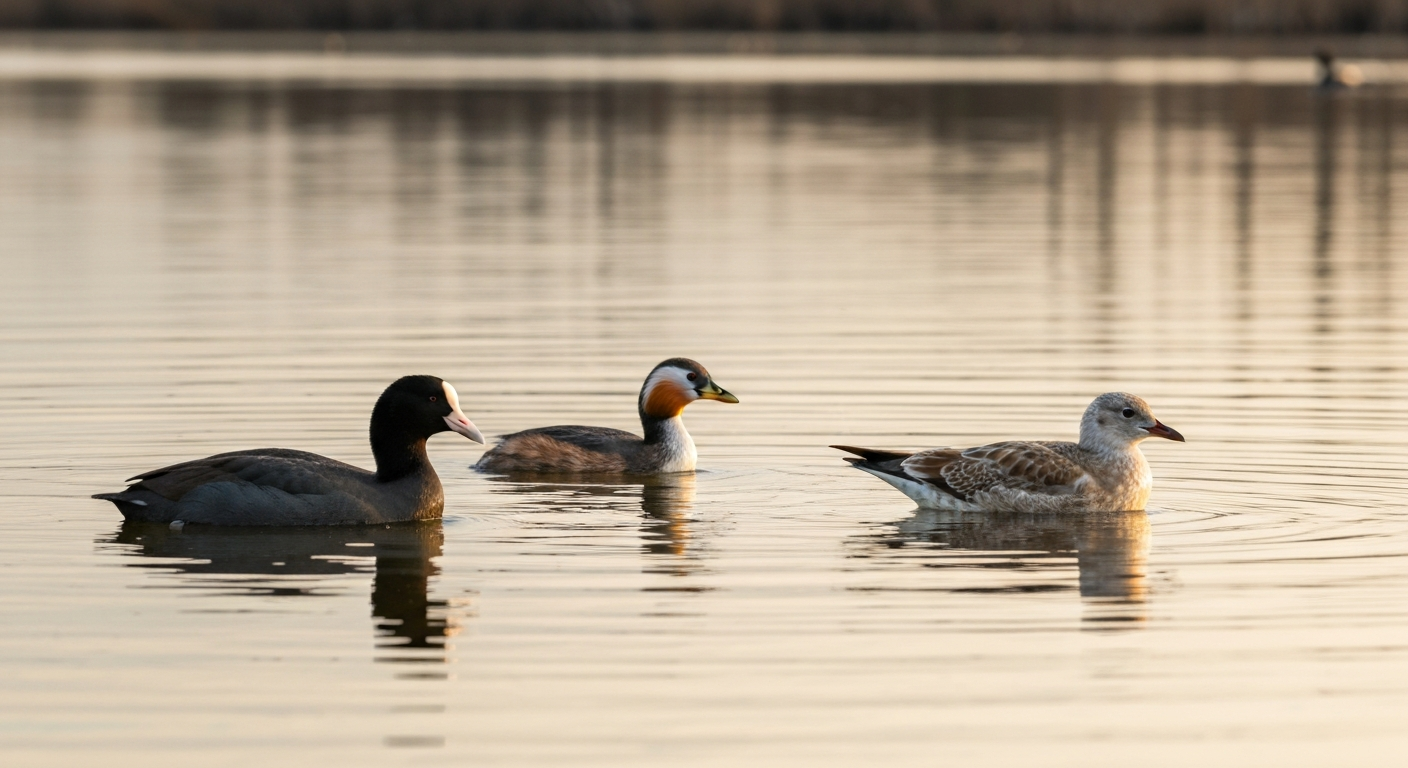
Several common waterbirds get mistaken for ducks all the time, and the most frequent culprits are coots, grebes, loons, moorhens, and the occasional young gull sitting low on the water. They share the same ponds, lakes, and coastal bays, and from a distance they can look remarkably duck-like. But once you know what to look for, the differences jump out fast. This guide walks you through each group, feature by feature, so you can tell them apart the moment you raise your binoculars.
What Bird Looks Like a Duck but Isn't: Quick ID Guide

Marcus Whitley
26 Jul 2026
How to use this visual ID guide
Think of this as your visual cheat-sheet for waterbird confusion. Each section covers one group of duck lookalikes and zeroes in on the handful of features that separate it from a true duck. You do not need to know scientific names or memorize taxonomy. Instead, focus on the physical cues you can actually see in the field: bill shape, head profile, foot type, body silhouette, and how the bird behaves on the water. Work through the at-a-glance list first to get a feel for the main players, then dive into whichever species section matches what you spotted. A quick-reference comparison table is included near the end so you can cross-check field marks on the fly.
Common duck lookalikes at a glance
These are the birds most commonly confused with ducks around the world. You might encounter different ones depending on your region, but this list covers the groups that come up again and again for birdwatchers everywhere.
- American Coot and Eurasian Coot (slate-black waterbirds with white bills, found on ponds and lakes across North America, Europe, and Asia)
- Pied-billed Grebe, Little Grebe, Great Crested Grebe, and Horned Grebe (small-to-medium diving birds with pointed bills and lobed toes, found globally on fresh and coastal water)
- Common Loon (called Great Northern Diver in the UK) and Red-throated Loon (large, low-slung diving birds on open lakes and coastal bays in the Northern Hemisphere)
- Common Moorhen and Gallinules (dark marsh birds with bright red-and-yellow bills and white undertail flashes, widespread on ponds globally)
- Water Rails and other rails (secretive, narrow-bodied marsh birds occasionally seen swimming across open water)
- Double-crested Cormorant and Great Cormorant (large, dark waterbirds that sit low on the water and are often confused with dark sea ducks at distance)
- Juvenile Herring Gulls and other large gulls (brown-speckled young birds that sit low on the water and drift like ducks)
- Common Tern and similar terns resting on water (slender-bodied seabirds occasionally mistaken for small ducks when viewed from afar)
The key visual cues that separate lookalikes from real ducks
Before jumping into specific birds, it helps to know the core features worth checking whenever you spot an unfamiliar waterbird. True ducks (the Anatidae family) share a consistent set of features that, once you know them, make it easier to notice when something is slightly off.
Bill shape
A duck bill is broad, flat, and rounded at the tip, sometimes called spatulate. It often has a small nail at the very tip and serrated edges inside that act like a strainer. If the bill you see is thin and pointed, short and chicken-like, or bright and shield-like, you are almost certainly not looking at a duck.
Feet and toes
Ducks have fully webbed feet, with skin stretched tightly between three forward-pointing toes. Grebes and coots do not. Grebes have lobed toes, meaning each toe has scalloped flaps of skin along the sides but is not joined to the others by a web. Coots also have lobed toes with wide, paddle-like scales. This difference is sometimes visible when the bird lifts a foot near the surface or climbs onto a bank. If you see a bird with long, stick-like toes (like a moorhen) or feet set so far back on the body that it can barely walk on land, those are strong clues it is not a duck.
Neck posture and body silhouette
Most ducks carry their neck in a relaxed S-curve and sit with a fairly level back on the water. Grebes and loons sit noticeably lower, often with the rear of the body almost at water level. Coots bob their heads forward and backward as they swim, a characteristic movement ducks do not do. Moorhens flick their tails constantly, showing a white flash under the tail, and hold their bodies at a more upright angle.
Diving versus dabbling behaviour
Dabbling ducks (like Mallards) tip forward with their tails in the air to feed in shallow water. Diving ducks (like Scaup or Tufted Duck) disappear cleanly beneath the surface. Grebes and loons also dive cleanly, but they tend to leap or roll forward into the water in a more deliberate motion. Coots dive too, but their lobed feet kick up a spray as they go under. Moorhens almost never dive properly; they dabble at the surface or pick at vegetation.
Plumage patterns
Ducks often show distinct wing patches called speculums (usually a bright iridescent panel on the secondary feathers), bold head colours, and clear demarcation between body sections. Many duck lookalikes are mostly plain or uniform in colour, especially coots (all-black body), loons in winter (grey and white), and young gulls (mottled brown overall). Grebes tend to have rufous or chestnut cheeks and necks in breeding plumage that look quite different from any duck.
Size and overall silhouette
Comparing size to something familiar helps enormously. A Mallard is a useful benchmark: roughly the size of a small domestic cat when crouched. Coots are slightly smaller and rounder. Grebes range from sparrow-sized (Little Grebe) to slightly larger than a Mallard (Great Crested Grebe). Loons are noticeably bigger, closer in size to a small goose. Moorhens are distinctly smaller and slimmer than a Mallard.
Flight profile
Ducks in flight show broad, pointed wings, a clearly defined neck and head, and often a visible speculum. Grebes look almost comically thin in flight, with dangling feet trailing behind and a very rapid wingbeat. Loons also fly with feet trailing and have a distinctive hunchbacked look, with the head held slightly lower than the body. Coots rarely fly far but when they do, they look puffball-round with their feet trailing behind. Cormorants fly in a straight line with the neck extended and a slight kink, often in formation.
Calls
While this is a visual guide, a quick note on calls is useful because sound often triggers you to look in the first place. Ducks quack, whistle, or make nasal honking sounds depending on the species. Coots make sharp, explosive 'kuk' or 'kow' calls that sound almost mechanical. Moorhens produce a loud, bubbling 'kurruk' and shrill squeaks. Grebes make trilling, whinnying, or wailing sounds that sound nothing like a duck. Loons produce the iconic haunting wail that is completely unmistakable once heard.
Coots: the most commonly confused duck lookalike
At first glance, a coot looks like a small, all-black diving duck. They share the same ponds and lakes as ducks, often mixed right in with Mallards and Tufted Ducks. blank" rel="noopener noreferrer">But coots are actually rails, belonging to the Rallidae family, not ducks at all. The American Coot is the most widespread species in North America; the Eurasian Coot covers Europe, Asia, and parts of Africa and Australia.
What a coot looks like
The body is entirely slate-black, almost sooty, with a slightly paler grey sheen on the back in good light. The most distinctive feature is the bright white bill and the white frontal shield, a bony plate that extends up from the bill onto the forehead. The eyes are red, which you can sometimes see at close range. The legs are not webbed: each toe has wide, fleshy lobes that fold back on the forward stroke and spread open on the power stroke, a bit like the paddle on a kayak. When a coot climbs onto a bank, the lobed toes are obvious and quite different from the webbed feet of a duck.
Quick ID features for coots
- All-black or very dark grey body with no wing patches or speculum
- Bright white bill and white forehead shield (unique to coots; no duck has this)
- Lobed toes visible on feet, not webbed
- Distinctive head-bobbing swim, nodding forward with each stroke
- Often seen grazing on grass beside water, walking with an awkward, slightly pigeon-toed gait
- Dives frequently but also grazes on aquatic vegetation at the surface
- Loud, sharp 'kuk' or 'kow' calls, nothing like a duck's quack
Seasonally, coots look the same year-round, which makes them easier to ID than many birds. Juveniles are paler and browner overall with a dull bill, but the lobed toes are always present. Regional note: in North America, look for American Coot on virtually any freshwater lake, reservoir, or coastal marsh from autumn through spring. In Europe and the UK, Eurasian Coots are resident year-round on most lowland wetlands.
Grebes: the slim divers with the pointed bills
Grebes are one of the groups most often misidentified as ducks, especially the smaller species. They sit low on the water like diving ducks, they dive, and they frequent the same lakes. But once you know their shape, they look quite different. The key is the bill: thin, pointed, and dagger-like, nothing like the broad flat bill of any duck.
What grebes look like
The most important silhouette clue is the leg placement. A grebe's legs are set very far back on the body, almost at the tail. This makes them excellent divers but terrible walkers on land. On the water, you will notice that the rear of a grebe sits noticeably low, almost flush with the surface, while the head and neck are held high. This gives them a distinctive wedge-shaped or tapered look from the side. Ducks, by contrast, have a flatter, more evenly balanced posture.
In breeding plumage, many grebes are gorgeous. The Great Crested Grebe (widespread across Europe, Asia, Africa, and Australia) sports a rusty-orange and black ear tuff and crest, a white face, and a long white neck. The Horned Grebe (North America and Europe) has a striking golden-orange head stripe on a black head with a rich chestnut neck. The Pied-billed Grebe (North America) is plain brown with a thick, pale bill that has a dark band around it in breeding season. In winter, nearly all grebes become plain grey and white, making them easier to confuse with diving ducks like Scaup or Ring-necked Ducks. The pointed bill, rear-heavy silhouette, and completely plain wings are your best winter ID clues.
Quick ID features for grebes
- Thin, pointed, dagger-like bill (never broad or flat like a duck's)
- Rear of body sits low on the water, legs positioned very far back
- No visible tail; the body just tapers to a point at the back
- Lobed toes rather than fully webbed feet
- Wings appear very plain in flight: no speculum or wing patches
- Extremely fast wingbeat; body looks thin and cigar-shaped in flight with feet trailing behind
- Dives cleanly and smoothly, often with a slight forward leap
- Little Grebe (Dabchick) is tiny, about the size of a tennis ball, and stays close to reedy margins
Age and season variation matters a lot with grebes. Breeding adults are striking and distinctive, but winter adults and juveniles are plain and confusing. Juvenile Great Crested Grebes have a striped black-and-white face that is charming but unexpected. The rule of thumb: if the bird is plain grey-brown, sits very low with a pointed rear, and has a sharp bill, it is almost certainly a grebe rather than a diving duck.
Loons (divers): the big-water specialists
In North America they are called loons; in the UK and Europe they are called divers. Either way, if you spot a large, low-slung bird on an open lake or coastal bay that seems too big and somehow too serious-looking to be a duck, there is a good chance it is a loon. The Common Loon (Great Northern Diver) is the most widespread species and one of the most striking waterbirds on the continent.
What loons look like
In breeding plumage, the Common Loon is unmistakable: a black head with a glossy green sheen, a black-and-white chequered back, and a striped black-and-white collar. The bill is long, thick, and pointed, like a large spike. In winter it becomes much plainer, with a dark grey back, white underparts, and a pale grey face, but it still has that heavy, dagger-like bill and that low, level profile on the water. The body is long, almost submarine-like, and the head is held low and level rather than raised on a neck like a duck.
Like grebes, loons have their legs set far back on the body, which means they can barely walk on land but are extraordinary swimmers and divers. They often stay submerged for 30 to 90 seconds and surface some distance away. In flight, the heavy body, extended neck, and large feet trailing behind give them a hunchbacked silhouette that is quite different from a duck.
Quick ID features for loons
- Much larger than most ducks, closer in bulk to a small goose
- Long, heavy, dagger-like bill, held level or slightly upturned
- Body sits very low and flat on the water, almost like a submarine
- Breeding plumage: bold black-and-white chequered pattern on back, black head
- Winter plumage: plain dark grey above, white below, but always large and flat-profiled
- In flight, hunchbacked silhouette with feet trailing, fast and direct with shallow wingbeats
- Rarely seen near shore; prefers large, open, clear lakes and coastal bays
- Iconic haunting wail call in breeding season; quieter in winter but occasionally gives a short bark
Regional notes: Common Loons breed on forested lakes across northern North America and winter on coastal bays and large inland reservoirs. In the UK and northern Europe, look for Great Northern Diver, Red-throated Diver, and Black-throated Diver on coastal waters, sea lochs, and large freshwater lochs in winter. All three look superficially duck-like at distance but have that distinctively flat, elongated profile and heavy bill.
Moorhens and rails: the sneaky marsh birds
Moorhens are one of the most overlooked duck lookalikes precisely because they are so familiar. They are on almost every park pond, canal, and reedy lakeside in Europe, North America, Africa, and Australia, often swimming right alongside ducks. Rails are more secretive and are usually glimpsed darting across open water between reed beds.
What moorhens look like
The Common Moorhen (called Common Gallinule in North America) is a dark, blackish-brown bird about the size of a small domestic hen, noticeably smaller than a Mallard. The single most striking feature is the bright red frontal shield and bill with a yellow tip. Look for it immediately: no duck has anything like that pop of red on the face. The flanks show a broken white line, and the undertail is a bold white patch that flicks constantly as the bird swims, a habit no duck shares. The legs are long and greenish-yellow, and the toes are extremely long and unwebbed, allowing the bird to walk across floating vegetation.
What rails look like
The Water Rail (Europe and Asia) and Virginia Rail (North America) are the rails most likely to be glimpsed swimming. Both are about sparrow-to-starling-sized, much smaller than a duck. The Water Rail is streaked brown above with blue-grey underparts and a long, slightly downcurved red bill. Virginia Rail is similarly brown and streaked with a long, slightly drooped bill. Both look extremely thin side-on: rails are famously narrow-bodied, built to slip through dense reed stems. When one does cross open water, it moves quickly and nervously, often holding its tail cocked up, and dives back into cover almost immediately.
Quick ID features for moorhens and rails
- Bright red (sometimes red and yellow) bill and frontal shield on moorhens: completely unlike any duck bill
- Constant white undertail flash on moorhens, flicking as the bird swims
- Very long, unwebbed toes visible when on land or climbing vegetation
- Body held at a higher angle than a duck, with a more upright rear posture
- Nervous, jerky swimming motion with head bobbing forward
- Rails are very narrow-bodied when viewed from the front, sometimes described as 'thin as a rail'
- Long, slightly drooped bills on rails rather than the flat, broad bills of ducks
- Juveniles of both moorhen and rails are browner and lack the bright bill colours, but still show the long toes
Juvenile moorhens are worth noting specifically because they are brown overall with a much duller bill, making them easier to overlook or confuse with a small diving duck. The key giveaways even in juveniles are the long green legs, the unwebbed long toes, and the tail-flicking habit. Purple Gallinule (southeastern USA and Central America) is a spectacular lookalike: electric purple-blue body, red-and-yellow bill, and sky-blue frontal shield, with bright yellow legs and extremely long toes. It is hard to mistake for a duck in good light but can be confusing in poor light.
Juvenile gulls and terns: the distance-confusion trap
This is a mis-ID trap that catches even experienced birders. A first-year Herring Gull or Lesser Black-backed Gull sitting on the water, viewed from 100 metres away, can look surprisingly duck-like: a medium-large brown bird floating quietly on the surface. Add some chop or haze and it gets genuinely confusing.
What juvenile gulls look like on the water
First-year large gulls are mottled brown all over, lacking the clean grey and white of adults. They sit relatively flat and low, similar to a dabbling duck, and can drift with the current. From a distance the brownish overall colour and medium-large size put them in the 'could be a duck' zone. Get the binoculars on the head and bill, though, and the difference is immediate: the bill is large, heavy, and hooked at the tip, nothing like a duck's flat bill. The head is often large and rounded, and the wingtips when folded show very long, pointed primary feathers extending well past the tail, giving a different rear profile from a duck.
What terns look like on the water
Terns rarely sit on the water for long, but when they do, their small, slender body, short legs, and very long folded wings make them look quite unlike a duck. Common Terns and Arctic Terns have a pointed red or orange bill, a black cap, and a posture that tilts forward when resting. At distance on a choppy sea they can initially read as 'small duck' but the very long wingtip projection and pointed bill are clear once you focus in.
Tips to separate distant gulls and terns from ducks
- Look at the bill first: gulls have a heavy, hooked bill; terns have a thin, pointed bill; ducks have a flat, broad, rounded bill
- Check the wingtip projection: gulls and terns have very long, pointed wingtips folded well past the tail when sitting; ducks have shorter, more rounded wing projections
- Watch for flight takeoff: gulls run on water or spring up easily; terns shoot straight up; dabbling ducks spring vertically; diving ducks need a running takeoff
- Note the head shape: gulls have a large, rounded head that looks proportionally bigger than a duck's head; terns have a small, rounded head with a black cap
- Plumage tone: juvenile gulls are very uniformly mottled brown with pale wingbars visible even when sitting; ducks tend to show more contrast or distinct head colours
- Watch behaviour over 30 seconds: ducks dabble, tip up, or dive; gulls sit passively or peck at the surface; terns bob and then take flight to plunge-dive
A note on cormorants: while not covered in detail in the sections above, Double-crested Cormorant (North America) and Great Cormorant (widespread globally) are worth a quick mention here because they come up constantly as distance-confusion birds. Cormorants are large, all-dark waterbirds that sit low and flat on the water, which can suggest a large dark sea duck like a scoter. The clues are the long, hooked bill, the long tail that angles upward slightly when swimming, and the habit of holding the wings out to dry when perched on rocks or posts. No duck dries its wings like that.
Side-by-side comparison: key field marks at a glance
| Bird group | Bill shape | Feet/toes | Body posture on water | Wing pattern in flight | Most reliable quick ID |
|---|---|---|---|---|---|
| True duck (e.g. Mallard) | Broad, flat, rounded tip | Fully webbed, palmate | Level, balanced float | Often shows coloured speculum patch | Flat bill + webbed feet + speculum |
| Coot | Short, white, chicken-like with forehead shield | Lobed toes, not webbed | Round body, head bobs forward as it swims | Plain dark wings, feet trail | White bill/shield + black body + head-bob |
| Grebe | Thin, pointed, dagger-like | Lobed toes, not webbed | Rear sits very low, tapered at back | Plain wings, feet trail, very fast wingbeat | Pointed bill + low rear + rear-set legs |
| Loon (Diver) | Long, thick, pointed spike | Webbed but legs set far back | Extremely low and flat, submarine-like | Hunchbacked, feet trail, fast shallow beats | Flat profile + heavy pointed bill + size |
| Moorhen / Rail | Red and yellow frontal shield (moorhen); long, drooped (rail) | Long, unwebbed individual toes | Upright rear, tail flicks constantly | Short, rounded wings, legs dangle | Red bill/shield + white undertail flash + long toes |
| Juvenile gull | Heavy, hooked at tip | Webbed but small relative to body | Sits flat, drifts passively | Long, pointed wingtips visible folded | Hooked bill + long wingtip projection + mottled brown |
| Tern | Thin, pointed, often red or orange | Small webbed feet | Tilts forward when resting | Very long, narrow pointed wings | Pointed bill + long narrow wings + black cap |
| Cormorant | Long, strongly hooked tip | Fully webbed, large | Low flat float, tail angled up | Long neck extended, kink in neck | Hooked bill + wing-drying posture + long tail |
Seasonal and age variation: when identification gets harder
Most of these lookalike groups change appearance significantly between seasons and as they age from juvenile to adult. Winter is generally the hardest time because many birds drop their colourful breeding plumage and become much plainer. Grebes in winter lose their rufous necks and golden crests and become grey and white, closer in overall tone to a winter Scaup. Loons in winter lose their chequered backs and become grey above and white below. The structural clues (bill shape, body posture, foot type, rear profile) stay the same year-round, so when colour fails you, fall back on shape and silhouette.
Juveniles add another layer of difficulty. Young coots are brownish with a dull pale bill. Young moorhens are brown without the red shield. Young grebes often have striped faces. In all cases, the foot structure and body posture are still reliable guides even when plumage colours have not yet developed. A young grebe still has lobed toes and a rear-set leg position. A young coot still bobs its head when it swims.
Regional likelihood: where you are matters
The lookalikes you are most likely to encounter depend on where you are in the world and what time of year it is. In North America, American Coots, Pied-billed Grebes, and Common Loons are the most frequent source of duck-confusion. In the UK and Europe, Eurasian Coots, Little Grebes, Great Crested Grebes, and Common Moorhens appear on virtually every body of freshwater. In coastal contexts in winter, divers (loons) and cormorants are common. In tropical and subtropical regions including Central and South America, the Caribbean, and parts of Africa and Southeast Asia, gallinules like the Purple Gallinule and Purple Swamphen are the main lookalikes. For a separate ID challenge, see notes on a bird that looks like a female cardinal but is not. Australia adds the Australasian Grebe and Dusky Moorhen to the mix.
Printable quick-ID cheat-sheet
Use this checklist in the field whenever you see an unfamiliar waterbird. Work through the questions in order: the first feature that does not match a duck tells you to look at the non-duck groups instead.
- Is the bill broad, flat, and rounded at the tip? If no, it is probably not a duck.
- Are the feet fully webbed between all three forward toes? If no, consider grebe (lobed) or moorhen/rail (long individual toes).
- Does the bird sit with a balanced, level posture, not too low at the rear? If the rear is very low, consider grebe or loon.
- Does the bird bob its head forward while swimming? If yes, likely a coot.
- Is there a bright red, yellow, or white forehead shield or frontal plate? If yes, coot or moorhen.
- Does the tail flick constantly to show a white patch underneath? If yes, moorhen.
- Is the bird very large, flat, and submarine-like? If yes, consider loon.
- In flight, do the feet trail behind the tail, and are the wings very plain? If yes, grebe or loon, not a duck.
- Is the bill heavy and hooked at the tip? If yes, gull or cormorant, not a duck.
- If still unsure, note the habitat: very large open lake or coastal bay (loon), dense reeds (rail), park pond (coot or moorhen), open sea in winter (grebe, diver, or cormorant).
Practical tips for spotting the difference in the field
Binoculars make a significant difference for any of these ID challenges. An 8x42 pair is the sweet spot for most birdwatchers: enough magnification to see bill shape clearly from 50 metres, with a wide enough field of view to follow a moving bird. If you do not have binoculars, your phone camera on full zoom can capture enough detail for a post-sighting ID check.
When you spot something unfamiliar, spend 30 to 60 seconds just watching before reaching for a guide. Behaviour is often the fastest diagnostic: head-bobbing, tail-flicking, dive style, and takeoff technique can all narrow down the ID before you have even looked at the bill shape. Note the habitat too: a bird in the middle of a large open reservoir is much more likely to be a grebe or loon than a moorhen.
For recording sightings, a birding app like Merlin Bird ID (free from Cornell Lab) or eBird is genuinely useful. Merlin includes a photo ID feature where you can upload a photo and get an instant suggestion, and it covers thousands of species globally. eBird lets you log sightings and see what others have recorded at the same location, which gives you a strong prior on what species are actually likely to be there. For cross-validation and downloadable occurrence data, use blank" rel="noopener noreferrer">GBIF (Global Biodiversity Information Facility) occurrence downloads to check eBird-derived seasonality and create CSV or heatmap overlays for each region. If you enjoy comparing unusual plumages and lookalike species, the same instinct that brings you to a visual guide like this one also makes a good field guide worth keeping on your shelf: the Sibley Guides for North America or the Collins Bird Guide for Europe are both excellent, with detailed comparison plates showing multiple plumages side by side. If you're also curious about backyard songbirds, check the internal guide what does a cardinal bird look like for clear ID tips on Northern Cardinals and similar species. If you need species- or nest-specific details (for example, what does a cardinal bird nest look like), see the dedicated guide on that topic for clear photos and construction notes.
The more you look at waterbirds, the faster these differences click into place. Coots, grebes, loons, moorhens, and distant gulls all start to look distinctly themselves rather than vaguely duck-like after just a few dedicated sessions at a local lake or reservoir. For help with species that resemble familiar birds, for example, what bird looks like a yellow cardinal, consult that identification guide for focused comparison tips. The same visual-ID approach that works here applies to other groups too: once you have the habit of asking 'what does the bill look like? what do the feet look like? how is the body sitting on the water?', identifying unfamiliar birds gets much easier across the board. For related backyard birding tips, see our page on what does a cardinal bird house look like.
FAQ
What primary research tasks are needed to compile an accurate species list of birds that look like ducks but aren’t?
1) Compile candidate taxa by family (e.g., Podicipedidae, Rallidae, Gaviidae, Phalacrocoracidae, Laridae juveniles) using Birds of the World and regional field guides. 2) Cross‑check occurrence by region (North America, Europe, Asia, Africa, Australasia) using eBird Status & Trends and GBIF occurrence downloads to confirm which lookalikes are plausible in each region and season. 3) Prioritize species by frequency and likelihood of misidentification (use eBird abundance/phenology indices and GBIF occurrence density). 4) Build a master spreadsheet with taxon, common name, family, regional presence, typical habitats, and references (BOW, Sibley/HBW, All About Birds).
Which authoritative data sources should be used to describe visual diagnostic field marks?
Use Birds of the World (Cornell Lab) as the primary species account source for morphology and plumage-by-age/sex/season. Supplement with Sibley Guides and HBW for compact diagnostic text and comparative plates. Use All About Birds pages for concise field notes (bill shape, foot/leg descriptions). Cite these sources for each species’ diagnostic bullet points.
How should occurrence and regional likelihood be determined and documented?
1) Pull regional monthly presence and abundance from eBird Status & Trends maps for each species and region. 2) Cross‑validate with GBIF occurrence downloads (filter by date and region) to detect vagrancy or range limits. 3) Flag seasonal, migratory vs resident status and include a short regional likelihood thumbnail (e.g., 'Common spring migrant in NE US; rare inland in Europe'). 4) Save eBird/GBIF map images and attach CSVs used for any numeric summaries.
What image and media sources are required for side‑by‑side visual comparisons and what licensing checks must be done?
Primary media source: Macaulay Library for high‑quality, metadata‑rich photos and video (searchable by species, angle, age). Supplement with iNaturalist and Wikimedia Commons for regionally specific or juvenile plumages. For every file: record contributor, media ID, shot angle, date, license, and permissions. Verify Wikimedia and iNaturalist licenses against Commons:Licensing and iNaturalist help pages—do not use images lacking an appropriate license for web/print. Obtain direct permission from contributors for non‑free media and document agreements.
What visual diagnostic features must be written and how should they be structured for each lookalike species?
For each species provide concise, reader‑facing bullets: primary bill shape and size, foot type (webbed vs lobed vs long toes), leg placement and posture (rear‑set vs central), typical neck posture and silhouette, diving vs dabbling behaviour as seen on surface, key plumage patterns and seasonal/age variants, relative size and silhouette vs common duck species, flight profile (wingbeat style/neck extension), and distinctive calls (short, visually diagnostic note). Keep each item 1–2 sentences and cite the species account used.
How should seasonal, age and sex variation be handled to reduce misidentification?
1) For each species include a small subsection: 'Juveniles and non‑breeding/sex differences' listing the main plumage stages and when they occur. 2) Use BOW and Macaulay Library to compile representative images for each stage. 3) Note common confusions that occur in specific seasons (e.g., juvenile gulls in fall resemble small dabblers). 4) Include regional notes where certain plumages are not seen due to migration or local population structure.
Next Articles
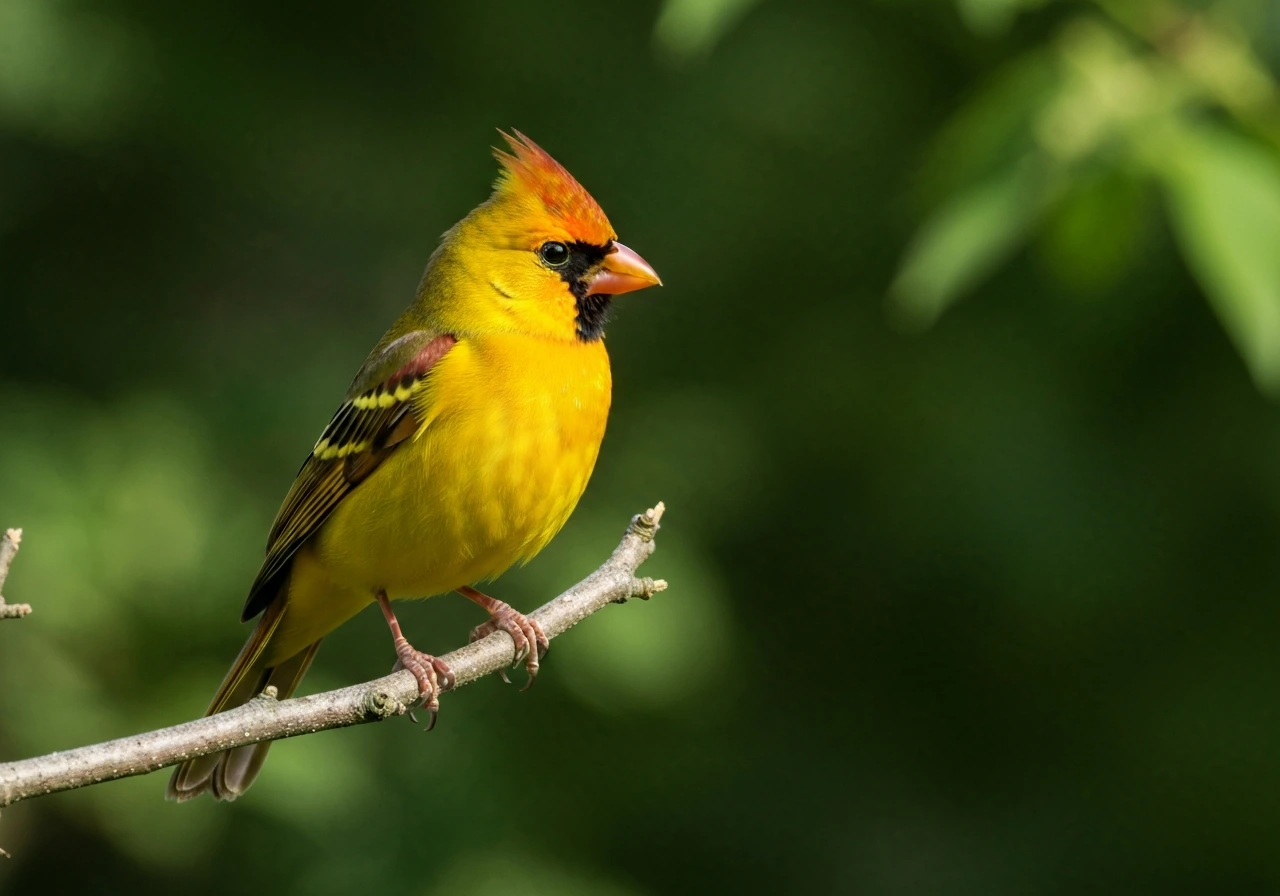
What Bird Looks Like a Yellow Cardinal? Top Look-Alikes
Compare yellow cardinal look-alikes like cedar waxwing, yellow-breasted chat, and finches using head, beak, wings, and t
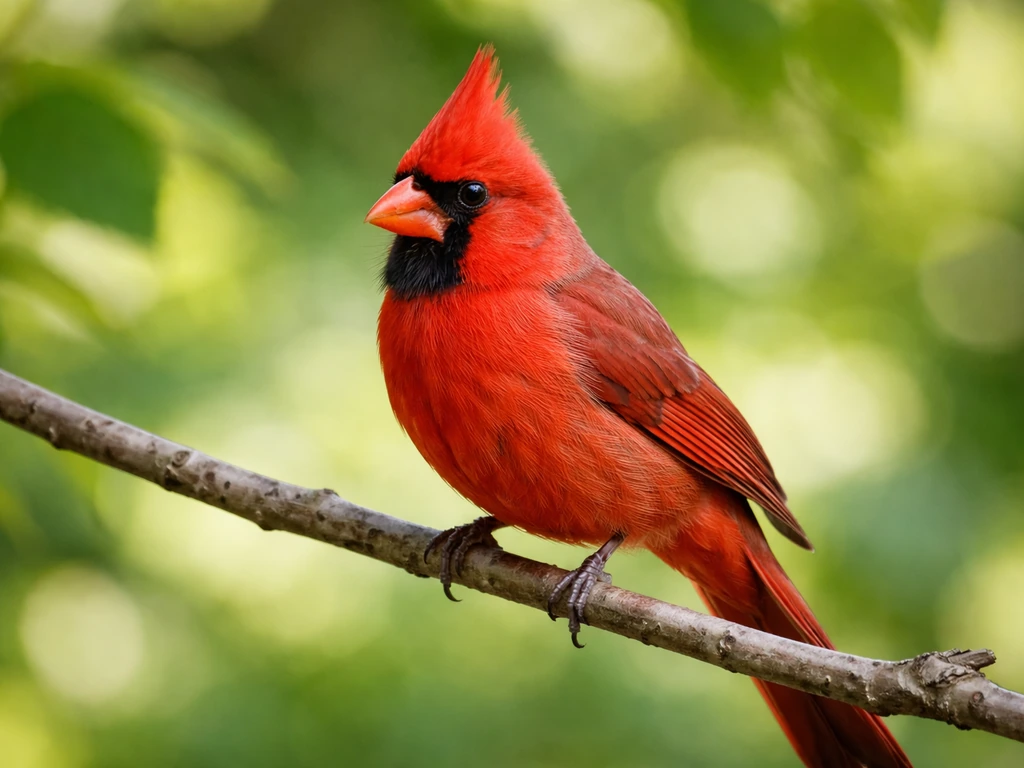
What Bird Looks Like a Cardinal? Lookalikes and ID Tips
Cardinal lookalikes explained with field marks for gray, black, small, and female-like birds plus quick photo checks.
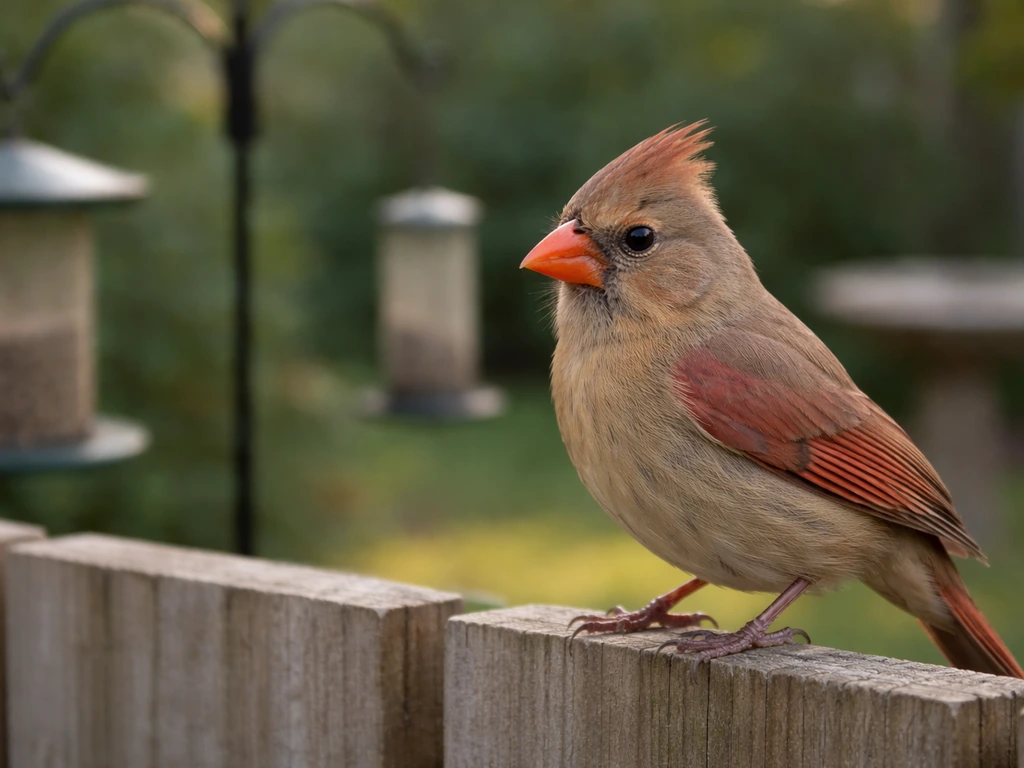
Bird That Looks Like a Female Cardinal but Is Not
Rule out female cardinal fast, then compare key lookalikes by plumage, bill, size, patterns, habitat, and flight behavio