Several birds get mistaken for woodpeckers regularly, including nuthatches, Brown Creepers, Northern Flickers, and even the large Pileated Woodpecker. The most likely culprit depends on what you actually saw: where it was foraging (on a tree trunk, on the ground, high in the canopy), how it moved, and what its bill looked like. Some people are actually thinking of a turkey-like look, and that often comes down to comparing body size and bill shape. Once you lock in those three things, you can usually nail the species in a few minutes with a good photo or visual reference.
What Bird Looks Like a Woodpecker? Quick Lookalike Guide

Marcus Whitley
2 Jul 2026
Quick answer: woodpecker-like birds you might be seeing
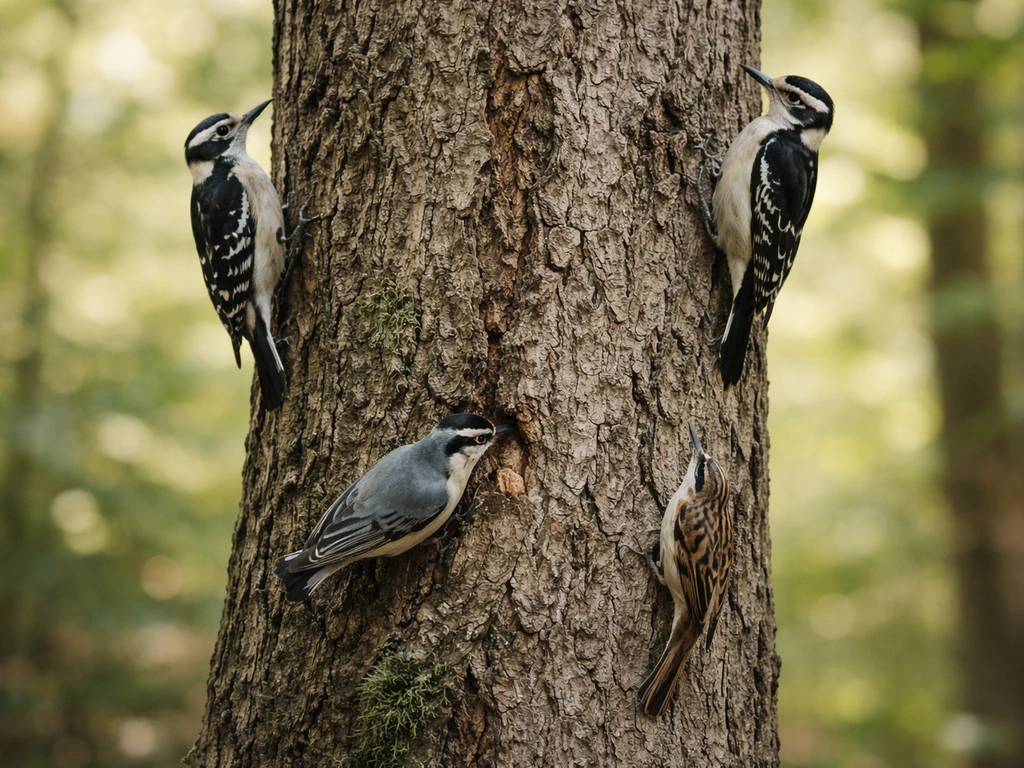
If you spotted a bird clinging to a tree trunk with a pointed bill, it could be a Downy Woodpecker, a Hairy Woodpecker, a Brown Creeper, or a nuthatch. If you were asking what bird looks like an eagle, compare it to eagle look-alikes you might be mistaking for a woodpecker-shaped bird Downy Woodpecker. If it was large, mostly black with a red crest, and drilling rectangular holes in dead wood, that's almost certainly a Pileated Woodpecker.
If it had a spotted or barred pattern and was foraging on the ground or on an open lawn, think Northern Flicker. Sapsuckers (especially Yellow-bellied and Red-breasted) also fool people because they share that classic black-and-white woodpecker look but with more dramatic red on the head. Here's a fast-reference breakdown before we dig deeper:
| Bird | Size | Key visual clue | Most likely habitat |
|---|---|---|---|
| Downy Woodpecker | Sparrow-sized (small) | Short, dainty bill about 1/3 head length; black-and-white pattern | Wooded suburbs, parks, backyards |
| Hairy Woodpecker | Robin-sized (medium) | Long, sturdy bill nearly as long as head; same pattern as Downy but larger | Mature forests, larger wooded areas |
| Pileated Woodpecker | Crow-sized (large) | Red crest, white face stripes, massive chisel bill, rectangular holes in wood | Old-growth and mature forest |
| Northern Flicker | Robin-sized | Slightly curved bill, spotted/barred body, often on the ground | Open woods, lawns, forest edges |
| Yellow-bellied Sapsucker | Robin-sized | Black-and-white with red cap and throat, rows of small holes in bark | Mixed forests, orchards |
| White-breasted Nuthatch | Smaller than a sparrow | White face and underparts, blue-grey back, stubby upturned bill | Deciduous forests, feeders |
| Brown Creeper | Very small (4–5.5 inches) | Brown streaked camouflage, thin curved bill, hugs bark tightly | Mature forests with large trees |
The visual traits that define a woodpecker look
Before you can match a bird to a species, it helps to know exactly what gives woodpeckers their distinctive appearance. There's a consistent package of traits across the family that you can use as a checklist.
The bill
The bill is the first thing to focus on. True woodpeckers have a straight, chisel-like bill that comes to a sharp, hard point, kept that way by constant pecking. It's strong and thick at the base. On a Downy Woodpecker, the bill looks almost dainty, roughly one-third the length of the head. On a Hairy Woodpecker, the bill is noticeably longer and more powerful, almost as long as the entire head. The Pileated's bill is enormous, roughly the full length of its head, and built for hammering out rectangular chunks of rotten wood. If you see a curved or thin bill, you're likely looking at a creeper, flicker, or nuthatch rather than a true woodpecker.
Body shape and posture
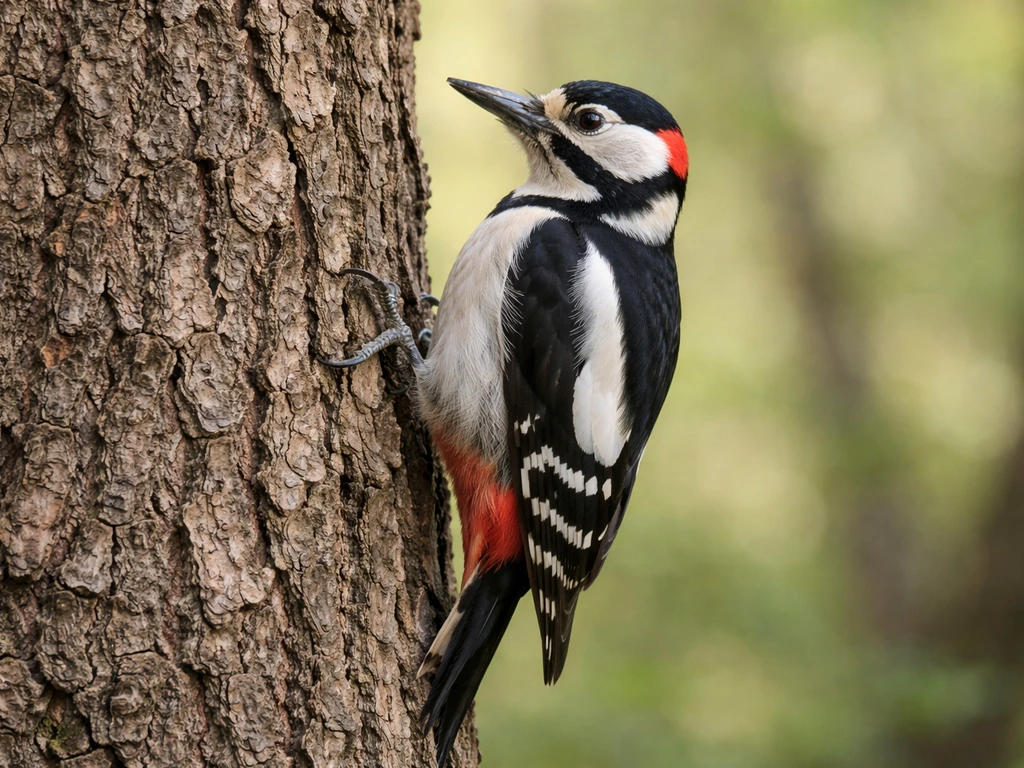
Woodpeckers have a stocky, compact body with a large head relative to their frame. When they're on a tree trunk, they press their stiff tail feathers against the bark as a brace, creating a very upright, almost vertical posture. The feet grip the bark using a zygodactyl arrangement: two toes pointing forward and two pointing back, which lets them anchor firmly to vertical surfaces. This combination of braced tail and gripping feet gives them that signature stable, upright stance you don't quite see in other birds.
Markings and color patterns
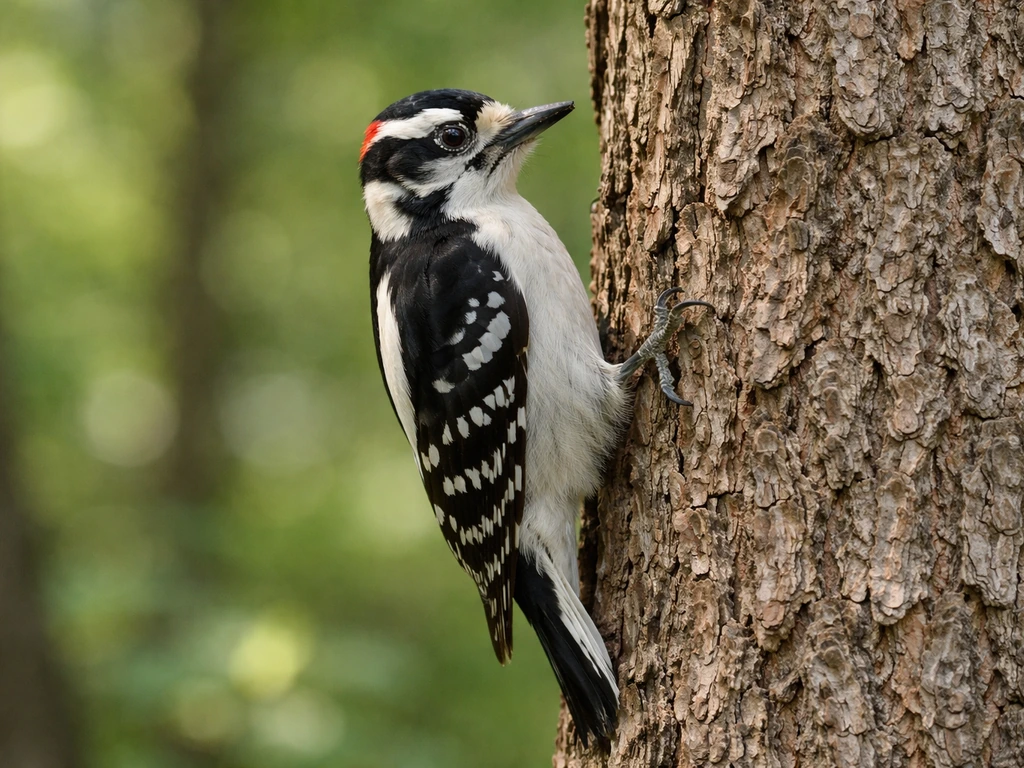
Most North American woodpeckers are built around black-and-white patterns, often with a red patch somewhere on the head. Downy and Hairy Woodpeckers have a clean white back stripe and bold black-and-white wings. Three-toed Woodpeckers swap the white back stripe for black-and-white barring across the back and flanks. Ladder-backed Woodpeckers have a distinctive barred pattern running up the entire back with very little solid black on the upper back. Northern Flickers break the mold with a brown-and-black barred body, a spotted chest, and a bold black crescent bib. The Pileated stands out immediately: mostly black with a flaming red crest and white stripes running down the face and neck.
The most common look-alikes and how to tell them apart
This is where most identification confusion happens. Several birds share enough woodpecker-like traits to fool even experienced birders at a quick glance. Some people describe this confusion as a bird that looks like a penguin, but the details of the bill, posture, and pattern usually point to the right woodpecker-like species what is the bird that looks like a penguin. Here's how to separate them.
Downy vs Hairy Woodpecker
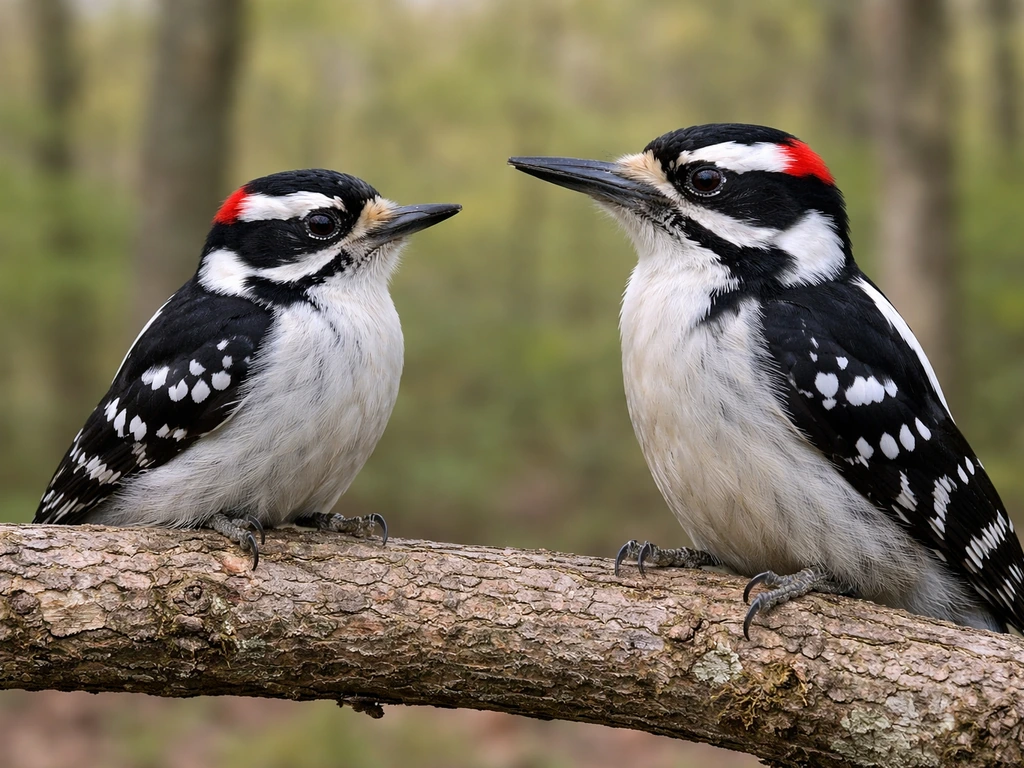
These two look almost identical in pattern: both have that classic black-and-white body with a red patch on the back of the head in males. The reliable separator is the bill. Downy's bill is short and dainty, clearly shorter than the head looks wide. Hairy's bill is long and sturdy, closer to the full length of the head from front to back. Size helps too: Downies are noticeably smaller, closer to a large sparrow, while Hairies are closer to a robin. If you can't judge size in the field, trust the bill length every time.
Nuthatches (especially White-breasted and Red-breasted)
Nuthatches cause the most confusion because they also cling to tree bark and have a pointed bill. Maine Audubon notes that nuthatch-versus-woodpecker confusion is often resolved when you look at both behavior and visual markers together behaviors and visual markers together resolve nuthatch-versus-woodpecker confusion.
The give-away is how they move: nuthatches walk head-first down the tree trunk, something woodpeckers simply cannot do. Woodpeckers can only move upward because they use their stiff tail as a brace and need it pressing against the bark. If the bird you saw was scooting down the trunk headfirst, it was a nuthatch. White-breasted Nuthatches also have a clean white face and underparts with a blue-grey back, very different from the black-and-white bold patterning of most woodpeckers.
Brown Creeper
Brown Creepers are small, only about 4 to 5. 5 inches long, and they're streaky brown rather than boldly patterned. Like woodpeckers they press their stiff tail against the bark for support and keep their head up while climbing. Brown Creepers use a spiraling motion around the trunk and brace with their tail against bark to help maintain footing, according to the U.
S. National Park Service [spiral upward around a trunk](https://www. nps. gov/brca/learn/nature/nuthatches.
htm). But they spiral upward around a trunk, then fly weakly back down to the base of another tree to start over. Their bill is thin and slightly curved, not chisel-like at all. If the bird seemed to melt into the bark with brown camouflage and had a thin curved bill, it was almost certainly a Brown Creeper.
Northern Flicker
Flickers are true woodpeckers, but they behave differently enough that people often wonder what they're looking at. They spend most of their time on the ground, digging for ants and beetles with a slightly curved bill rather than hammering tree bark. Their body is brown and barred rather than bold black-and-white, with a spotted chest, a black bib, and a bright yellow or red underwing flash depending on the subspecies. If you saw a robin-sized bird working the lawn or a grassy area with what looked like a woodpecker-shaped body, it was almost certainly a flicker.
Sapsuckers
Yellow-bellied, Red-breasted, and Red-naped Sapsuckers share the black-and-white woodpecker look but have more extensive red on the head and throat. A useful field clue: sapsuckers drill neat rows of small, evenly spaced holes in living tree bark (called sap wells), which is very different from the larger, more irregular excavations other woodpeckers make. Red-breasted Sapsuckers have almost entirely red heads, which can make people think of the Red-headed Woodpecker at a glance, but wing pattern differences set them apart. Red-naped Sapsuckers can be told from Yellow-bellied by a red patch on the back of the neck, present in both male and female Red-napeds.
Habitat and behavior clues that match the woodpecker look
Where and how a bird forages tells you as much as its markings. Woodpeckers are overwhelmingly associated with trees: they drum loudly on trunks (both to excavate food and to signal territory), and you'll often hear them before you see them. The sound is a rapid, mechanical hammering, not a tap. They move jerkily up a trunk in short hops, always heading upward, always braced with the tail.
Pileated Woodpeckers leave the most obvious signs: look for large, rectangular holes in dead or rotten wood, often in mature forests or old-growth areas. Sapsuckers leave rows of small circular holes in the bark of living trees. Flickers break all the tree rules and forage mostly on open ground, especially near ant colonies. If the bird you spotted was in a lawn, park edge, or open field, flicker should jump to the top of your list.
Step-by-step: narrow down the species right now
Follow these steps in order and you'll have a strong candidate species within a few minutes.
- Note the size first. Was it sparrow-sized (small, think Downy), robin-sized (medium, think Hairy, Flicker, or Sapsucker), or crow-sized (large, almost certainly Pileated)?
- Check the foraging location. On a vertical tree trunk? On the ground or a lawn? In the upper canopy drilling into dead wood?
- Watch or recall the movement direction on the trunk. Moving upward only = woodpecker or Brown Creeper. Moving headfirst downward = nuthatch.
- Look at the bill shape. Straight, thick, and chisel-like = woodpecker. Thin and slightly curved = Brown Creeper or Flicker. Short and upturned = nuthatch.
- Note any color on the head. Solid red cap and throat = sapsucker. Red crest on a large black bird = Pileated. Small red patch on the back of the head only = Downy or Hairy. No red at all on a brown barred bird = Flicker (female or western subspecies).
- If you got a photo, zoom in on the bill length relative to the head, the back pattern (barred vs solid black vs white stripe), and any color on the wings or underparts.
- If you heard drumming, try to recall the pace and volume. Woodpecker drumming is rapid and loud. A softer, slower tapping on a trunk is more likely a nuthatch or creeper probing for insects.
How to use visual references to make the final call
Once you've worked through the steps above, you should have a short list of one or two candidates. Now it's time to compare your bird against reference images systematically rather than just doing a quick Google image search and going with the first match that looks close.
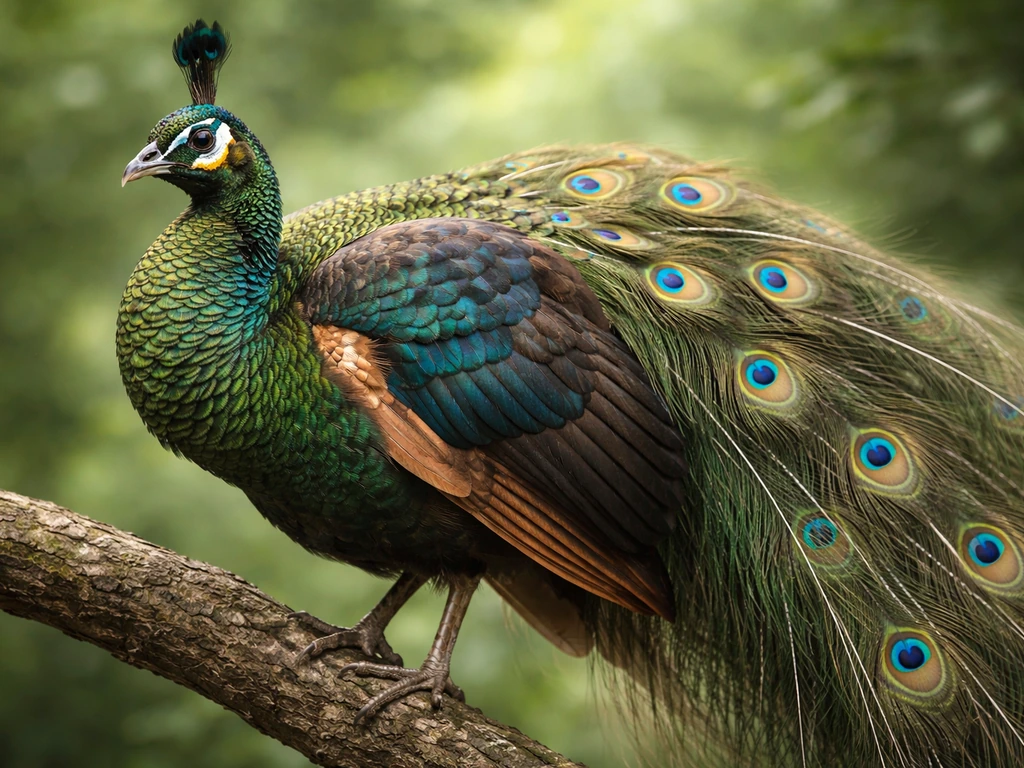
Start with the bill. Pull up a reference photo of your candidate species and compare bill length against head size. This single feature separates Downy from Hairy, and separates true woodpeckers from nuthatches and creepers faster than any other trait. Next, look at the back pattern: does your bird have a clean white stripe down the center of the back, bold black-and-white barring across the back, or a brown-and-black barred pattern? A helpful way to think about it is that the “peacock-like” look usually comes from showy crests and dramatic patterning, so compare the bird's markings and posture carefully what bird looks like a peacock. Those three options point to different species groups immediately.
If you have a photo, zoom in on the wing surface and look at how white shows up in the feathers. Regional variation matters here: Downy Woodpeckers in western North America are darker overall and show less white in the wings than eastern birds, which can throw off an identification if you're comparing your bird to a photo taken in a different region.
For sapsuckers specifically, if you're stuck between two similar species, focus on the nape (back of the neck). A red patch there means Red-naped Sapsucker. No red nape means Yellow-bellied. And if the entire head is red rather than just patchy, you're looking at a Red-breasted Sapsucker.
When you search for comparison images, use specific terms: try the bird's name plus the words 'back pattern,' 'bill close-up,' or 'on trunk' to get the angles that actually help with identification rather than glamour shots that look beautiful but don't show the detail you need. The same visual approach works well for other striking birds people often want to identify, like a bald eagle look-alike or a turkey-like bird in the woods: anchor on one or two defining features, compare those specifically, and avoid going by overall impression alone.
If you're still not sure after all of this, the single best thing you can do is photograph the bird from the side while it's on a vertical surface. That angle shows bill length, head pattern, back color, and posture all at once, which is everything you need to make a confident call.
FAQ
If I only got a blurry photo, how can I tell whether it is a woodpecker versus a nuthatch?
Yes. A bird can look woodpecker-like in still photos, but motion is the shortcut. If you can see it moving, woodpeckers only climb upward in short hops with their tail braced, while nuthatches can travel down head-first.
What is the fastest way to confirm a Downy versus a Hairy when the bird is far away?
On a vertical surface, try to determine bill length relative to the head width, then check whether the back shows a central white stripe, barring, or a barred-only look. Those three back patterns sort most lookalikes faster than overall color alone.
How can I tell a Northern Flicker from a woodpecker if it keeps feeding on the ground?
Look for feeding pattern and damage. Flickers mostly probe the ground and lawn for ants and beetles, they do not leave the large rectangular excavations typical of Pileateds, and they usually show a spotted chest plus a distinct black bib.
What practical sign tells me a sapsucker is feeding, not a true woodpecker?
Sapsuckers drill neat, evenly spaced small sap wells in living bark, and they often linger around those areas. Other woodpeckers usually make larger, irregular excavations (and Pileateds specifically create big rectangular holes in dead or rotten wood).
If the bird is small and on a tree trunk, how do I distinguish a Brown Creeper from a woodpecker?
Use bill shape, not just size. Creepers have a thin, slightly curved bill and streaky camouflage, plus they spiral upward around a trunk and then fly weakly back down to repeat, while woodpeckers move in braced upward hops.
What should I look for in the bill if I suspect the bird is not actually a woodpecker?
Bill shape matters for these. True woodpeckers have a straight, chisel-like pointed bill; a curved or overly thin bill usually points to a creeper, flicker, or nuthatch rather than a true woodpecker.
Why might my woodpecker ID look wrong when I compare it to photos online?
Region can skew wing and body contrast, especially for Downy Woodpeckers. When comparing to reference images, match the bird’s location first, then check bill length and the back stripe or barring second.
What is the best photo angle to get a confident ID for woodpecker lookalikes?
Yes, a side view on a trunk is often decisive because it shows bill length, head pattern, and the upright posture together. If you can only manage one shot, aim for the angle that shows how long the bill looks from the front of the head to the tip while the tail is braced.
How do I use head and nape color to separate similar sapsuckers?
If the entire head looks red rather than just having a red patch at the throat or nape, that points toward Red-breasted Sapsucker. If there is a red patch at the back of the neck, that suggests Red-naped Sapsucker, and if the head is mostly not fully red, consider Yellow-bellied.
How can I confirm the species by checking the tree for feeding signs later?
Watch the area around the bird after it leaves. Sapsuckers typically create rows of small circular holes on living trees, while Pileated Woodpeckers leave larger rectangular holes in dead or rotten wood, usually in more mature forest settings.
Next Article
What Bird Looks Like a Peacock? Quick Identification Guide
Identify peacock-lookalikes fast using eye-spot, tail-train, size, and habitat checks with a photo workflow.