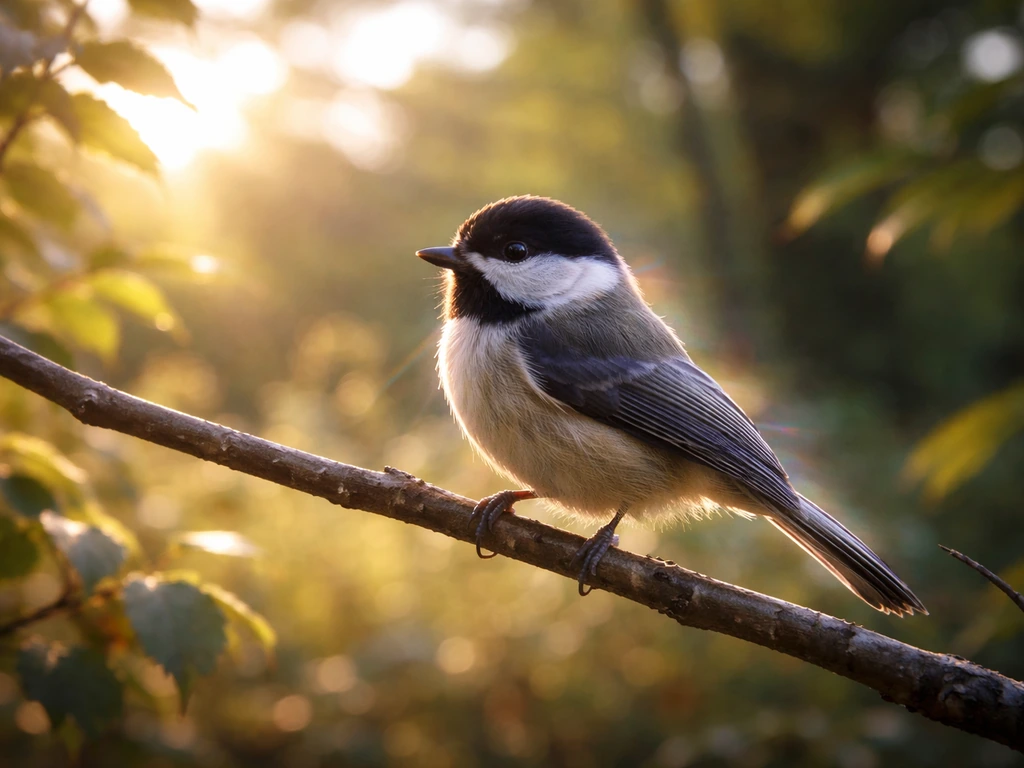
A bird's chest (also called the breast) is the front-facing panel of feathers sitting between the throat and the belly. The British Trust for Ornithology provides a labeled bird topography diagram with named regions such as Throat, Breast, Belly, and Flank to support boundary-based anatomical descriptions. It's one of the most useful patches on the whole bird for identification because it's often well-lit, faces forward when a bird perches, and carries distinct colors or patterns that field guides rely on heavily. Whether you're looking at bold orange on a robin, heavy streaks on a song sparrow, or a crisp black band across a cerulean warbler's white underparts, that chest zone is where the action is.
What Does a Bird Chest Look Like? Field Marks Guide

Marcus Whitley
13 Jun 2026
What exactly is the "chest" on a bird?
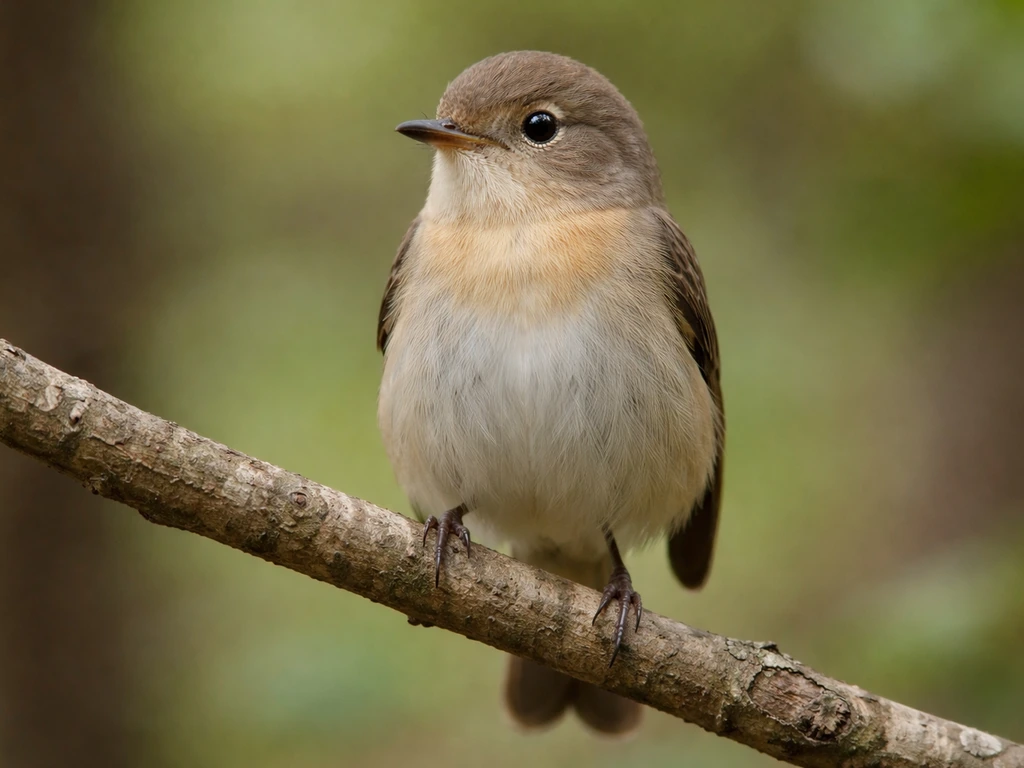
When birders and field guides say "breast" or "chest," they mean the same region: the upright front of the body running from the bottom of the throat down to where the belly begins. Below the breast sits the belly (or abdomen), which extends further down to the undertail coverts. On the sides of the belly, you have the flanks, which can be partly hidden depending on how the bird is holding its wings. These are genuinely separate zones, and it's worth keeping them straight because a bird might have a plain white breast but streaky flanks, or a warm-washed belly that contrasts with a whiter chest.
The throat sits just above the breast and can sometimes look continuous with it, especially on small birds or in dim light. The practical boundary is roughly where the neck meets the front of the body and where the color or pattern clearly shifts. If you're trying to describe what you're seeing to someone else or jot a note in the field, use these four words as your anchors: throat, breast, belly, flank. That structure matches what every field guide uses, and it'll make your notes a lot more useful.
Quick visual checklist for reading a bird's chest
When you get a look at a bird's front, run through these questions quickly. You don't need to answer all of them perfectly, but even two or three solid observations will narrow things down a lot.
- What is the base color of the chest? (white, buff, orange, yellow, gray, brown, rufous, etc.)
- Is the chest one solid color, or does it have a pattern on top of that base color?
- If there's a pattern, what kind? (streaks, spots, bars, a single band, mottling, scaling)
- Does the pattern cover the whole chest, or is it concentrated in the center, on the sides, or toward the bottom?
- Is there a sharp contrast between the throat and the chest, or do they blend together?
- Does the chest color/pattern transition gradually into the belly, or is there a clear boundary?
- Are the flanks (sides) a different color or pattern from the central breast area?
- How bold or subtle is the overall pattern? (crisp and high-contrast vs. faint and washed)
The most common chest patterns and what they look like
Bird chests don't come in unlimited varieties. Most fall into a handful of pattern types, and once you can name them, you'll find field guides suddenly make a lot more sense.
Solid or washed
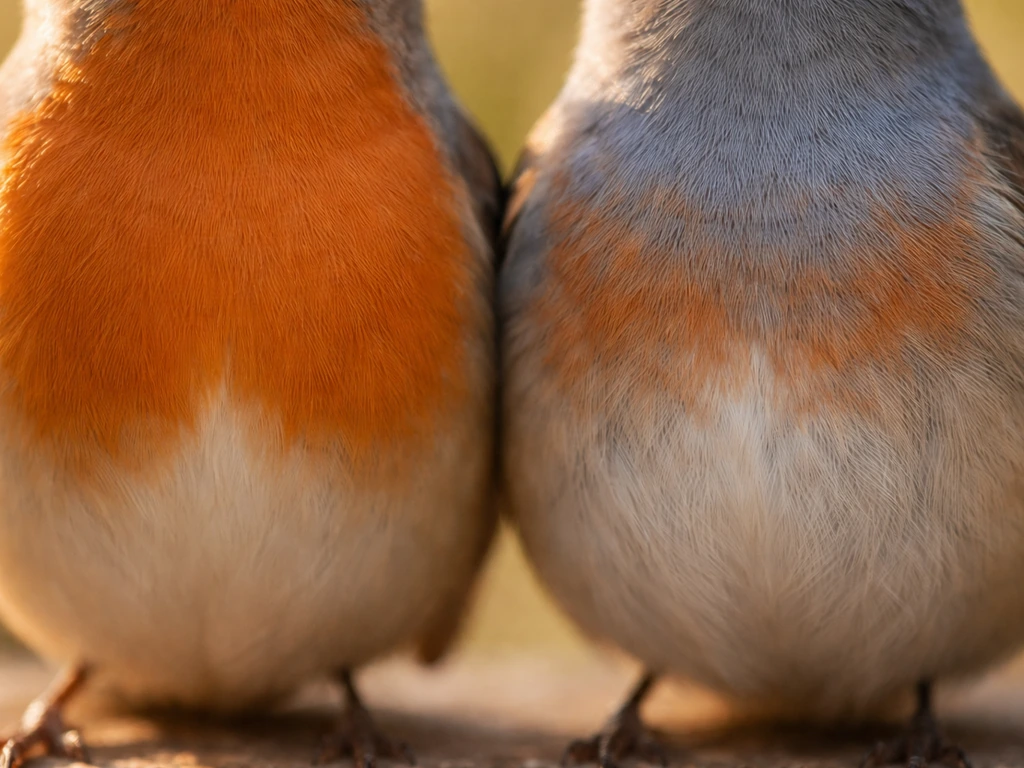
This is the simplest chest to read: one color, no obvious marks. Think of the American robin's warm orange-red breast, or a bluebird's rusty chest. "Washed" means the color is softer and diffuse, like watercolor rather than paint. A lot of warblers, vireos, and thrushes have washed yellows or buff tones on the breast. It looks clean but can vary in intensity by season, sex, and age.
Streaked or striped
Streaks run vertically (up and down), and they're extremely common on sparrows, warblers, and thrushes. The song sparrow is a classic: it has heavy dark streaks on a pale chest, often with a bold central breast spot where several streaks converge in the middle. Streaking can be thin and delicate or thick and messy depending on the species, and where the streaks concentrate matters. Center-heavy streaking versus flank-heavy streaking points you toward different birds.
Barred
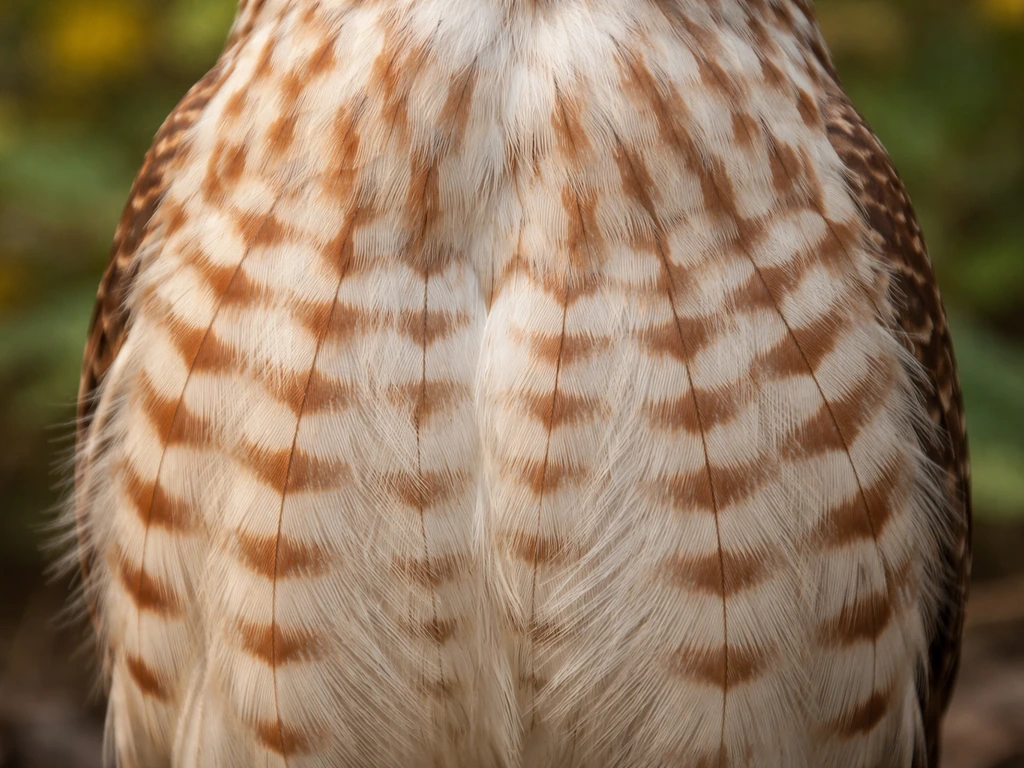
Bars run horizontally (side to side) across the chest. You see this pattern commonly in raptors, shorebirds, and some owls. A sharp-shinned hawk has fine rusty bars on white underparts. Barring gives a striped-across look rather than striped-down. It's usually crisp and evenly spaced on adults, making it easy to identify once you know what you're looking for.
Spotted
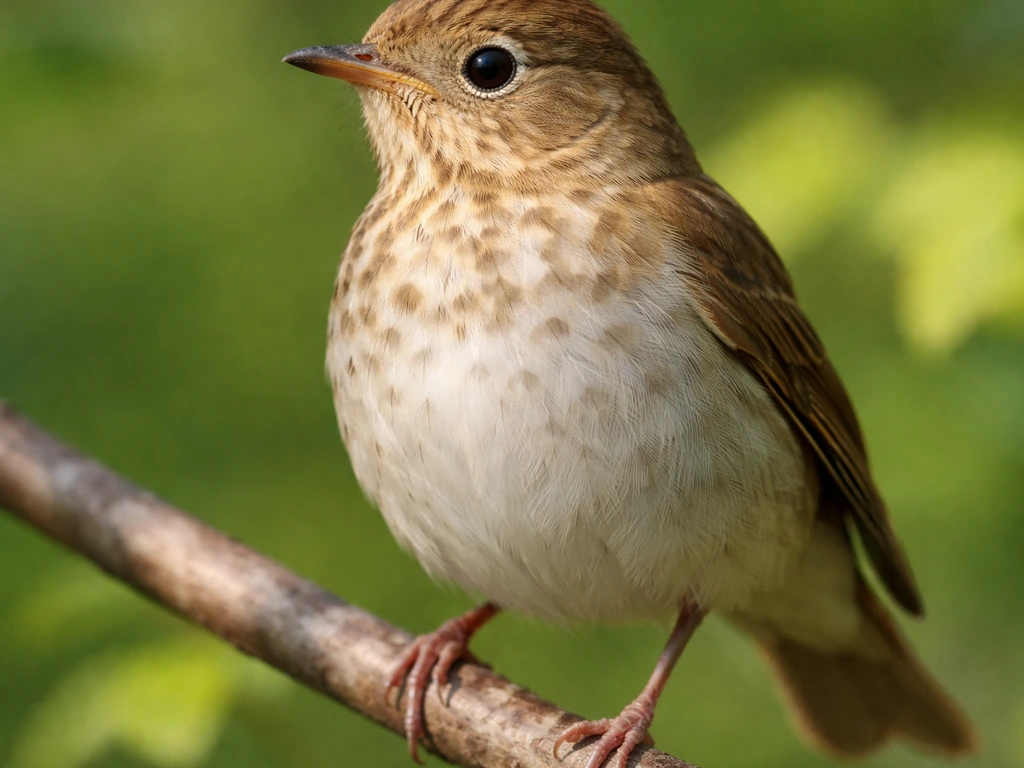
Discrete round or oval spots, fairly evenly distributed. The hermit thrush and wood thrush are textbook examples: round dark spots on a pale or warm-buff breast. Spotting tends to be bolder and more structured-looking than streaking. On juvenile birds, spotting often appears on species that will be plain or streaked as adults, so it's a useful age clue too.
Banded (breastband)
A single distinct band crossing the chest like a stripe on a shirt. The cerulean warbler is a great example: white underparts with a thin black band across the breast. Killdeer have two bold black bands. A breastband is one of the most distinctive field marks possible because it's so specific and consistent.
Mottled
Mottling looks blotchy and irregular, like patches of darker color mixed into a lighter base without any clear organization. It's different from barring or spotting because it doesn't have a repeating structure. Some jaegers have a dark mottled breastband on their otherwise white or pale underparts. Mottling also shows up on many shorebirds in breeding plumage.
Scaly or scaled
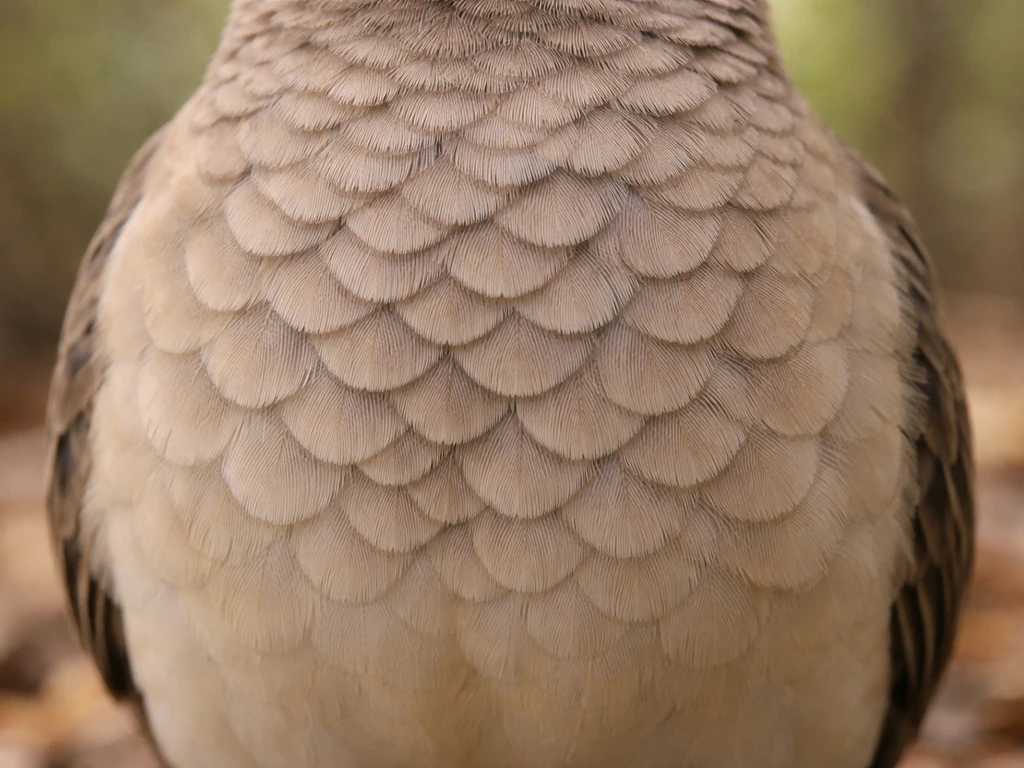
Scaling happens when each feather has a dark edge, creating a pattern that looks like fish scales or overlapping tiles. You'll notice it on scaled quail and some doves. It's a subtle but distinctive look once you know to search for it, almost like the chest is covered in neat little outlined squares.
| Pattern Type | What It Looks Like | Example Birds |
|---|---|---|
| Solid/Washed | One even color, sometimes soft and diffuse | American Robin, Eastern Bluebird |
| Streaked | Vertical dark lines on a pale base, often with a central spot | Song Sparrow, many warblers |
| Barred | Horizontal bands crossing the chest side to side | Sharp-shinned Hawk, owls |
| Spotted | Round or oval discrete spots on a pale base | Wood Thrush, Hermit Thrush |
| Banded (Breastband) | Single distinct dark band crossing the full chest | Cerulean Warbler, Killdeer |
| Mottled | Irregular blotchy patches without clear structure | Pomarine Jaeger, some shorebirds |
| Scaly | Dark feather edges creating a tiled or scaled look | Scaled Quail, some doves |
How to use chest features as real field marks
Color and pattern alone don't always seal the deal. The way those things are arranged and where they start and stop matters just as much. Here's how to read the chest zone like a field mark rather than just a color patch.
Shape and coverage of the pattern
Notice whether the pattern fills the whole chest or just part of it. Streaks concentrated in the center point toward one species; the same streaks bleeding across the flanks suggest another. Some birds have a clean hood or bib of dark color that ends sharply at the upper chest, almost like they're wearing a necklace. The great tit has a bold black stripe running straight down its yellow breast from the throat, dividing the chest clean in half. That midline division is a field mark all on its own.
Contrast and edge sharpness
Ask yourself if the edges of any pattern are crisp or blurry. A crisp black-and-white breastband reads very differently from a diffuse smudgy wash. High contrast marks tend to be more reliable for ID because they're consistent across individuals and easier to confirm even in brief views. Low-contrast, softly washed patterns are harder and may vary more between sexes or ages.
The throat-to-belly transition
This transition is one of the most overlooked features in beginner birding. Does the throat color flow seamlessly into the chest, or is there a hard line between them? Does the chest pattern fade gradually into the belly, or stop abruptly? On some warblers, a yellow throat transitions into a white belly through a warm yellow-washed breast. On others, the throat is white and the chest has a bold patch of color that stops cold before the belly. These transitions are quick to check and highly diagnostic.
Central spot vs. overall streaking
The presence of a single bold dark spot in the center of the chest is worth calling out specifically. It's a hallmark of song sparrows and a few other species, and it's caused by streaks converging toward the middle. A bird with diffuse overall streaking and no central spot is a different bird from one with a bullseye-like central mark, even if the general pattern looks similar at a glance.
Getting the clearest chest view in the field
The chest is naturally forward-facing, which means a perched bird often gives you a decent look just by sitting still. If you are wondering what a cat bird looks like, focus on its overall look first, then confirm the chest and underpart pattern you can see from the best angle perched bird often gives you a decent look. But a few habits will dramatically improve the quality of your views and your photos.
- Position yourself so the light hits the bird from behind you or from the side. Front-lit birds show chest color and pattern most accurately. Backlit birds look dark and washed-out, and you'll lose all the detail.
- Wait for the bird to turn toward you. A bird facing sideways shows you the flank and wing, not the breast. Patience pays off.
- Use binoculars at the right distance. Too close and you'll startle the bird; too far and you can't resolve fine markings. For most small birds, 10 to 30 feet is ideal.
- For photos, shoot in the direction that keeps the sun roughly behind you and look for a moment when the bird is in an open spot without branches crossing the chest area.
- If you're using a field guide, compare the angle of the illustration to what you actually saw. Some guides show birds from slightly above, which shifts how the chest versus belly proportion looks.
- Try to see the whole underside in one view: throat, breast, belly, and flanks together. A single quick scan tells you far more than four separate glances.
Don't let these things fool you
Even experienced birders get tripped up on chest patterns. Here are the most common traps and how to avoid them.
Lighting and iridescence
Tricky lighting is probably the single biggest source of misidentification based on underpart color. A bird in shade can look much darker and more heavily marked than the same bird in direct sun. Some feathers (like those on hummingbirds or certain ducks) show iridescence, meaning they change color dramatically depending on the angle of light. If you're not sure about a chest color, reposition yourself or wait for the bird to move before committing.
Viewing angle
A bird seen from the side or from below looks very different from the same bird seen face-on. What bird vision looks like depends on its visual abilities and the way its eyes interpret color, contrast, and motion in the scene. A side view might show you flank pattern rather than true breast pattern, or the belly instead of the chest. Always try to confirm what region you're actually looking at before drawing conclusions.
Juveniles and molting birds
Young birds (juveniles) frequently have different chest patterns from adults. Many juvenile thrushes and warblers show spotting or streaking that disappears once they reach adult plumage. Molting birds are another wrinkle: if a bird is partway through replacing its feathers, it can show a patchwork on its chest that doesn't match any illustration in your guide cleanly. Wear also matters. Feather tips can fade or abrade over a season, making a bold chest pattern look much softer by late winter than it did in fall.
Similar-looking species
Some species look nearly identical on the chest, and you'll need additional clues to separate them. In those cases, look beyond the breast: check the face pattern, bill shape, wing markings, and habitat. The chest is a great starting point but rarely the only thing you should look at. If the chest pattern alone doesn't give you a clear answer, that's normal, not a failure.
Distance
At long range, streaking can blur into a solid wash, spots can disappear, and a banded chest can look uniformly dark. Be honest with yourself about what you could actually resolve at the distance you were standing. Noting "appeared to have dark streaking on the chest" is far more useful than a firm ID based on a feature you weren't really able to confirm.
How to narrow it down using chest traits
Once you have a clear mental picture of the chest, use it as your starting filter, then layer in other observations. Here's a practical workflow for moving from what you saw to a species name.
- Start with the chest pattern type (solid, streaked, spotted, barred, banded, mottled, scaly) to get into the right family or group.
- Note the base color of the chest and whether it matches or contrasts with the belly and flanks.
- Look at the throat-to-chest boundary. A sharp contrast here (dark hood vs. white chest, for example) cuts your options dramatically.
- Check the flank markings separately from the breast. Flanks that match the breast suggest overall pattern; flanks that differ suggest a more complex underpart design.
- Bring in size, shape, habitat, and behavior to confirm. If the chest pattern matches two similar species, bill shape or habitat is usually the tiebreaker.
- Use a visual reference (a field guide, Merlin, or a species page with photos) to compare the exact pattern and color you saw against known examples. Look specifically at whether the streaks are on the whole chest or just the sides, whether there's a central spot, and where the pattern stops.
If you want to go deeper on related identification challenges, understanding what different bird types look like overall, how bird vision works, or how to read other external features all build on the same systematic approach you're using for the chest. If you are wondering what a bird brain looks like, the key is understanding how the head shape and behavior relate to species ID cues what does a bird brain look like.
It can also help to think about what different bird types look like overall, since chest patterns are just one clue. If you want to interpret those subtle chest colors and patterns more accurately, it helps to understand what bird vision looks like and how it differs from human sight how bird vision works.
What does a bird look like overall, beyond the chest, can also depend on its head, wings, and the lighting you’re viewing it in what different bird types look like overall. If you want the bigger picture, here’s how overall bird appearance ties together head, wings, and lighting in addition to the chest what does a bird look like. The more regions of the bird you train yourself to read consistently, the faster and more confident your IDs will become.
FAQ
If the chest looks mostly one color, how can I tell whether it is truly plain or just streaks hidden by angle or distance?
Check for evenness of the feather edges and for any faint vertical pattern, especially near the center of the breast. A true plain chest usually looks uniform from throat to upper belly, while hidden streaks often show up as subtle darkening or uneven texture in better light or closer views.
What should I do if I cannot get a head-on view, and I only have a side angle?
Treat the visible underparts as a hypothesis, then confirm the region you are actually seeing by using the throat-to-breast boundary and the wing position. In side views, flank can dominate your impression, so look for whether the pattern is centered on the front of the body (breast) or offset toward the body sides (flanks).
How do I distinguish a chest band from mottling when the light is dim or the bird is moving?
Bands read as a consistent line of darker color with relatively clear edges across the chest. Mottling looks irregular and patchy without a repeating structure. If the bird flickers due to movement, wait for a moment where the contrast stabilizes, then reassess whether the pattern repeats in a stripe-like way.
Can iridescence or fresh feathers make a bird’s chest look like a different color than field guides show?
Yes. Some species shift color with viewing angle, so what looks like a washed brown or green could be the same underlying feather pigment seen differently. Compare multiple moments as the bird turns, and focus on the pattern structure (band, streaks, spots) rather than only the exact hue.
How can I tell whether a juvenile chest pattern is age-related rather than a different species?
Look for whether the pattern style matches what you expect for that species across ages, such as spotting or streaking that can later become plain. Also check for partial molt, because patchwork on the breast can mimic another pattern type. If you see mixed-feather stages, age uncertainty should be treated as a real possibility.
When I see a central dark spot on the breast, does that always mean song sparrow?
Not always. A central breast spot is a strong clue, but some other birds can show central darkening or converging streaks at certain times or angles. Confirm by checking whether the overall pattern is converging streak structure (not random blotches) and whether the throat-to-breast transition matches the same individual.
What distance should I consider “too far” to identify a bird by chest pattern?
If you cannot reliably determine whether streaks are vertical, whether spots are distinct, or whether a band crosses the chest as a continuous stripe, then distance is likely too far for confident chest-based ID. In that case, record what you actually resolved, then add other cues like face pattern, bill shape, wing markings, and habitat.
Should I describe the chest pattern in my notes using the pattern type names, or should I just write the color?
Use both, but prioritize pattern type first. Writing “vertical streaking,” “horizontal barring,” “discrete spots,” or “one breast band” communicates structure that remains consistent even when color shifts from lighting, wear, or season.
How do I record the breast, belly, and flanks correctly when the wings are tucked?
If wings are tucked, the flank may be less visible, so focus on the front-facing panel between throat and belly and describe whether markings extend beyond that into the sides. If the wings separate slightly, reassess, because some “streaks” you saw earlier may actually have been on the flanks.
Next Article
What Does Bird Vision Look Like in the Real World
See how birds perceive color, motion, distance, and contrast in real life, plus tips for better birdwatching.